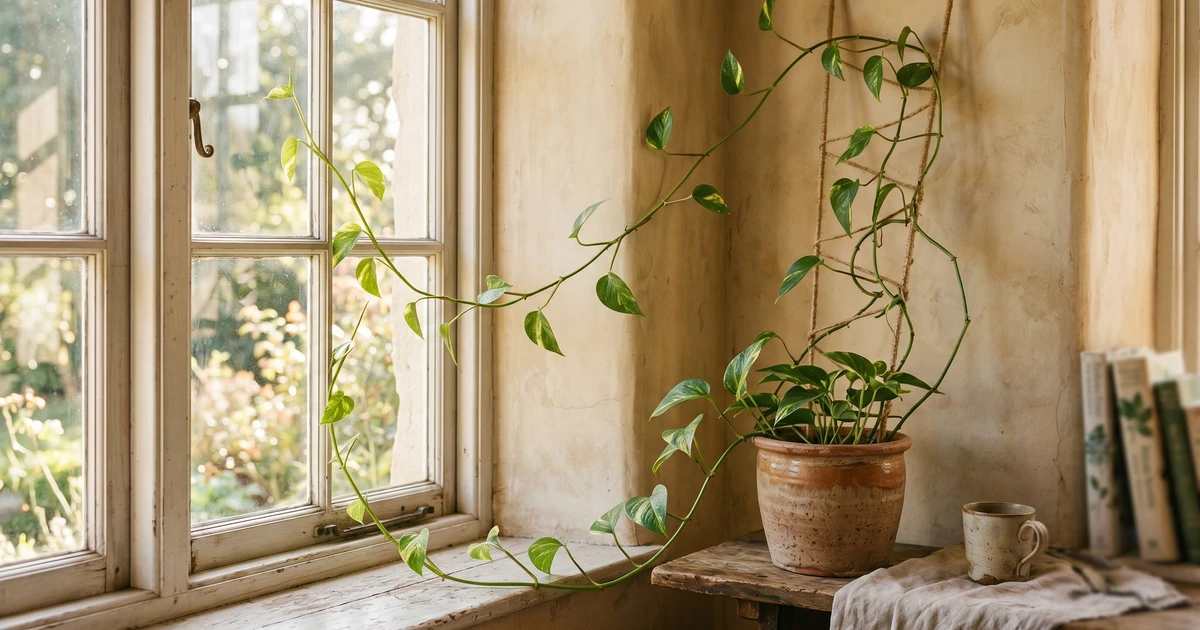
fenestration development on Monstera Deliciosa
Quick answer
If your Monstera Deliciosa has fenestration development, the most likely cause is: Monstera deliciosa leaves develop fenestrations (holes) through conformal mapping growth patterns that minimize elastic energy. The fenestration process follows mathematical stress-free configurations determined by time evolution of growth density. High light variability in tropical understories drives this adaptation—fenestrations reduce growth variance by 15-25% in stochastic light environments, increasing geometric mean fitness.
Start here:
- 1. Young Monstera (under 2 years) will not develop fenestrations - this is normal, not a care issue
- 2. Ensure plant receives 1000-2500 lux for 6-8 hours daily to trigger fenestration development
Why Monstera Deliciosa gets fenestration development
Monstera deliciosa
Monstera deliciosa leaves develop fenestrations (holes) through conformal mapping growth patterns that minimize elastic energy. The fenestration process follows mathematical stress-free configurations determined by time evolution of growth density. High light variability in tropical understories drives this adaptation—fenestrations reduce growth variance by 15-25% in stochastic light environments, increasing geometric mean fitness.
Other documented causes on monstera deliciosa:
- • Leaf fenestrations (the iconic splits and holes) develop in Monstera deliciosa through a complex interplay of genetics, light intensity, and climbing support. In their native tropical canopy, Monsteras start as ground-dwelling seedlings with small, heart-shaped juvenile leaves. As they climb tree trunks toward brighter light, they undergo a dramatic metamorphosis: leaf size increases 10-20x, and fenestrations emerge to allow wind passage and maximize light capture in dense forest. Indoor Monsteras require intense indirect light (4000+ lux) and vertical climbing support (moss poles/trellises) to trigger this genetic transition. Low light or horizontal growth maintains juvenile leaf morphology indefinitely.
How to reverse fenestration development on Monstera Deliciosa
- 1
Young Monstera (under 2 years) will not develop fenestrations - this is normal, not a care issue
- 2
Ensure plant receives 1000-2500 lux for 6-8 hours daily to trigger fenestration development
- 3
Maintain climbing support (moss pole) as epiphytic growth habit stimulates larger, fenestrated leaves
- 4
Be patient - first fenestrations appear on leaves 6-10 depending on light conditions and age
- 5
If no fenestrations after 3 years with adequate light, check for genetic factors (some cultivars fenestrate later)
Keep fenestration development off this Monstera Deliciosa
Provide bright, indirect light with some direct morning sun to encourage fenestration development in mature plants (typically begins at 2-3 years of age).
Other Monstera Deliciosa problems
Same Problem on Other Plants
Go Deeper
This is covered in-depth in the monstera deliciosa Mastery Pack — structured modules with video walkthroughs, advanced protocols, and rescue timelines.
Get the Mastery Pack — $37 →