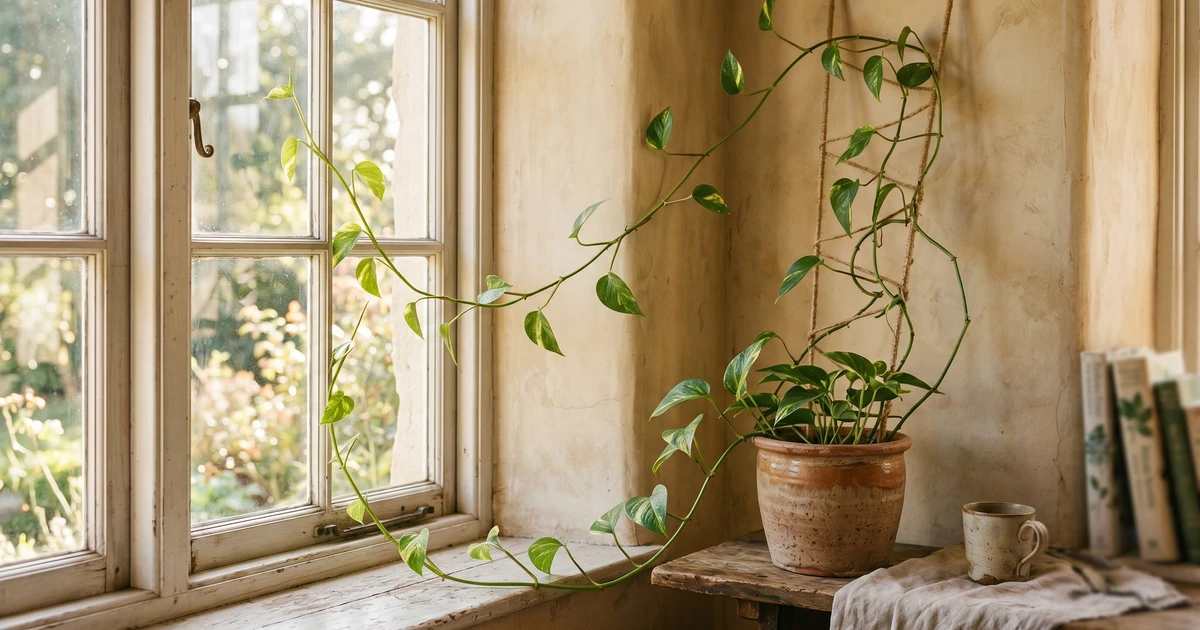
moss pole support on Monstera Deliciosa
Quick answer
If your Monstera Deliciosa has moss pole support, the most likely cause is: Monstera deliciosa is an obligate climber (hemiepiphyte) in its natural habitat, using adventitious aerial roots to attach to tree trunks and climb toward the forest canopy. Without vertical support, Monstera stems grow horizontally across soil or cascade from hanging baskets, resulting in smaller leaves, leggy growth, and failure to produce mature fenestrated foliage. A moss pole or coir pole mimics the natural tree trunk substrate, triggering the plant's genetic programming to produce larger leaves and fenestrations as it ascends. The pole also provides stability for heavy mature specimens.
Start here:
- 1. Select appropriate support: moss pole, coir pole, or wooden plank at least 2 feet tall
- 2. Install pole firmly into soil 3-4 inches deep, avoiding root damage
Why Monstera Deliciosa gets moss pole support
Monstera deliciosa
Monstera deliciosa is an obligate climber (hemiepiphyte) in its natural habitat, using adventitious aerial roots to attach to tree trunks and climb toward the forest canopy. Without vertical support, Monstera stems grow horizontally across soil or cascade from hanging baskets, resulting in smaller leaves, leggy growth, and failure to produce mature fenestrated foliage. A moss pole or coir pole mimics the natural tree trunk substrate, triggering the plant's genetic programming to produce larger leaves and fenestrations as it ascends. The pole also provides stability for heavy mature specimens.
How to reverse moss pole support on Monstera Deliciosa
- 1
Select appropriate support: moss pole, coir pole, or wooden plank at least 2 feet tall
- 2
Install pole firmly into soil 3-4 inches deep, avoiding root damage
- 3
Position main stem against pole and secure loosely with plant ties or Velcro
- 4
Mist moss pole 2-3 times weekly to maintain moisture for aerial root attachment
- 5
As plant grows, continue securing new stem sections every 6-8 inches
- 6
For multiple stems, add additional poles or use wide trellis system
- 7
Train aerial roots onto pole surface to encourage natural climbing behavior
Keep moss pole support off this Monstera Deliciosa
Install support structure when plant reaches 12-18 inches tall. Choose moss pole at least 24 inches tall to accommodate growth. Secure stem to pole before it becomes top-heavy. Mist moss pole regularly to encourage aerial root attachment.
Other Monstera Deliciosa problems
Go Deeper
This is covered in-depth in the monstera deliciosa Mastery Pack — structured modules with video walkthroughs, advanced protocols, and rescue timelines.
Get the Mastery Pack — $37 →