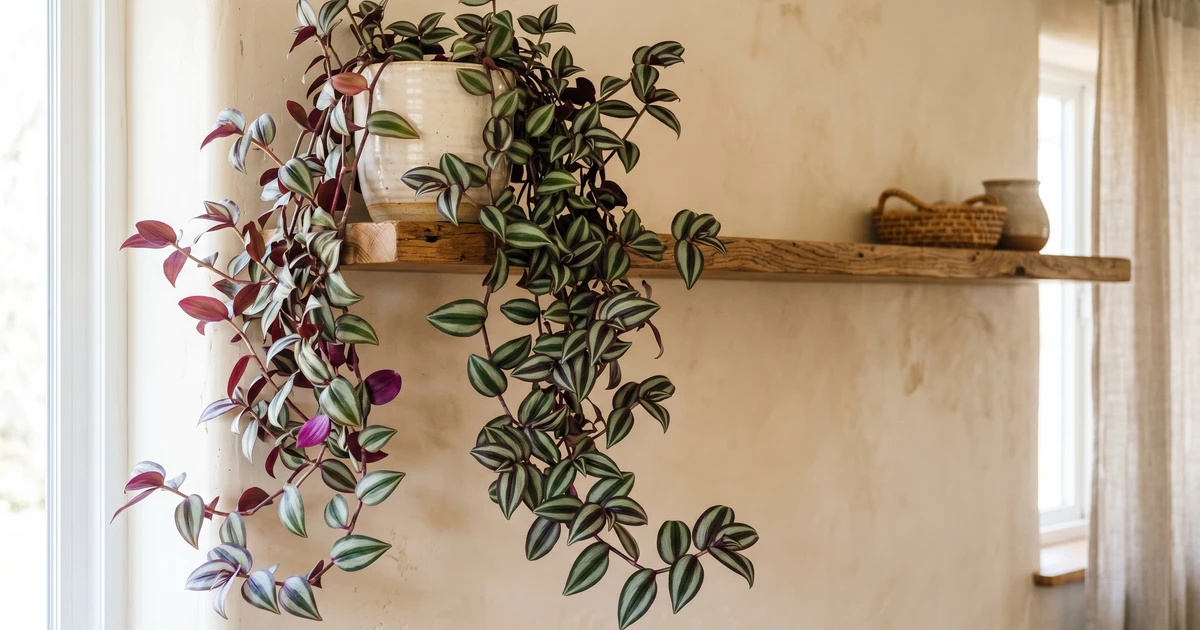
climbing philodendron care on Philodendron
Quick answer
If your Philodendron has climbing philodendron care, the most likely cause is: Climbing philodendrons (including White Knight, Brasil, and heartleaf varieties) are hemiepiphytes that transition from soil-rooted seedlings to canopy climbers using specialized aerial roots. These roots require a textured surface (moss pole, coir, tree bark) to attach via root hairs. Without climbing support, the plant remains in juvenile form with smaller leaves. Climbing triggers hormonal changes that increase leaf size by 3-5x and activate mature morphological features.
Start here:
- 1. Install moss pole or rough-textured trellis when potting—climbers need support to reach maturity
- 2. Mist or water moss pole regularly to keep aerial roots moist and encourage attachment
Why Philodendron gets climbing philodendron care
Philodendron spp.
Climbing philodendrons (including White Knight, Brasil, and heartleaf varieties) are hemiepiphytes that transition from soil-rooted seedlings to canopy climbers using specialized aerial roots. These roots require a textured surface (moss pole, coir, tree bark) to attach via root hairs. Without climbing support, the plant remains in juvenile form with smaller leaves. Climbing triggers hormonal changes that increase leaf size by 3-5x and activate mature morphological features.
How to reverse climbing philodendron care on Philodendron
- 1
Install moss pole or rough-textured trellis when potting—climbers need support to reach maturity
- 2
Mist or water moss pole regularly to keep aerial roots moist and encourage attachment
- 3
Use plant ties loosely to guide vines initially—remove once roots attach naturally
- 4
Position in bright indirect light—climbing philodendrons need 3000-5000 lux for optimal growth
- 5
As vines reach top of support, extend pole or train horizontally to maintain upward growth habit
Keep climbing philodendron care off this Philodendron
Install moss pole, trellis, or rough-textured support at planting time; maintain pole moisture to encourage aerial root attachment; provide bright indirect light (climbing types need more light than self-heading); avoid frequent repositioning once attached.
Other Philodendron problems
Go Deeper
This is covered in-depth in the philodendron Mastery Pack — structured modules with video walkthroughs, advanced protocols, and rescue timelines.
Get the Mastery Pack — $37 →