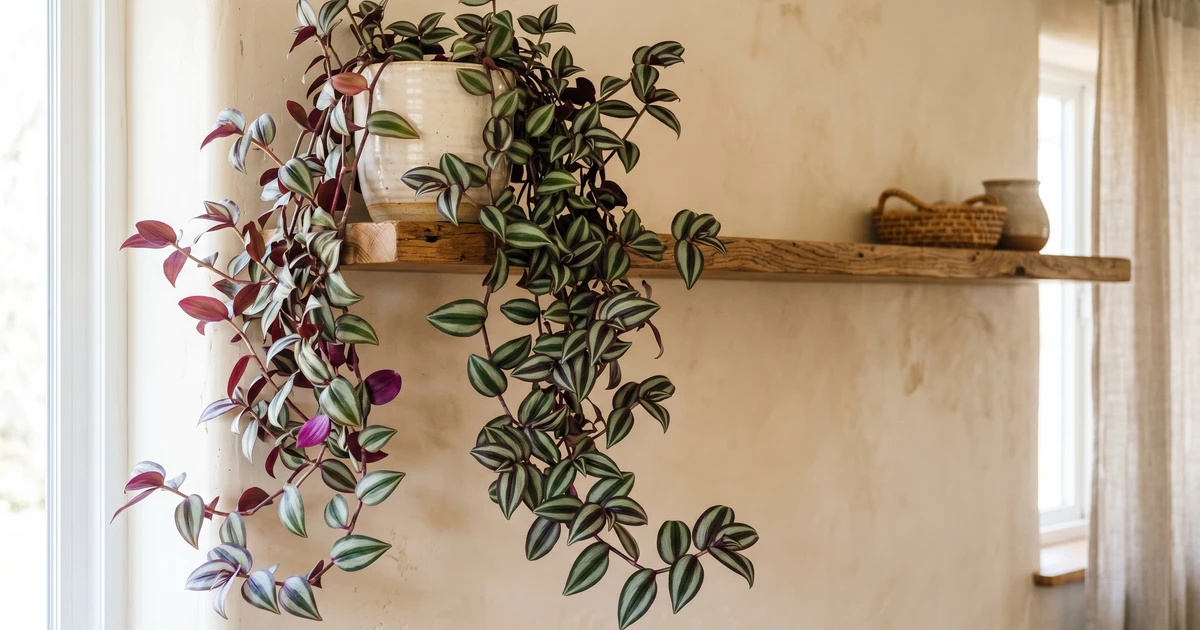
Philodendron: propagation failure from cuttings
Quick answer
propagation failure from cuttings for Philodendron: Philodendron propagation failure from stem cuttings occurs due to improper node selection and moisture imbalance. Unlike pothos, philodendrons require a visible node (swollen bump with aerial root primordia) for successful rooting. Cuttings taken below leaf joints without nodes cannot produce adventitious roots. Additionally, excessive moisture during rooting causes basal rot, while insufficient humidity prevents root emergence. The 'White Knight' cultivar shows particular sensitivity to propagation conditions.
Start here:
- 1. Identify proper cutting site: Locate node 1/4 inch below leaf joint with visible aerial root bump
- 2. Make clean cut with sterile blade: 45-degree angle maximizes rooting surface
Why propagation failure from cuttings matters for Philodendron
Philodendron spp.
Philodendron propagation failure from stem cuttings occurs due to improper node selection and moisture imbalance. Unlike pothos, philodendrons require a visible node (swollen bump with aerial root primordia) for successful rooting. Cuttings taken below leaf joints without nodes cannot produce adventitious roots. Additionally, excessive moisture during rooting causes basal rot, while insufficient humidity prevents root emergence. The 'White Knight' cultivar shows particular sensitivity to propagation conditions.
How to handle propagation failure from cuttings on Philodendron
- 1
Identify proper cutting site: Locate node 1/4 inch below leaf joint with visible aerial root bump
- 2
Make clean cut with sterile blade: 45-degree angle maximizes rooting surface
- 3
Callus formation: Lay cutting on dry paper towel in shade for 24-48 hours
- 4
Water propagation: Submerge node only, keep leaf above water line
- 5
Rooting environment: Bright indirect light, 70-80°F, change water every 5-7 days
- 6
Soil transition: Plant in moist chunky mix when roots reach 2-3 inches; keep humid for 2 weeks
- 7
Alternative method: Root in damp sphagnum moss for faster establishment (3-4 weeks vs 4-6 in water)
Keeping Philodendron on track
Select cuttings with minimum 2 nodes; use sterile razor blades to prevent infection; allow cut ends to callus for 24-48 hours before water exposure; maintain 70-80% humidity during rooting; change water every 5-7 days to prevent bacterial growth; transition to soil when roots reach 2-3 inches.
Other Philodendron problems
Go Deeper
This is covered in-depth in the philodendron Mastery Pack — structured modules with video walkthroughs, advanced protocols, and rescue timelines.
Get the Mastery Pack — $37 →