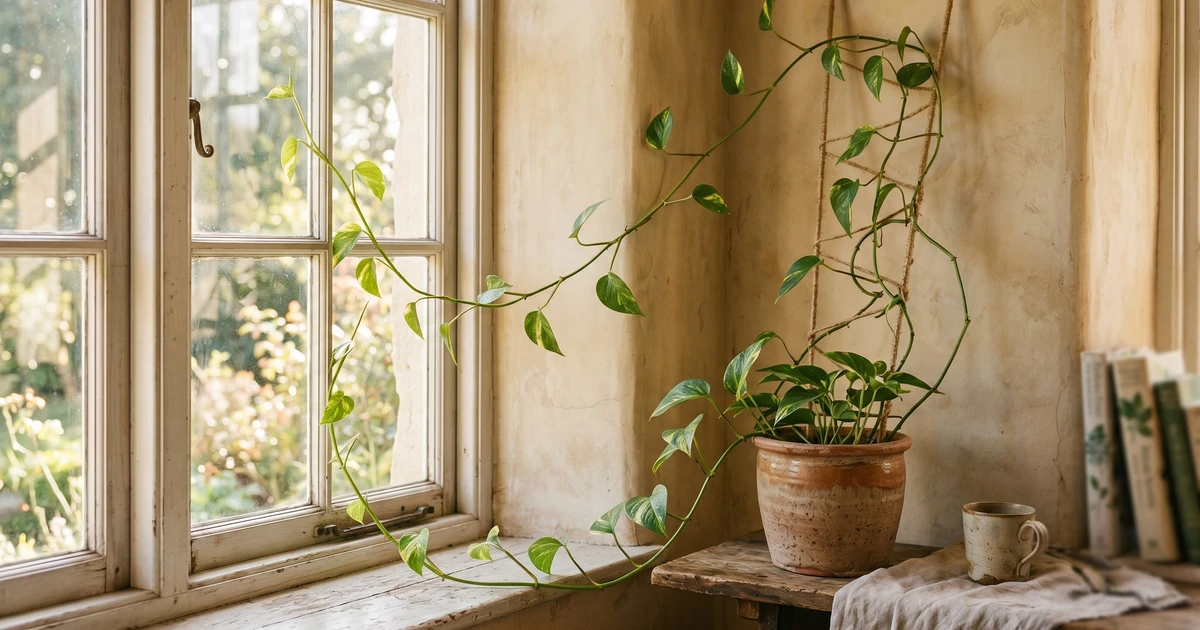
rhaphidophora tetrasperma
Evidence-based care guide for Rhaphidophora Tetrasperma (). Covers disease treatment, symptom diagnosis, propagation methods, lighting and watering. Our analysis draws from 18 verified community cases with an average confidence score of 77%. Each protocol is synthesized from real rescue outcomes, not generic advice.
Care Essentials
Get to Know Your Rhaphidophora Tetrasperma
Keep an eye out for pests — regular leaf inspections catch problems early.
Light
bright indirect
Wants bright, indirect light — sensitive to both extremes. Too much direct sun causes burns, too little causes stretching.
💡 Grow lights: Thrives under artificial grow lights (LED or fluorescent, 10-12 hours/day). A great option if your space lacks natural light.
Watering
every 7-10 days
Water when the top 1-2 inches of soil feel dry. Adjust with the seasons — less in winter, more in summer.
Humidity & Temperature
Loves higher humidity (60%+). If your air is dry, group it with other plants, use a pebble tray, or run a humidifier nearby.
Standard room temperature (60-80°F / 15-27°C) is perfect. Avoid cold drafts and sudden temperature swings.
Soil
Needs well-draining soil — add perlite or orchid bark to a standard potting mix. Good drainage is critical to prevent root rot.
Care Requirements
At a Glance
Care Profile in Development
While our detailed care profile is being compiled, you can find specific care guidance in the 4 care-related diagnoses below — including watering schedules, light requirements, and propagation methods from real-world cases.
Start Here
Most Common Problems
Based on 18 analyzed cases — these are the issues you're most likely to encounter
Don't see your symptom? Search all 14 topics below, or run the Diagnostic.
Why is my Rhaphidophora Tetrasperma losing its variegation?
Rhaphidophora tetrasperma demonstrates exceptional shade tolerance through...
How do I propagate my Rhaphidophora Tetrasperma?
Rhaphidophora tetrasperma propagates readily from stem cuttings containing at...
Why does my Rhaphidophora Tetrasperma have root rot?
Rhaphidophora tetrasperma, despite being a tropical plant, is susceptible to...
How much light does my Rhaphidophora Tetrasperma need?
Rhaphidophora tetrasperma adapts to various light intensities but requires...
Rhaphidophora Tetrasperma: Fenestration
Fenestrations (leaf splits) only develop on mature Rhaphidophora tetrasperma...
Which of the 7 Killers
is threatening your plants?
We analyzed 1,616 documented plant deaths to identify the 7 causes behind 78% of all losses. Answer 5 questions — we'll tell you exactly which ones apply to your setup.
Skip the quiz — get The 7 Killers course ($19) →Question 1 of 5
How do you decide when to water your plants?
Question 2 of 5
Where do most of your plants live?
Question 3 of 5
What's your home environment like?
Question 4 of 5
Have you lost a plant in the last 6 months?
Question 5 of 5
How often do you check your plants for pests?
Your diagnosis is ready
We've identified your top 2 risk killers. Enter your email to see the full breakdown and your personalized rescue protocol.
Your plants are most at risk from:

The 7 Killers mini-course covers every one of these in depth — mechanism, rescue protocol, prevention. 1,616 cases. 7 lessons. $19.
Get The 7 Killers — $19 →Get the Plant Mortality Checklist
The 7 killers behind 78% of houseplant deaths — and the exact fix for each. Free PDF based on 1,616 documented cases.
Your checklist is ready!
We also sent it to your inbox. Check your email for the full download.
Open the ChecklistFree. No spam. Unsubscribe anytime.
Verified Data
All Diagnoses
14 topics consolidated from 18 documented cases. Expand any topic to see all protocols.
Symptoms (1 topics · 1 cases)
Why are my Rhaphidophora Tetrasperma leaves turning yellow?
As an epiphytic aroid native to tropical understories, Rhaphidophora tetrasperma requires well-aerated root conditions
75%
Why are my Rhaphidophora Tetrasperma leaves turning yellow?
As an epiphytic aroid native to tropical understories, Rhaphidophora tetrasperma requires well-aerated root conditions
Cause
As an epiphytic aroid native to tropical understories, Rhaphidophora tetrasperma requires well-aerated root conditions. Soil saturation beyond 7 days deprives roots of oxygen, triggering anaerobic bacterial growth and impairing nutrient uptake, leading to chlorosis starting from older leaves. Unlike drought stress which causes crispy edges, overwatering produces uniform yellowing with soft, limp tissue.
Solutions
- Insert finger 2-3 inches into soil; water only when completely dry
- Unpot and inspect roots if yellowing persists—trim any black, mushy sections with sterilized shears
- Repot in chunky aroid mix: 40% potting soil, 30% perlite, 30% orchid bark
- Treat remaining roots with 3% hydrogen peroxide solution (1:4 dilution) to kill anaerobic bacteria
- Resume watering only after top 2 inches of soil dry completely
Prevention
Water only when top 2-3 inches of soil are dry to the touch. Use pots with drainage holes and well-aerated aroid mix. Reduce watering frequency by 50% in winter when growth slows.
Diseases (1 topics · 2 cases)
Why does my Rhaphidophora Tetrasperma have root rot?
Rhaphidophora tetrasperma, despite being a tropical plant, is susceptible to root rot when soil remains waterlogged for 7+ days
2 protocols
75–80%
Why does my Rhaphidophora Tetrasperma have root rot?
Rhaphidophora tetrasperma, despite being a tropical plant, is susceptible to root rot when soil remains waterlogged for 7+ days
Protocol 1: root rot · 80% confidence
Cause
Rhaphidophora tetrasperma, despite being a tropical plant, is susceptible to root rot when soil remains waterlogged for 7+ days. Anaerobic conditions promote Phytophthora and Pythium species which infect root cortex cells, causing browning, mushiness, and eventual root death. Aerial roots may remain healthy while substrate roots decay.
Solutions
- Unpot plant immediately; gently rinse roots to inspect extent of damage
- Trim all brown, mushy, or foul-smelling roots with sterilized shears; healthy roots are white/firm
- Treat remaining roots with 3% hydrogen peroxide solution (1:1 with water) for 5 minutes
- Repot in fresh, dry aroid mix with 40% orchid bark, 30% perlite, 30% peat or coco coir
- Wait 7-10 days before watering; then resume light watering—soil should dry top 2 inches between waterings
Prevention
Use chunky, well-draining aroid mix. Ensure pot has drainage holes. Water only when top 2-3 inches of soil are dry. In winter, extend dry periods to 10-14 days. Use terracotta pots which wick excess moisture.
Protocol 2: root rot · 75% confidence
Cause
Rhaphidophora tetrasperma has evolved for tropical understory conditions with well-draining forest floor substrates. Root rot develops when soil remains saturated for 7+ days, creating anaerobic conditions below 2mg/L dissolved oxygen. The fine, fibrous root system is particularly susceptible to hypoxic damage.
Solutions
- Inspect immediately: Unpot and examine root color—healthy roots are white/cream and firm
- Identify rot: Trim ALL brown/black, mushy, or foul-smelling roots with sterilized scissors
- Sterilize remaining tissue: Treat cut ends with cinnamon or 3% hydrogen peroxide dilution
- Repot in fresh mix: Use 50% orchid bark, 30% perlite, 20% potting soil for maximum aeration
- Recovery care: Water only after 7 days post-repotting; maintain 65-75°F and 60%+ humidity
- Timeline: Expect 4-6 weeks for root recovery before new growth resumes
Prevention
Water only when top 2 inches of soil are dry; use chunky aroid mix (50% bark/perlite); ensure drainage holes allow water exit within 30 seconds; avoid oversized pots that retain excess moisture; maintain bright indirect light to support transpiration.
Environment (1 topics · 1 cases)
Why does my Rhaphidophora Tetrasperma have sunburn?
White variegated tissue on Rhaphidophora tetrasperma contains no chlorophyll, eliminating photoprotective mechanisms
80%
Why does my Rhaphidophora Tetrasperma have sunburn?
White variegated tissue on Rhaphidophora tetrasperma contains no chlorophyll, eliminating photoprotective mechanisms
Cause
White variegated tissue on Rhaphidophora tetrasperma contains no chlorophyll, eliminating photoprotective mechanisms. When exposed to direct sunlight or intense artificial light, the white cells undergo photooxidative damage—essentially sunburn without protective pigments. This appears as brown, crispy spots specifically on white/cream sectors while green tissue remains unaffected.
Solutions
- Immediate relocation: Move to bright INDIRECT light only—never direct sun on variegated tissue
- Assess damage pattern: Brown spots on white sectors only = sunburn; green tissue damage = different issue
- Trim affected areas: Use sterile scissors to remove crispy brown tissue for aesthetics and prevention
- Increase humidity: Raise to 70-80% to support cellular repair in damaged variegated cells
- Grow light adjustment: Maintain 18+ inches distance; use hand-heat test (no warmth felt at leaf surface)
Prevention
Position 4-6 feet from south-facing windows; use sheer curtains to diffuse direct sun; maintain 60%+ humidity to support stressed tissue; avoid fertilizing damaged plants; acclimate gradually over 7-10 days when relocating.
Growth & Structure (2 topics · 2 cases)
Rhaphidophora Tetrasperma: Climbing
Rhaphidophora tetrasperma is a hemiepiphyte with natural climbing behavior
82%
Rhaphidophora Tetrasperma: Climbing
Rhaphidophora tetrasperma is a hemiepiphyte with natural climbing behavior
Cause
Rhaphidophora tetrasperma is a hemiepiphyte with natural climbing behavior. Without vertical support, the plant grows horizontally with smaller leaves and delayed maturity. Aerial roots require a textured surface (moss pole, coir, or bark) to attach and absorb moisture/nutrients from the air and climbing medium.
Solutions
- Install a moss pole, coir totem, or wooden plank when plant reaches 12-18 inches tall
- Keep moss pole consistently moist (not soggy) to encourage aerial root attachment
- Secure main stems loosely with plant velcro or soft ties every 6-8 inches
- Position climbing surface within 2-3 inches of aerial roots to encourage attachment
- Rotate plant quarterly to ensure even growth on all sides
Prevention
Provide climbing support from the start rather than retrofitting. Maintain moss pole moisture at 60-70%. Use well-draining aroid mix to prevent root rot while keeping aerial roots hydrated.
How do I set up a moss pole for my Rhaphidophora Tetrasperma?
Rhaphidophora tetrasperma is a hemi-epiphytic climbing aroid that in its natural habitat attaches to tree trunks using aerial roots
75%
How do I set up a moss pole for my Rhaphidophora Tetrasperma?
Rhaphidophora tetrasperma is a hemi-epiphytic climbing aroid that in its natural habitat attaches to tree trunks using aerial roots
Cause
Rhaphidophora tetrasperma is a hemi-epiphytic climbing aroid that in its natural habitat attaches to tree trunks using aerial roots. Without vertical support, plants remain juvenile with smaller leaves, leggy internodes, and delayed fenestration. Insufficient climbing substrate prevents activation of mature growth hormones.
Solutions
- Install moss pole, coir pole, or cedar plank before plant reaches 12 inches tall
- Gently secure main stem to support using plant Velcro or soft ties—avoid cutting into aerial roots
- Mist moss pole daily or maintain 60-70% ambient humidity to encourage aerial root attachment
- As plant climbs, redirect new growth toward support; mature leaves will enlarge with fenestrations
- Extend pole by stacking additional sections when plant reaches top
Prevention
Provide vertical support from day one. Keep moss pole consistently moist to encourage aerial root attachment. Maintain bright indirect light (2000-5000 lux) to fuel vertical growth energy demands.
Propagation (1 topics · 2 cases)
How do I propagate my Rhaphidophora Tetrasperma?
Rhaphidophora tetrasperma propagates readily from stem cuttings containing at least one node and one aerial root
2 protocols
68–88%
How do I propagate my Rhaphidophora Tetrasperma?
Rhaphidophora tetrasperma propagates readily from stem cuttings containing at least one node and one aerial root
Protocol 1: propagation · 88% confidence
Cause
Rhaphidophora tetrasperma propagates readily from stem cuttings containing at least one node and one aerial root. Nodes contain meristematic tissue that differentiates into new roots and shoots when provided with moisture, warmth, and oxygen.
Solutions
- Select cutting with 2-3 nodes and at least one aerial root; cut 1 inch below node with sterilized shears
- For water propagation: submerge node in room-temperature water; change water every 3-5 days
- For soil propagation: plant node 1 inch deep in moist aroid mix; cover with humidity dome or plastic bag
- Provide bright indirect light and 70-75°F (21-24°C) temperatures
- Roots develop in 2-4 weeks water, 3-6 weeks soil; transplant when roots reach 2-3 inches
Prevention
Always include at least one node—leaf-only cuttings will not root. Keep humidity high during rooting to prevent desiccation. Avoid overwatering soil propagations which causes stem rot.
Protocol 2: propagation · 68% confidence
Cause
Rhaphidophora tetrasperma propagates vegetatively through stem cuttings containing at least one node with axillary bud. Success depends on preserving the meristematic tissue at the node while providing adequate moisture for root initiation without causing rot. Unlike some aroids, R. tetrasperma roots readily from internodal cuttings but requires the node itself for new growth emergence. Aerial roots present on cuttings accelerate establishment but are not strictly necessary.
Solutions
- Select healthy stem: Choose firm, non-woody stem with visible node (bump where leaf meets stem)
- Cut below node: Make clean cut 1-2 inches below node using sterilized blade; ensure cutting has 1-2 leaves
- Rooting medium options: (1) Water propagation—change every 3-4 days, roots in 2-4 weeks; (2) Sphagnum moss—maintain dampness, high success rate; (3) Soil—use perlite-heavy mix, keep lightly moist
- Callus formation: Allow cut end to dry 2-4 hours before water/moss planting to reduce rot risk
- Transplant timing: Move to soil when roots reach 2-3 inches long; use well-draining aroid mix
Prevention
Always include at least one node—internode-only cuttings will not produce new growth. Avoid overwatering during rooting phase; moist but not wet conditions prevent rot while encouraging root development. Maintain 65-80°F and bright indirect light during propagation.
Care Methods (1 topics · 3 cases)
Why is my Rhaphidophora Tetrasperma losing its variegation?
Rhaphidophora tetrasperma demonstrates exceptional shade tolerance through specific leaf area adaptation mechanisms
3 protocols
70–85%
Why is my Rhaphidophora Tetrasperma losing its variegation?
Rhaphidophora tetrasperma demonstrates exceptional shade tolerance through specific leaf area adaptation mechanisms
Protocol 1: light requirements variegated · 85% confidence
Cause
Rhaphidophora tetrasperma demonstrates exceptional shade tolerance through specific leaf area adaptation mechanisms. Under low-light conditions (6.8 μmol m⁻² s⁻¹), plants increase specific leaf area to maximize light capture efficiency. However, the variegated form requires more light than the standard green form because white sectors contain zero chlorophyll and cannot photosynthesize. When light intensity drops below threshold levels, the plant cannot support the metabolic burden of non-photosynthetic tissue, leading to decline.
Solutions
- Measure current light with PAR meter or smartphone app—variegated R. tetrasperma needs 100-150 μmol m⁻² s⁻¹ minimum
- Relocate to brighter position: East window ideal, or filtered south/west exposure
- If grow lights needed: Provide 12-14 hours at 12-18 inches distance with full spectrum LED
- Monitor variegation: Loss of white/cream sectors indicates light starvation—plant is reverting to survive
- Acclimate gradually: Increase light exposure over 7-10 days to prevent sun shock
Prevention
Provide bright indirect light at 100-150 μmol m⁻² s⁻¹ (approximately 800-1200 foot-candles) for variegated specimens—higher than green forms. Position near east-facing windows or 3-5 feet from south/west windows with sheer curtains. Monitor for loss of variegation (reversion to green) as a sign of insufficient light.
Protocol 2: variegated care · 75% confidence
Cause
Variegated Rhaphidophora tetrasperma exhibits white/cream sectors lacking chlorophyll, reducing photosynthetic capacity by 40-60% compared to green specimens. Research shows the species sustains growth at 6.8 µmol m⁻² s⁻¹ white LED for 9h/day, but variegated forms require higher light intensity (12-15 µmol m⁻² s⁻¹) to compensate for reduced chlorophyll area. White tissue provides zero photoprotection, making variegated sectors susceptible to photooxidative damage under direct sunlight while simultaneously requiring brighter conditions than green forms.
Solutions
- Position in bright indirect light: East-facing window with sheer curtain or 3-5 feet from south/west windows
- Supplement with grow lights: 12-15 µmol m⁻² s⁻¹ for 12-14 hours daily if natural light is insufficient
- Maintain 60-75% humidity year-round to support reduced photosynthetic efficiency
- Rotate plant weekly to ensure even light distribution across all variegated sectors
- Avoid direct sunlight: Even morning sun causes irreversible sunburn on white tissue within 2-4 hours
Prevention
Provide consistent bright indirect light (2000-4000 lux) measured with light meter. Variegated forms need more total light than green specimens to support equivalent growth rates. Maintain stable environment without sudden light changes that trigger stress responses.
Protocol 3: variegated watering · 70% confidence
Cause
Variegated Rhaphidophora tetrasperma exhibits reduced chlorophyll area (40-60% less than green forms), requiring adjusted watering protocols. Research shows standard species maintains growth at 6.8 µmol m⁻² s⁻¹ light intensity with standard moisture levels. However, variegated forms with compromised photosynthetic capacity transpire less and require 20-30% less frequent watering than green specimens. White/cream sectors lack stomata density and lose moisture at slower rates, creating risk of overwatering if treated identically to all-green plants.
Solutions
- Extend watering intervals: Add 2-3 days to your standard schedule for variegated forms
- Use finger test: Insert 3 inches deep—water only when soil is dry throughout top layer
- Check pot weight: Lift before/after watering to learn dry vs saturated weight for your specimen
- Improve drainage: Mix 40% perlite or orchid bark into standard potting soil
- Reduce fertilizer: Apply at half strength to avoid overwhelming reduced root activity
Prevention
Water variegated specimens only when top 2-3 inches of soil are dry, extending intervals 2-3 days longer than green forms. Use well-draining aroid mix with 40% perlite/bark to offset reduced transpiration. Monitor soil moisture with meter rather than visual cues, as variegated leaves show stress differently.
Other Topics (7 topics · 7 cases)
Rhaphidophora Tetrasperma: Cutting Success Rates
Rhaphidophora tetrasperma roots readily from stem cuttings but exhibits differential success rates based on cutting composition and environmental conditions
70%
Rhaphidophora Tetrasperma: Cutting Success Rates
Rhaphidophora tetrasperma roots readily from stem cuttings but exhibits differential success rates based on cutting composition and environmental conditions
Cause
Rhaphidophora tetrasperma roots readily from stem cuttings but exhibits differential success rates based on cutting composition and environmental conditions. The plant's aroid physiology requires at minimum one node with intact axillary bud for new growth initiation; leaf-only cuttings fail 100%. Research on related aroids shows optimal rooting occurs at 20-25°C with high humidity (>70%) that prevents desiccation during the 2-4 week root initiation phase. Cuttings lacking aerial roots take 30% longer to establish.
Solutions
- Cutting selection: Choose stems with 2-3 leaves, 1-2 visible nodes, and ideally aerial roots
- Preparation: Sterilize blade with 70% alcohol; cut 1 inch below node at 45-degree angle
- Callus period: Allow cut end to dry 2-4 hours before placing in medium to reduce rot risk
- Water method: Change water every 3-4 days with room-temperature dechlorinated water; roots emerge in 2-4 weeks
- Moss method: Use damp sphagnum in clear cup with ventilation holes; check weekly for root development
- Transplant: Move to soil when roots reach 2-3 inches; use chunky aroid mix to prevent transplant shock
Prevention
Select cuttings with 1-2 nodes minimum and at least one aerial root if possible. Maintain propagation environment at 70-80°F with 70%+ humidity using propagation boxes or humidity domes. Avoid direct sunlight that overheats propagation vessels and promotes algae growth in water.
Rhaphidophora Tetrasperma: Fenestration
Fenestrations (leaf splits) only develop on mature Rhaphidophora tetrasperma plants with adequate light and climbing support
85%
Rhaphidophora Tetrasperma: Fenestration
Fenestrations (leaf splits) only develop on mature Rhaphidophora tetrasperma plants with adequate light and climbing support
Cause
Fenestrations (leaf splits) only develop on mature Rhaphidophora tetrasperma plants with adequate light and climbing support. Juvenile leaves remain entire (unsplit). High light intensity (200-400 µmol/m²/s PAR) combined with vertical growth triggers the genetic expression of fenestration during leaf development.
Solutions
- Ensure minimum 6 hours of bright indirect light daily (East or West-facing window)
- Provide vertical climbing support to encourage mature growth habit
- Allow plant to reach 3-4 feet tall before expecting consistent fenestrations
- Maintain humidity at 60%+ to support healthy leaf expansion
- Use grow lights (4000-6500K) for 12-14 hours daily if natural light is insufficient
Prevention
Avoid low light conditions which permanently stunt fenestration development. Don't expect splits on juvenile plants under 2 feet. Maintain consistent care—stress from irregular watering can pause maturity progression.
Rhaphidophora Tetrasperma: Fenestration Development
Fenestration (natural leaf splits) in Rhaphidophora tetrasperma develops when plants transition from juvenile to mature growth phase, triggered by adequate light intensity supporting robust photosynthesis
75%
Rhaphidophora Tetrasperma: Fenestration Development
Fenestration (natural leaf splits) in Rhaphidophora tetrasperma develops when plants transition from juvenile to mature growth phase, triggered by adequate light intensity supporting robust photosynthesis
Cause
Fenestration (natural leaf splits) in Rhaphidophora tetrasperma develops when plants transition from juvenile to mature growth phase, triggered by adequate light intensity supporting robust photosynthesis. Research demonstrates that climbing plants allocate more biomass to stems under higher light (20.1 µmol m⁻² s⁻¹), altering morphology. Juvenile leaves remain entire (unsplit) until the plant reaches maturity markers: stem diameter >8mm, climbing support attachment, and minimum 6-8 nodes from base.
Solutions
- Provide climbing support early: Install moss pole or trellis when plant has 4-6 leaves to encourage vertical growth habit
- Ensure adequate light: Minimum 1500 lux for fenestration initiation; 2500+ lux for consistent split development
- Allow plant to climb: Horizontal/trailing growth maintains juvenile morphology; vertical climbing triggers maturity
- Be patient: First fenestrated leaves typically emerge after 8-12 months of proper growing conditions
- Maintain humidity above 60% to support the larger leaf surface area of mature foliage
Prevention
Start with climbing support from day one. Position in bright indirect light rather than low light corners. Understand that fenestration is a maturity marker—seedlings and young plants will not produce split leaves regardless of conditions.
Rhaphidophora Tetrasperma: Fenestration Progression
Fenestration in Rhaphidophora tetrasperma follows a predictable developmental sequence tied to cumulative light exposure and node count
68%
Rhaphidophora Tetrasperma: Fenestration Progression
Fenestration in Rhaphidophora tetrasperma follows a predictable developmental sequence tied to cumulative light exposure and node count
Cause
Fenestration in Rhaphidophora tetrasperma follows a predictable developmental sequence tied to cumulative light exposure and node count. Research demonstrates climbing plants under enhanced lighting (20.1 µmol m⁻² s⁻¹) allocate biomass to stem growth while maintaining efficient photosynthesis. Fenestration appears in stages: first leaf shows single central split, subsequent leaves develop additional splits and holes following a Fibonacci-like pattern. Environmental stress during leaf formation disrupts this pattern, creating asymmetrical or incomplete fenestration.
Solutions
- Document progression: Photograph each new leaf to track fenestration pattern development
- Stage 1 (Nodes 8-10): Expect single central split on first mature leaf
- Stage 2 (Nodes 11-14): Look for 2-3 splits with developing secondary fenestrations
- Stage 3 (Nodes 15+): Mature leaves develop 4-6 splits with multiple holes per segment
- Address disruptions: If pattern stalls, check light levels, humidity, and climbing support attachment
Prevention
Maintain stable growing conditions throughout the 3-4 week leaf development period. Avoid repotting, relocation, or major care changes when new leaves are emerging. Monitor for consistent incremental fenestration progression; sudden pattern changes indicate environmental stress requiring investigation.
Rhaphidophora Tetrasperma: Juvenile Phase Persistence
Rhaphidophora tetrasperma is a climbing hemiepiphyte native to Southeast Asian rainforests where juvenile vines grow horizontally along forest floor until locating tree trunks
68%
Rhaphidophora Tetrasperma: Juvenile Phase Persistence
Rhaphidophora tetrasperma is a climbing hemiepiphyte native to Southeast Asian rainforests where juvenile vines grow horizontally along forest floor until locating tree trunks
Cause
Rhaphidophora tetrasperma is a climbing hemiepiphyte native to Southeast Asian rainforests where juvenile vines grow horizontally along forest floor until locating tree trunks. This evolutionary trait manifests in cultivation as weak, sprawling growth without vertical support. Plants denied climbing substrates enter indefinite juvenile phase with elongated internodes, smaller leaves, and delayed or absent fenestration. The hormonal trigger for maturity requires gravitational orientation changes that occur only when vines transition from horizontal to vertical growth.
Solutions
- Select appropriate support: Moss poles (24-36 inches), coir totems, or rough wooden stakes 2-3 inches diameter
- Installation timing: Add support when plant has 4-6 leaves to prevent developmental delay
- Secure method: Use soft velcro ties or plant clips loosely to guide without constricting stem
- Encourage attachment: Mist moss pole daily; moisture activates aerial root attachment hormone
- Maintenance: Extend or replace pole as plant outgrows it to maintain vertical trajectory
Prevention
Install vertical support immediately upon acquisition regardless of plant size. Never allow plants to trail or hang—the juvenile phase persists indefinitely in horizontal orientation. Position supports centrally to allow circumnutation (spiral growth) behavior that stimulates aerial root production.
How much light does my Rhaphidophora Tetrasperma need?
Rhaphidophora tetrasperma adapts to various light intensities but requires bright indirect light (200-400 µmol/m²/s PAR) for mature fenestrated leaf development
90%
How much light does my Rhaphidophora Tetrasperma need?
Rhaphidophora tetrasperma adapts to various light intensities but requires bright indirect light (200-400 µmol/m²/s PAR) for mature fenestrated leaf development
Cause
Rhaphidophora tetrasperma adapts to various light intensities but requires bright indirect light (200-400 µmol/m²/s PAR) for mature fenestrated leaf development. According to PMID 39075122, this species demonstrated growth chamber adaptation to workplace lighting, though increased intensity supports enhanced growth and leaf size.
Solutions
- Position 3-5 feet from East or West-facing window for ideal bright indirect light
- In low-light rooms: use full-spectrum LED grow lights 12-14 hours daily, 12-18 inches above canopy
- Monitor for leggy growth or small leaves—signs of insufficient light
- Avoid direct South-facing sun which causes leaf scorch; use sheer curtain if necessary
- Rotate plant 90° weekly to ensure even light exposure on all sides
Prevention
Provide consistent bright indirect light from the start. Avoid dramatic light level changes which cause stress. Supplement with grow lights during winter months when day length drops below 10 hours.
How do I set up a moss pole for my Rhaphidophora Tetrasperma?
Rhaphidophora tetrasperma is an obligate hemiepiphyte with evolutionary adaptation for climbing tree trunks in Southeast Asian forests
72%
How do I set up a moss pole for my Rhaphidophora Tetrasperma?
Rhaphidophora tetrasperma is an obligate hemiepiphyte with evolutionary adaptation for climbing tree trunks in Southeast Asian forests
Cause
Rhaphidophora tetrasperma is an obligate hemiepiphyte with evolutionary adaptation for climbing tree trunks in Southeast Asian forests. In cultivation, the plant exhibits apical dominance and produces smaller leaves when denied vertical climbing substrates. Aerial root activation occurs upon contact with textured surfaces (moss, coir, rough bark), triggering hormonal changes that promote larger leaf development and fenestration. Without support, plants remain in perpetual juvenile state with vine-like growth habit.
Solutions
- Install moss pole or coir totem: 24-36 inches tall, positioned in center of pot
- Mist support structure daily: Moisture activates aerial root attachment—dry poles inhibit climbing response
- Secure stems loosely: Use soft plant ties to guide vines toward support without constricting growth
- Provide texture: Rough surfaces (moss, coconut coir, rough wood) trigger root attachment better than smooth materials
- Height progression: As plant climbs, extend or replace pole; aerial roots will attach to support and nourish upper growth
Prevention
Never grow Rhaphidophora tetrasperma as hanging/trailing plant if fenestration is desired. Install support before plant reaches 6 leaves to prevent developmental delay. Maintain 60%+ humidity to support aerial root health and attachment strength.
Common Questions
Frequently Asked Questions
Why does my rhaphidophora tetrasperma have Light requirements variegated?
Cause: Rhaphidophora tetrasperma demonstrates exceptional shade tolerance through specific leaf area adaptation mechanisms. Under low-light conditions (6.8 μmol m⁻² s⁻¹), plants increase specific leaf area to maximize light capture efficiency. However, the variegated form requires more light than the standard green form because white sectors contain zero chlorophyll and cannot photosynthesize. When light intensity drops below threshold levels, the plant cannot support the metabolic burden of non-photosynthetic tissue, leading to decline.
Solution: Measure current light with PAR meter or smartphone app—variegated R. tetrasperma needs 100-150 μmol m⁻² s⁻¹ minimum
Prevention: Provide bright indirect light at 100-150 μmol m⁻² s⁻¹ (approximately 800-1200 foot-candles) for variegated specimens—higher than green forms. Position near east-facing windows or 3-5 feet from south/west windows with sheer curtains. Monitor for loss of variegation (reversion to green) as a sign of insufficient light.
85% confidence · View full protocol →
Why does my rhaphidophora tetrasperma have Propagation?
Cause: Rhaphidophora tetrasperma propagates readily from stem cuttings containing at least one node and one aerial root. Nodes contain meristematic tissue that differentiates into new roots and shoots when provided with moisture, warmth, and oxygen.
Solution: Select cutting with 2-3 nodes and at least one aerial root; cut 1 inch below node with sterilized shears
Prevention: Always include at least one node—leaf-only cuttings will not root. Keep humidity high during rooting to prevent desiccation. Avoid overwatering soil propagations which causes stem rot.
88% confidence · View full protocol →
Why does my rhaphidophora tetrasperma have Root rot?
Cause: Rhaphidophora tetrasperma, despite being a tropical plant, is susceptible to root rot when soil remains waterlogged for 7+ days. Anaerobic conditions promote Phytophthora and Pythium species which infect root cortex cells, causing browning, mushiness, and eventual root death. Aerial roots may remain healthy while substrate roots decay.
Solution: Unpot plant immediately; gently rinse roots to inspect extent of damage
Prevention: Use chunky, well-draining aroid mix. Ensure pot has drainage holes. Water only when top 2-3 inches of soil are dry. In winter, extend dry periods to 10-14 days. Use terracotta pots which wick excess moisture.
80% confidence · View full protocol →
Why does my rhaphidophora tetrasperma have Light?
Cause: Rhaphidophora tetrasperma adapts to various light intensities but requires bright indirect light (200-400 µmol/m²/s PAR) for mature fenestrated leaf development. According to PMID 39075122, this species demonstrated growth chamber adaptation to workplace lighting, though increased intensity supports enhanced growth and leaf size.
Solution: Position 3-5 feet from East or West-facing window for ideal bright indirect light
Prevention: Provide consistent bright indirect light from the start. Avoid dramatic light level changes which cause stress. Supplement with grow lights during winter months when day length drops below 10 hours.
90% confidence · View full protocol →
Why does my rhaphidophora tetrasperma have Fenestration?
Cause: Fenestrations (leaf splits) only develop on mature Rhaphidophora tetrasperma plants with adequate light and climbing support. Juvenile leaves remain entire (unsplit). High light intensity (200-400 µmol/m²/s PAR) combined with vertical growth triggers the genetic expression of fenestration during leaf development.
Solution: Ensure minimum 6 hours of bright indirect light daily (East or West-facing window)
Prevention: Avoid low light conditions which permanently stunt fenestration development. Don't expect splits on juvenile plants under 2 feet. Maintain consistent care—stress from irregular watering can pause maturity progression.
85% confidence · View full protocol →
Common Questions
Frequently Asked About Rhaphidophora Tetrasperma
What problems can Rhaphidophora Tetrasperma get?
Our database contains 18 documented Rhaphidophora Tetrasperma cases covering 14 distinct topics, including diseases, pest identification, environmental stress, propagation, and advanced care protocols — each with verified solutions.
Structured Learning
Ready to Go Deeper?
Explore our Mastery Packs for structured, video-based learning with step-by-step protocols from 20,000+ analyzed plant cases.
Browse All Courses →