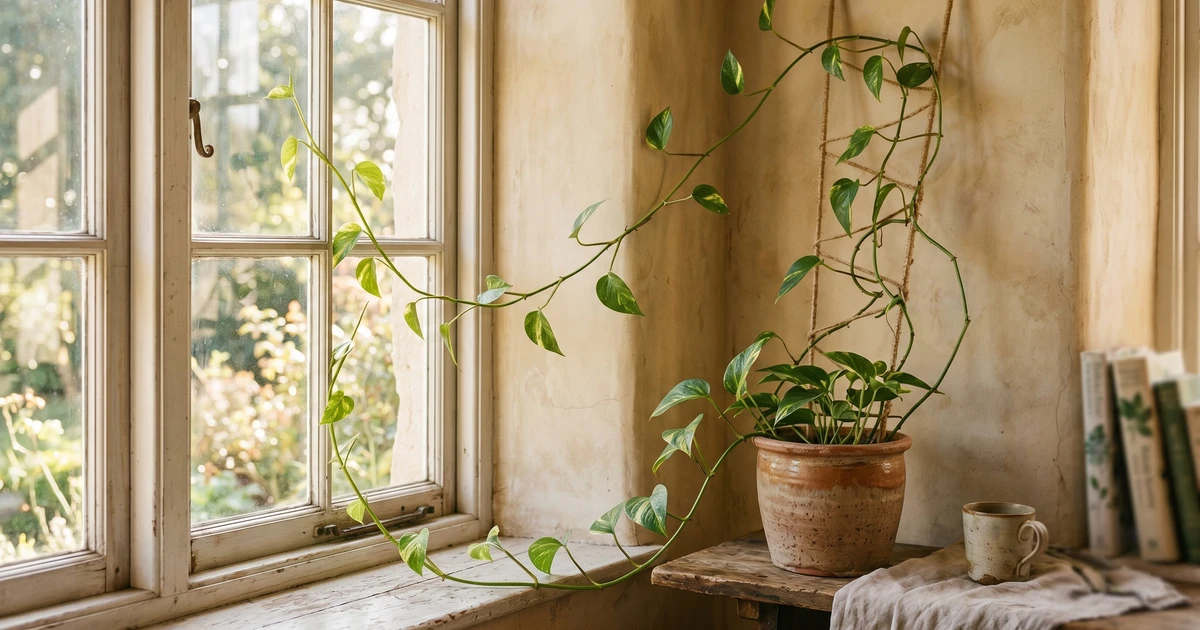
leggy growth on Pilea Peperomioides
Quick answer
If your Pilea Peperomioides has leggy growth, the most likely cause is: Pilea peperomioides develops leggy, stretched growth with increased internodal spacing when light intensity falls below optimal levels (typically below 200-400 foot-candles). The plant exhibits phototropism - growing toward light sources - and in low light conditions, the stem elongates excessively as the plant attempts to reach more photons for photosynthesis. Leaf size decreases and petioles become longer and thinner. The biomechanical petiole structure (PMID 34893822) cannot maintain proper leaf positioning when etiolated, leading to floppy, weak growth.
Start here:
- 1. Move plant to brighter indirect light location - east or west-facing windows ideal
- 2. Rotate pot 90 degrees weekly to encourage even, compact growth
Why Pilea Peperomioides gets leggy growth
Pilea peperomioides
Pilea peperomioides develops leggy, stretched growth with increased internodal spacing when light intensity falls below optimal levels (typically below 200-400 foot-candles). The plant exhibits phototropism - growing toward light sources - and in low light conditions, the stem elongates excessively as the plant attempts to reach more photons for photosynthesis. Leaf size decreases and petioles become longer and thinner. The biomechanical petiole structure (PMID 34893822) cannot maintain proper leaf positioning when etiolated, leading to floppy, weak growth.
How to reverse leggy growth on Pilea Peperomioides
- 1
Move plant to brighter indirect light location - east or west-facing windows ideal
- 2
Rotate pot 90 degrees weekly to encourage even, compact growth
- 3
If etiolation is severe: prune back to desired height using sterile shears
- 4
Root stem cuttings from pruned sections to propagate compact new plants
- 5
Supplement with full-spectrum LED grow light if natural light is inadequate (12-14 hours daily)
- 6
New growth will be more compact; old leggy stems won't revert - consider replacement
Keep leggy growth off this Pilea Peperomioides
Provide bright indirect light for 6-8 hours daily. Avoid deep shade or dark corners. Maintain consistent light exposure rather than frequent location changes. Supplemental lighting prevents etiolation in north-facing rooms or winter months.