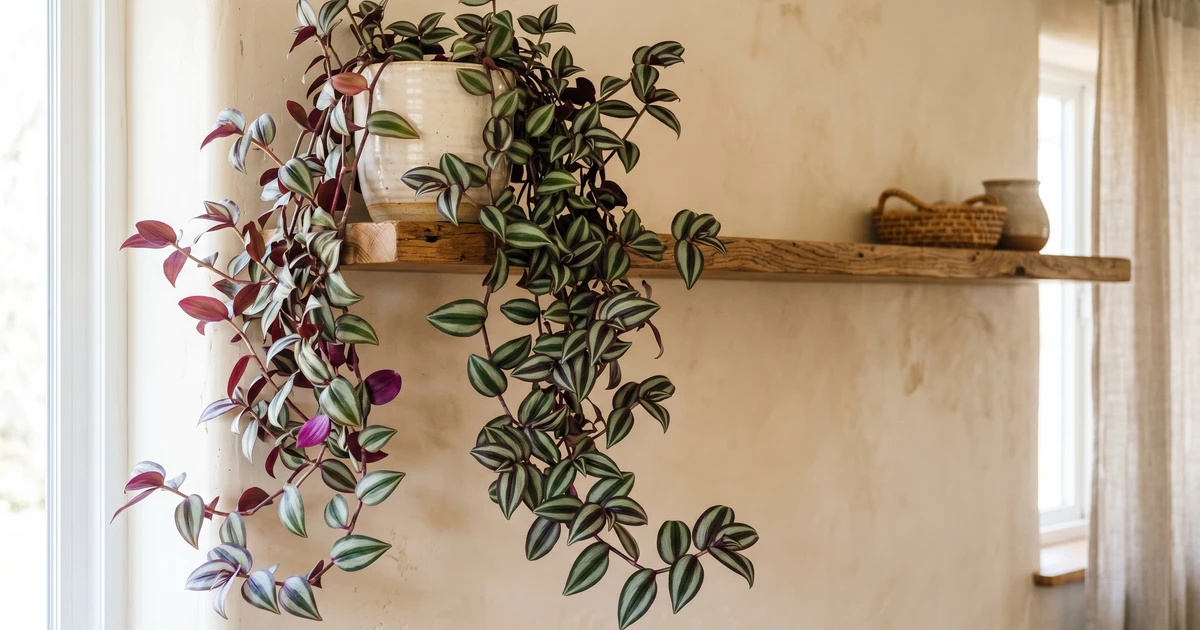
variegation reversion on Pink Princess Philodendron
Quick answer
If your Pink Princess Philodendron has variegation reversion, the most likely cause is: Pink Princess Philodendron exhibits genetic instability in its chimeral variegation pattern, where the pink coloration results from partial chlorophyll deficiency in leaf cells. During periods of environmental stress—particularly transitions between different humidity, temperature, or light conditions—the plant prioritizes survival over maintaining the energy-expensive variegated phenotype. This triggers cellular reversion where pink sectors revert to green (sporting), especially in new growth, as the plant maximizes photosynthetic efficiency to cope with suboptimal conditions.
Start here:
- 1. Stabilize environment: Maintain temperature 68-78°F and humidity 55-70% for minimum 4-6 weeks post-transition
- 2. Prune reverted growth: Remove fully green stems back to last variegated node to prevent dominant green tissue takeover
Why Pink Princess Philodendron gets variegation reversion
Philodendron erubescens 'Pink Princess'
Pink Princess Philodendron exhibits genetic instability in its chimeral variegation pattern, where the pink coloration results from partial chlorophyll deficiency in leaf cells. During periods of environmental stress—particularly transitions between different humidity, temperature, or light conditions—the plant prioritizes survival over maintaining the energy-expensive variegated phenotype. This triggers cellular reversion where pink sectors revert to green (sporting), especially in new growth, as the plant maximizes photosynthetic efficiency to cope with suboptimal conditions.
How to reverse variegation reversion on Pink Princess Philodendron
- 1
Stabilize environment: Maintain temperature 68-78°F and humidity 55-70% for minimum 4-6 weeks post-transition
- 2
Prune reverted growth: Remove fully green stems back to last variegated node to prevent dominant green tissue takeover
- 3
Optimize light levels: Use light meter to ensure 1500-2500 lux—too dark causes reversion, too bright damages pink tissue
- 4
Maintain humidity stability: Use humidifier or pebble trays to keep consistent 60%+ humidity during acclimation periods
- 5
Avoid fertilizing stressed plants: Wait 4-6 weeks post-transition before resuming fertilization
- 6
Patience protocol: Allow 3-4 new leaves to emerge under stable conditions before assessing variegation stability
Keep variegation reversion off this Pink Princess Philodendron
Maintain stable environmental conditions for 30+ days after any transition; keep humidity consistently above 55% to reduce cellular stress; provide adequate but not excessive light (1500-2500 lux) to support both green and pink tissue; avoid dramatic temperature swings (>10°F daily fluctuation); allow plants to fully acclimate to new environments before expecting stable variegation expression.
Other Pink Princess Philodendron problems
Go Deeper
This is covered in-depth in the pink princess philodendron Mastery Pack — structured modules with video walkthroughs, advanced protocols, and rescue timelines.
Get the Mastery Pack — $37 →