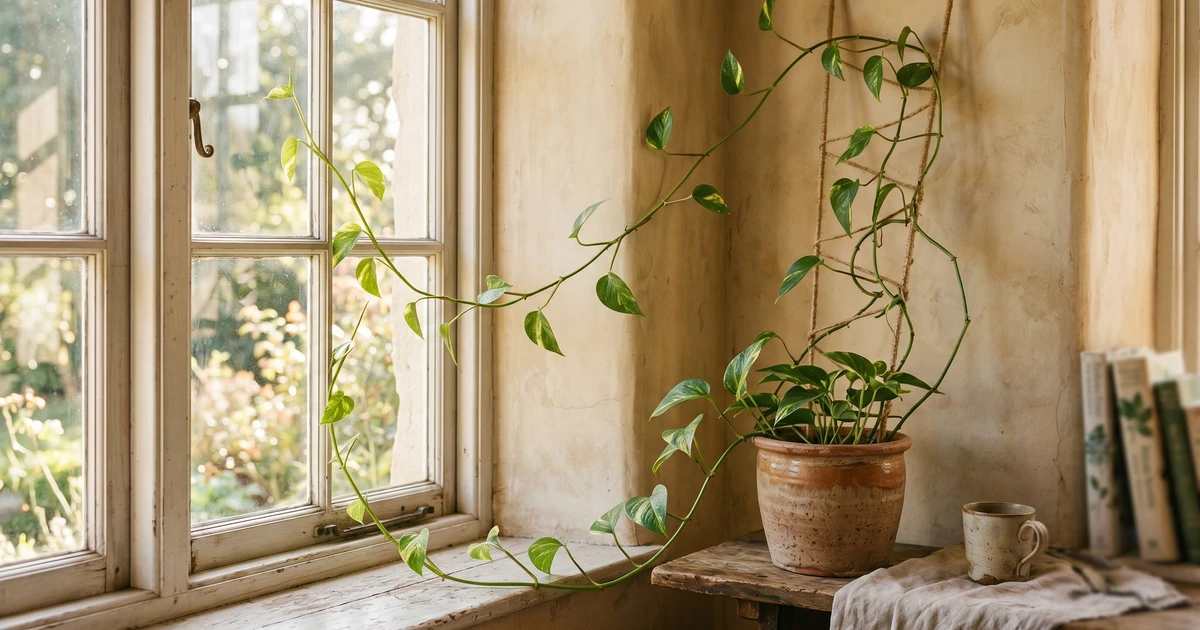
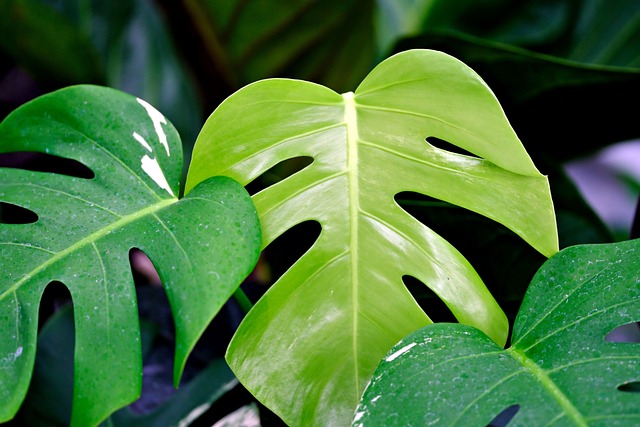
monstera deliciosa
Monstera deliciosa
Also known as: Swiss Cheese Plant, Split Leaf Philodendron
A climbing evergreen native to tropical forests of southern Mexico.
Care Essentials
Get to Know Your Monstera Deliciosa
A climbing evergreen native to tropical forests of southern Mexico.
Light
bright indirect
Requires bright, indirect light to develop fenestrations. Avoid harsh direct sun.
💡 Grow lights: Thrives under artificial grow lights (LED or fluorescent, 10-12 hours/day). A great option if your space lacks natural light.
Watering
weekly
Water weekly. Look for: drooping leaves, top 2 inches of soil feel dry.
Humidity & Temperature
Prefers 50-80% humidity. Average home humidity usually works fine, but give it a boost in winter when heating dries the air.
Comfortable between 65-85°F. Keep away from cold drafts and heating vents.
Soil
Well-draining aroid mix with perlite, orchid bark, and worm castings.
Care Requirements
At a Glance
bright indirect
Requires bright, indirect light to develop fenestrations. Avoid harsh direct sun.
Water weekly
Drooping leaves, top 2 inches of soil feel dry.
50-80% Humidity
Ideal temperature: 65-85F
Well-draining aroid mix with perlite, orchid bark, and worm castings.
Growth rate: fast
The #1 Mistake
Watering issues account for 13% of Monstera Deliciosa problems in our database (16 of 120 documented cases). Most failures trace back to watering on a schedule rather than checking soil moisture.
Go Deeper
Monstera Mastery Pack
The complete protocol: advanced care, seasonal calendars, and rescue modules. Everything on this page, plus video walkthroughs.
Start Here
Most Common Problems
Based on 120 analyzed cases — these are the issues you're most likely to encounter
Don't see your symptom? Search all 82 topics below, or run the Diagnostic.
Should I be concerned about my Monstera Deliciosa's aerial roots?
Aerial roots in Monstera deliciosa serve dual roles: structural support and...
Why does my Monstera Deliciosa have thrips?
Thrips (Thysanoptera) utilize a 'punch-and-suck' mechanism to rasp leaf tissue,...
How do I set up a moss pole for my Monstera Deliciosa?
Proper moss pole installation for Monstera deliciosa encourages vertical...
Why are my Monstera Deliciosa leaves turning yellow?
Yellowing in Monstera deliciosa primarily stems from root oxygen deprivation...
Why does my Monstera Deliciosa have root rot?
Root rot in Monstera deliciosa typically occurs from Pythium species or other...
Which of the 7 Killers
is threatening your plants?
We analyzed 1,616 documented plant deaths to identify the 7 causes behind 78% of all losses. Answer 5 questions — we'll tell you exactly which ones apply to your setup.
Skip the quiz — get The 7 Killers course ($19) →Question 1 of 5
How do you decide when to water your plants?
Question 2 of 5
Where do most of your plants live?
Question 3 of 5
What's your home environment like?
Question 4 of 5
Have you lost a plant in the last 6 months?
Question 5 of 5
How often do you check your plants for pests?
Your diagnosis is ready
We've identified your top 2 risk killers. Enter your email to see the full breakdown and your personalized rescue protocol.
Your plants are most at risk from:

The 7 Killers mini-course covers every one of these in depth — mechanism, rescue protocol, prevention. 1,616 cases. 7 lessons. $19.
Get The 7 Killers — $19 →Get the Plant Mortality Checklist
The 7 killers behind 78% of houseplant deaths — and the exact fix for each. Free PDF based on 1,616 documented cases.
Your checklist is ready!
We also sent it to your inbox. Check your email for the full download.
Open the ChecklistFree. No spam. Unsubscribe anytime.
Verified Data
All Diagnoses
82 topics consolidated from 120 documented cases. Expand any topic to see all protocols.
Symptoms (8 topics · 12 cases)
What disease does my Monstera Deliciosa have?
Bacterial leaf spot in Monstera deliciosa is caused by pathogens like Xanthomonas or Pseudomonas bacteria that enter through natural openings or wounds on leaves
87%
What disease does my Monstera Deliciosa have?
Bacterial leaf spot in Monstera deliciosa is caused by pathogens like Xanthomonas or Pseudomonas bacteria that enter through natural openings or wounds on leaves
Cause
Bacterial leaf spot in Monstera deliciosa is caused by pathogens like Xanthomonas or Pseudomonas bacteria that enter through natural openings or wounds on leaves. The disease manifests as water-soaked lesions that expand into brown or black spots, often surrounded by yellow halos. Unlike fungal issues, bacterial spots are typically angular and bounded by leaf veins. The bacteria spread via splashing water, contaminated tools, or hands touching wet foliage. High humidity above 70% combined with poor air circulation creates favorable conditions for bacterial proliferation. Monstera's large, textured leaves retain moisture longer, increasing infection risk.
Solutions
- Confirm diagnosis: bacterial spots are water-soaked, angular, and have yellow halos
- Immediately remove and destroy infected leaves - do not compost
- Isolate affected plant from other houseplants to prevent spread
- Avoid overhead watering; water only at soil level
- Improve air circulation with gentle fan (not directly on plant)
- Apply copper-based bactericide following label instructions
- Sanitize all tools and hands after handling infected plant
- Monitor for 3-4 weeks; if spots continue spreading, consider discarding plant
- Avoid misting or high humidity until infection is resolved
Prevention
Water at soil level, avoiding wetting foliage. Provide good air circulation with fans or spacing between plants. Sanitize pruning tools between plants with 70% alcohol. Avoid handling plants when foliage is wet. Quarantine new plants for 2 weeks. Remove infected leaves promptly at first sign.
Why do my Monstera Deliciosa leaves have brown tips?
Brown leaf tips in Monstera typically indicate low humidity or inconsistent watering
89%
Why do my Monstera Deliciosa leaves have brown tips?
Brown leaf tips in Monstera typically indicate low humidity or inconsistent watering
Cause
Brown leaf tips in Monstera typically indicate low humidity or inconsistent watering. Monstera deliciosa is native to tropical rainforests with 70-90% humidity. Indoor heating reduces humidity to 30-40%, causing moisture loss from leaf margins. Unlike overwatering (which causes yellowing), underwatering causes crispy brown tips starting from the leaf edge inward. Research shows Monstera's aerial roots have suberized transpiration barriers that help conserve water (PMID 35988126).
Solutions
- Increase humidity to 60-70%—use humidifier, pebble tray, or group plants
- Water thoroughly when top 2 inches of soil are dry
- Trim brown tips with clean scissors—cut at an angle following natural leaf shape
- Avoid placing near heating vents or air conditioning
- Mist leaves 2-3x weekly as supplemental humidity
- Bottom water occasionally to ensure full soil hydration
Prevention
Maintain 60%+ humidity year-round. Water consistently when top 2 inches dry. Group plants to create microclimate. Use humidity tray or humidifier.
What are these brown spots on my Monstera Deliciosa?
Brown spots on Monstera deliciosa leaves arise from multiple distinct causes requiring differential diagnosis
2 protocols
88–89%
What are these brown spots on my Monstera Deliciosa?
Brown spots on Monstera deliciosa leaves arise from multiple distinct causes requiring differential diagnosis
Protocol 1: brown spots · 89% confidence
Cause
Brown spots on Monstera deliciosa leaves arise from multiple distinct causes requiring differential diagnosis. MECHANICAL DAMAGE to tender new leaves during unfurling causes irregular brown patches with torn tissue—common when leaves contact pot edges, walls, or other plants. WATER DROPLET LENS BURN creates circular burn marks when water droplets on leaves magnify sunlight, especially in white-variegated sectors. FUNGAL/BACTERIAL SPOTS from overwatering present as water-soaked lesions that expand into brown spots with yellow halos, often in leaf centers. Each cause requires different prevention and treatment strategies.
Solutions
- Identify the pattern: Torn/irregular patches = mechanical damage; Circular spots = lens burn; Water-soaked expanding spots = pathogen
- For mechanical damage: Trim affected areas with sterile scissors; reposition plant away from contact points
- For lens burn: Stop misting immediately; switch to humidity trays; trim damaged tissue
- For suspected pathogens: Isolate plant, remove affected leaves, improve air circulation, allow soil to dry completely
- If spots spread rapidly: Apply copper fungicide as preventive measure; repot in fresh sterile mix if soil is waterlogged
Prevention
Handle new growth carefully—unfurled leaves are extremely tender for 2-3 weeks. Avoid misting; use pebble trays or humidifiers instead. Never leave water droplets on leaves in bright light. Maintain proper watering schedule—only when top 2-3 inches are dry. Space plants 12+ inches apart to prevent leaf contact damage. Water at soil level to avoid leaf wetting.
Protocol 2: brown spots · 88% confidence
Cause
Brown spots on Monstera deliciosa leaves typically result from thrips infestation (Thysanoptera) or mechanical damage to developing tissue. Thrips are tiny sap-sucking insects that pierce leaf cells, causing characteristic silvery stippling that necrotizes into brown spots with black fecal specks. Developing and unfurling leaves are particularly vulnerable due to thin, delicate cell walls. Mechanical damage occurs from rough handling, tight plant ties, or abrasion during growth. Unlike bacterial leaf spot, thrips damage appears scattered across the leaf surface rather than following veins.
Solutions
- Immediately quarantine affected plant to prevent spread to collection
- Inspect leaves with magnifying glass, focusing on undersides and midribs for tiny brown insects
- Wash all leaves thoroughly with lukewarm water to dislodge thrips and frass
- Apply neem oil or insecticidal soap weekly for 3-4 weeks to disrupt lifecycle
- Remove severely damaged leaves at base to redirect plant energy
- Increase humidity to 60-80% via humidifier to deter thrips which prefer dry conditions
Prevention
Quarantine new plants for 2-4 weeks before introducing to collection. Maintain 60-80% humidity with good air circulation. Inspect new growth weekly during spring/summer. Use yellow sticky traps for early detection. Handle plants gently, avoiding contact with unfurling leaves.
Why do my Monstera Deliciosa leaves have brown tips?
Brown leaf tips on Monstera deliciosa result from low ambient humidity (below 50%) causing marginal necrosis, fluoride/chlorine toxicity from tap water accumulating in leaf margins, or thrips infestation creating stippling damage that progresses to browning - diagnosis requires checking undersides for pests and water quality
90%
Why do my Monstera Deliciosa leaves have brown tips?
Brown leaf tips on Monstera deliciosa result from low ambient humidity (below 50%) causing marginal necrosis, fluoride/chlorine toxicity from tap water accumulating in leaf margins, or thrips infestation creating stippling damage that progresses to browning - diagnosis requires checking undersides for pests and water quality
Cause
Brown leaf tips on Monstera deliciosa result from low ambient humidity (below 50%) causing marginal necrosis, fluoride/chlorine toxicity from tap water accumulating in leaf margins, or thrips infestation creating stippling damage that progresses to browning - diagnosis requires checking undersides for pests and water quality
Solutions
- Trim affected tips: Use clean scissors to cut along natural leaf shape, removing only brown portions
- Switch water source: Use filtered, distilled, or rainwater; let tap water sit 24 hours to dissipate chlorine
- Increase humidity: Install humidifier maintaining 60-80% RH or use pebble trays with water below pebbles
- Check for thrips: Examine leaf undersides with 10x magnifier for silvery patches, black frass, or moving insects
- If thrips present: Apply insecticidal soap or neem oil weekly for 3-4 weeks; isolate plant
- Flush soil: Run 2-3 pot volumes of filtered water through soil monthly to leach excess salts from fertilizer or tap water
Prevention
Maintain 60-80% humidity via humidifier, pebble tray, or plant grouping; use filtered, distilled, or rainwater; flush soil monthly with plain water to remove salt buildup; quarantine new plants; inspect leaf undersides weekly with magnifying glass
Why is my Monstera Deliciosa wilting?
Drooping leaves in Monstera deliciosa have multiple causes: overwatering/root rot causes squishy, translucent leaves as roots fail to uptake water; underwatering causes slack, flexible leaves that lose stiffness; mechanical drooping occurs when mature heavy leaves naturally bend under their own weight; low light causes etiolation and weak growth unable to support leaves
87%
Why is my Monstera Deliciosa wilting?
Drooping leaves in Monstera deliciosa have multiple causes: overwatering/root rot causes squishy, translucent leaves as roots fail to uptake water; underwatering causes slack, flexible leaves that lose stiffness; mechanical drooping occurs when mature heavy leaves naturally bend under their own weight; low light causes etiolation and weak growth unable to support leaves
Cause
Drooping leaves in Monstera deliciosa have multiple causes: overwatering/root rot causes squishy, translucent leaves as roots fail to uptake water; underwatering causes slack, flexible leaves that lose stiffness; mechanical drooping occurs when mature heavy leaves naturally bend under their own weight; low light causes etiolation and weak growth unable to support leaves
Solutions
- Diagnose by feel: Squishy leaves = root rot; Slack/flexible leaves = underwatering; Firm but bent = mechanical or light issue
- For root rot: Remove from pot, trim rotten roots, repot in dry mix, withhold water 2-4 weeks
- For underwatering: Give thorough soak until water drains; leaves firm up in 24-48 hours
- For mechanical drooping: Provide support stakes or trellis; or prune tall heavy leaves
- For low light: Move to brighter indirect light location gradually
- Check for cold drafts: Monsteras dislike temperatures below 50°F (10°C)
- Support mature plants: Use stakes or moss poles to distribute leaf weight
Prevention
Use well-draining soil with 30-50% perlite; water only when top 2-3 inches are bone dry; provide bright indirect light; use support stakes for tall mature plants; maintain consistent environment avoiding temperature fluctuations; choose appropriately sized pots matching root ball
Why are my Monstera Deliciosa leaves turning yellow?
Yellowing lower leaves on Monstera deliciosa with scattered black spots indicates secondary infection following physical damage, cold stress, or pest attack
85%
Why are my Monstera Deliciosa leaves turning yellow?
Yellowing lower leaves on Monstera deliciosa with scattered black spots indicates secondary infection following physical damage, cold stress, or pest attack
Cause
Yellowing lower leaves on Monstera deliciosa with scattered black spots indicates secondary infection following physical damage, cold stress, or pest attack. The black spots are opportunistic fungi (Alternaria, Colletotrichum) colonizing weakened tissue. Yellowing spreads from wound sites as the plant redirects nutrients away from compromised leaves.
Solutions
- Remove affected leaves at base to prevent spore spread
- Spray remaining foliage with copper-based fungicide or neem oil
- Address underlying cause: check for pests, physical damage, or temperature stress
- Improve air circulation around plant to reduce fungal humidity requirements
- Avoid wetting leaves when watering to prevent further fungal colonization
- Monitor for 3-4 weeks; if spots appear on new leaves, systemic fungicide may be needed
Prevention
Avoid mechanical damage during repotting or moving. Maintain temperatures above 60°F. Inspect weekly for pest damage that creates entry points for fungi.
Why is my Monstera Deliciosa wilting?
Wilting in Monstera deliciosa indicates root dysfunction preventing water uptake despite adequate soil moisture; causes include root rot from overwatering (mushy black roots), severely dry soil (dehydration), or physical root damage during repotting - distinguishing the cause is critical as treatments are opposite
89%
Why is my Monstera Deliciosa wilting?
Wilting in Monstera deliciosa indicates root dysfunction preventing water uptake despite adequate soil moisture; causes include root rot from overwatering (mushy black roots), severely dry soil (dehydration), or physical root damage during repotting - distinguishing the cause is critical as treatments are opposite
Cause
Wilting in Monstera deliciosa indicates root dysfunction preventing water uptake despite adequate soil moisture; causes include root rot from overwatering (mushy black roots), severely dry soil (dehydration), or physical root damage during repotting - distinguishing the cause is critical as treatments are opposite
Solutions
- Check soil moisture immediately: Insert finger 2-3 inches deep
- If soil is dry: Water thoroughly until water drains from bottom; leaves should perk within 24 hours
- If soil is wet: Unpot and inspect roots immediately for rot
- For root rot: Trim all black, mushy, or foul-smelling roots with sterile shears
- Treat cut surfaces: Apply hydrogen peroxide or cinnamon to disinfect
- Repot in fresh dry mix if rot present; wait 3-5 days before first watering
- For recent repotting: Be patient as roots recover from transplant shock; maintain consistent moisture
Prevention
Use well-draining aroid mix with perlite and bark; maintain consistent watering allowing top 2 inches to dry; avoid oversized pots that retain excess moisture; handle roots gently during repotting; ensure pots have drainage holes and are never left sitting in water
Why are my Monstera Deliciosa leaves turning yellow?
Yellowing in Monstera deliciosa primarily stems from root oxygen deprivation caused by overwatering
4 protocols
87–92%
Why are my Monstera Deliciosa leaves turning yellow?
Yellowing in Monstera deliciosa primarily stems from root oxygen deprivation caused by overwatering
Protocol 1: yellow leaves · 92% confidence
Cause
Yellowing in Monstera deliciosa primarily stems from root oxygen deprivation caused by overwatering. As an epiphytic aroid, Monstera requires well-aerated, chunky soil mimicking its natural tropical understory habitat. Excess moisture creates anaerobic conditions where beneficial aerobic bacteria die off and anaerobic pathogens proliferate, impairing root function and preventing nutrient uptake. Chlorosis begins in older lower leaves as the plant mobilizes nitrogen from senescing tissue to support new growth. Root rot from Pythium or Phytophthora may follow if soil remains saturated beyond 7 days.
Solutions
- Assess soil moisture using finger test or moisture meter 2-3 inches deep; water only when fully dry
- Inspect roots by gently unpotting; trim any black, mushy, or foul-smelling roots with sterile shears
- Treat cut surfaces with 3% hydrogen peroxide solution to disinfect
- Repot in fresh aroid mix: 50% potting soil, 30% perlite, 20% orchid bark for optimal drainage
- Adjust watering frequency to 7-10 day intervals, using pot weight as secondary indicator
- Maintain 60-80% humidity via pebble trays or humidifier to reduce transpiration stress
Prevention
Water only when top 2-3 inches of soil are completely dry. Use terra cotta pots or containers with drainage holes. Maintain bright indirect light (2000-5000 lux) to drive transpiration. Reduce watering frequency by 50% in winter when growth slows. Never let pot sit in standing water.
Protocol 2: overwatering yellow leaves · 91% confidence
Cause
Monstera deliciosa is an epiphytic aroid evolved for tropical canopy conditions with rapid drainage and intermittent moisture. When soil remains saturated for 7+ days, anaerobic bacteria (Pythium, Erwinia spp.) colonize fine root hairs, blocking water and nutrient uptake. This triggers leaf chlorosis starting at tips and spreading across multiple leaves simultaneously. The confusion arises because overwatering is about frequency, not volume—even 'moderate' moisture maintained constantly creates hypoxic conditions below 2mg/L dissolved oxygen that the root system cannot survive.
Solutions
- Confirm diagnosis: Insert finger 2-3 inches deep or use moisture meter—soggy soil confirms overwatering, not underwatering
- Immediate cessation: Stop all watering for 10-14 days; improve air circulation to accelerate soil drying
- Surgical intervention: Unpot plant, rinse roots under lukewarm water, trim ALL black/mushy/foul-smelling roots with sterilized scissors
- Sterilization bath: Soak remaining roots in 3% hydrogen peroxide solution (1:1 with water) for 20 minutes to oxygenate tissue and kill anaerobic pathogens
- Repotting: Use fresh chunky aroid mix (50% potting soil, 30% perlite, 20% orchid bark) in terracotta pot with drainage holes
- Recovery monitoring: Resume watering only when top 50% of soil is completely dry; expect 4-8 week recovery before new growth emerges
Prevention
Adopt 'soak and dry' methodology: water thoroughly until drainage exits bottom, then allow top 2-3 inches to dry completely before next watering. Use terracotta pots for moisture wicking, maintain bright indirect light (6-8+ hours) to support transpiration, and calibrate frequency to environmental conditions—typically 10-14 days indoors in moderate humidity.
Protocol 3: yellow leaves · 91% confidence
Cause
Yellowing leaves in Monstera deliciosa stem from two distinct mechanisms that must be differentiated for proper treatment. NATURAL SENESCENCE occurs as the plant ages—oldest, smallest bottom leaves yellow over 2-3 months as nutrients are remobilized to support new growth. This is normal and healthy, affecting only one leaf at a time. OVERWATERING/OXYGEN STRESS causes rapid yellowing (within days) of multiple leaves due to anaerobic root conditions that impair nutrient uptake. Additional diagnostic markers: overwatering produces accompanying brown tips, thin floppy texture, and potential fungus gnats, while senescence shows uniform yellowing without other symptoms.
Solutions
- Distinguish the cause: Single oldest leaf = natural senescence; Multiple leaves rapidly yellowing = overwatering
- For natural senescence: Allow leaf to fully yellow, then snip at base with sterilized scissors
- For overwatering: Stop watering immediately, check soil moisture at 2-3 inch depth
- If soil is soggy: Unpot, trim any mushy roots, repot in fresh dry mix, water only after 1 week
- Remove severely yellowed leaves to redirect energy to healthy growth
- Resume watering only when soil is completely dry throughout top 3 inches
Prevention
Water only when top 2-3 inches of soil are completely dry—use finger test or moisture meter. Use chunky aroid mix with 30% perlite for drainage. Maintain 60-80% humidity to reduce water needs. Ensure pot has drainage holes and soil is never waterlogged. Avoid automated watering systems that create fixed schedules regardless of soil conditions.
Protocol 4: yellow leaves black spots · 87% confidence
Cause
Yellowing leaves with black spots on Monstera deliciosa typically indicate advanced root rot or bacterial leaf spot. Black, water-soaked lesions surrounded by yellow halos suggest bacterial infection (Xanthomonas or Pseudomonas), while uniform yellowing with scattered black spots indicates fungal root rot progressing to foliage. Both conditions result from excess moisture.
Solutions
- Isolate plant to prevent bacterial spread to other specimens
- Remove severely affected leaves at base with sterile shears
- For bacterial spot: apply copper-based fungicide weekly for 3 weeks
- For root rot: unpot, trim black roots, treat with hydrogen peroxide, repot in fresh dry mix
- Improve air circulation with small fan near plants
- Allow soil surface to dry between waterings during treatment period
Prevention
Water only when top 2-3 inches of soil dry completely. Avoid overhead watering that wets foliage. Ensure good air circulation between plants. Use clean, sterilized tools when pruning.
Diseases (7 topics · 10 cases)
What disease does my Monstera Deliciosa have?
Bacterial Leaf Spot (e
85%
What disease does my Monstera Deliciosa have?
Bacterial Leaf Spot (e
Cause
Bacterial Leaf Spot (e.g., Pseudomonas or Xanthomonas) often appears as water-soaked black spots that spread rapidly, frequently following a period of overwatering or high humidity. Bacteria enter through stomata or mechanical wounds and multiply in the intercellular spaces.
Solutions
- 1. Immediately isolate the plant and reduce ambient humidity below 50%.
- 2. Trim affected leaves using a 1-inch margin of healthy tissue to ensure removal of the bacterial colony.
- 3. Wipe the remaining foliage with a mild bicarbonate soda solution (1 tsp per quart) to shift surface pH.
Prevention
Ensure soil pH is between 5.5 and 7.0 to maintain optimal plant immunity and avoid over-saturation.
What disease does my Monstera Deliciosa have?
Fungal rust or leaf spot (e
90%
What disease does my Monstera Deliciosa have?
Fungal rust or leaf spot (e
Cause
Fungal rust or leaf spot (e.g., Puccinia) manifests as small brown/black spots with yellow halos, often triggered by stagnant air and wet leaves. Copper ions disrupt fungal enzymes and proteins, effectively halting the spread of the infection across the leaf surface.
Solutions
- 1. Remove severely infected leaves and dispose of them (do not compost).
- 2. Spray the remaining leaves with a copper-based fungicide, covering both sides.
- 3. Wipe down stems and petioles with a diluted copper solution to eliminate surface spores.
Prevention
Improve air circulation with a fan and avoid misting foliage directly.
What is the best soil mix for Monstera Deliciosa?
Moldy soil on Monstera deliciosa results from prolonged surface moisture creating anaerobic conditions ideal for saprophytic fungal growth; triggered by overwatering, poor airflow, compacted organic-rich soil, or high humidity without proper drainage - these fungi decompose organic matter but signal conditions conducive to root rot
90%
What is the best soil mix for Monstera Deliciosa?
Moldy soil on Monstera deliciosa results from prolonged surface moisture creating anaerobic conditions ideal for saprophytic fungal growth; triggered by overwatering, poor airflow, compacted organic-rich soil, or high humidity without proper drainage - these fungi decompose organic matter but signal conditions conducive to root rot
Cause
Moldy soil on Monstera deliciosa results from prolonged surface moisture creating anaerobic conditions ideal for saprophytic fungal growth; triggered by overwatering, poor airflow, compacted organic-rich soil, or high humidity without proper drainage - these fungi decompose organic matter but signal conditions conducive to root rot
Solutions
- Gently scrape off visible mold from soil surface with spoon or gloves; discard in sealed bag
- Apply 1% hydrogen peroxide solution (1 part 3% H2O2 mixed with 2 parts water) to soil surface
- Repeat H2O2 application every 3-5 days for 2 weeks, allowing soil to dry between treatments
- Disturb topsoil weekly with chopstick to improve aeration and prevent spore regrowth
- Allow top 2-3 inches of soil to dry completely before next watering
- If mold persists, repot in fresh sterile aroid mix and sterilize pot with 10% bleach solution
Prevention
Use well-draining aroid mix with perlite and bark; maintain 40-60% humidity with good air circulation; water only when top 2 inches of soil are dry; ensure pots have drainage holes; top-dress with sterile perlite or sand to reduce surface moisture retention
Monstera Deliciosa: Petiole Rot
Burying petioles (the stalks connecting leaves to the main stem) below the soil line leads to localized rot due to poor aeration and constant moisture contact
90%
Monstera Deliciosa: Petiole Rot
Burying petioles (the stalks connecting leaves to the main stem) below the soil line leads to localized rot due to poor aeration and constant moisture contact
Cause
Burying petioles (the stalks connecting leaves to the main stem) below the soil line leads to localized rot due to poor aeration and constant moisture contact. This often manifests as yellowing starting from the base of the newest or lowest leaves, even when the root system is healthy.
Solutions
- Remove excess soil until the base of all petioles and the main stem/node are fully exposed to air.
- If rot is present on the petiole, trim the affected leaf to prevent spread to the main node.
- Treat exposed stem area with a diluted hydrogen peroxide spray to disinfect.
Prevention
Ensure the plant is potted with the main stem sitting on top of the substrate; use support stakes for stability rather than deep planting.
Why does my Monstera Deliciosa have root rot?
Root rot in Monstera deliciosa typically occurs from Pythium species or other water molds that thrive in waterlogged, anaerobic soil conditions
4 protocols
88–92%
Why does my Monstera Deliciosa have root rot?
Root rot in Monstera deliciosa typically occurs from Pythium species or other water molds that thrive in waterlogged, anaerobic soil conditions
Protocol 1: root rot surgery · 92% confidence
Cause
Root rot in Monstera deliciosa typically occurs from Pythium species or other water molds that thrive in waterlogged, anaerobic soil conditions. Research has identified coronamycin-producing Streptomyces endophytes in Monstera species that provide some natural antifungal resistance, but overwatering overwhelms these defenses. Infected roots turn black, mushy, and emit a foul odor as cortical tissue decays.
Solutions
- Remove plant from pot and gently shake off soil to expose root system
- Trim all black, mushy, or foul-smelling roots with sterile pruning shears—continue cutting until only white/cream firm tissue remains
- Rinse remaining roots in hydrogen peroxide solution (1:4 ratio) for 3-5 minutes to disinfect
- Let roots air dry for 1-2 hours in a shaded area
- Repot in fresh, dry, well-draining aroid mix (orchid bark, perlite, potting soil)
- Wait 7-10 days before watering to allow root wounds to callus
Prevention
Use pots with drainage holes. Allow top 2-3 inches of soil to dry between waterings. Use chunky, well-draining aroid mix. Empty drainage saucers promptly. Reduce watering frequency in winter.
Protocol 2: root rot · 90% confidence
Cause
Root rot in Monstera deliciosa results from anaerobic soil conditions—typically overwatering, poor drainage, or oversized pots. Pathogens include Pythium, Phytophthora, and Rhizoctonia. Root tissue suffocates and dies, creating entry points for opportunistic fungi. Symptoms: yellowing lower leaves, wilting despite wet soil, foul odor from roots, and black/mushy root tissue. Root rot advances rapidly in heavy, moisture-retentive soils.
Solutions
- Remove plant from pot immediately—gently shake off old soil
- Rinse roots under lukewarm water to inspect fully
- Trim all black, brown, or mushy roots with sterile shears—cut back to firm white tissue
- Disinfect remaining roots: soak in hydrogen peroxide solution (1:4 dilution) for 10 minutes
- Repot in fresh, well-draining aroid mix (50% potting soil, 25% perlite, 25% orchid bark)
- Use appropriately sized pot—only 1-2 inches larger than root ball
- Wait 7-10 days before first watering to allow cut roots to callus
Prevention
Use well-draining aroid mix. Allow top 2 inches of soil to dry between waterings. Ensure pot has drainage holes. Avoid oversized pots.
Protocol 3: root rot · 90% confidence
Cause
Advanced root rot can travel up the stem, necessitating the sacrifice of the root system. Recovery is possible through "wet stick" propagation�using a leafless node that still contains an axillary bud and sufficient energy reserves.
Solutions
- Cut the stem into individual nodes, ensuring each has an axillary bud (the eye).
- Allow cut ends to callous for 24-48 hours (critical for thick-stemmed Monstera).
- Place on a bed of damp sphagnum moss in a high-humidity prop box or plastic bag.
- Provide bright indirect light and keep temps between 70-80�F to trigger bud activation.
Prevention
Use highly aerated substrate (aroid mix) and terracotta pots to prevent anaerobic soil conditions.
Protocol 4: root rot emergency treatment · 88% confidence
Cause
Root rot in Monstera deliciosa occurs when soil remains waterlogged >7 days, creating anaerobic conditions that favor Pythium, Phytophthora, and Rhizoctonia fungi. Infected roots turn black, mushy, and foul-smelling; the root cortex separates easily from the vascular cylinder. Severe cases cause systemic decline visible as yellowing leaves and wilting.
Solutions
- Remove plant from pot and gently shake off soil
- Trim all black, mushy, or foul-smelling roots with sterile pruners
- Disinfect remaining healthy roots in 3% hydrogen peroxide solution for 3 minutes
- Repot in fresh, dry aroid mix in clean pot with drainage
- Withhold water for 7-10 days to allow root callusing
- Reduce light exposure by 30% during recovery to minimize transpiration demands
Prevention
Use aroid potting mix with 40% drainage amendments (perlite, orchid bark, pumice). Ensure pot has multiple drainage holes. Water only when top 2-3 inches of soil are dry.
Monstera Deliciosa: Root Rot Surgery H2o2
Root rot (typically Pythium or Phytophthora) occurs when anaerobic conditions (soil saturation) allow opportunistic fungi to digest the root cortex
95%
Monstera Deliciosa: Root Rot Surgery H2o2
Root rot (typically Pythium or Phytophthora) occurs when anaerobic conditions (soil saturation) allow opportunistic fungi to digest the root cortex
Cause
Root rot (typically Pythium or Phytophthora) occurs when anaerobic conditions (soil saturation) allow opportunistic fungi to digest the root cortex. Hydrogen peroxide (H2O2) releases high concentrations of oxygen on contact, oxidizing fungal cell walls and aerating the root zone.
Solutions
- 1. Unpot the plant and remove all mushy, black, or foul-smelling roots.
- 2. Soak the remaining healthy root system in a 1:3 ratio of 3% hydrogen peroxide and water for 30 minutes.
- 3. Repot in fresh, sterile medium; wait 3 days before watering to allow roots to stabilize.
Prevention
Use a high-porosity aroid mix (50% bark/perlite) and allow the top 2 inches of soil to dry.
Why is my Monstera Deliciosa's stem turning black?
Stem rot in aroids (Philodendron, Monstera) occurs when bacterial or fungal pathogens enter through wounds, leaf abscission points, or prolonged stem wetness
87%
Why is my Monstera Deliciosa's stem turning black?
Stem rot in aroids (Philodendron, Monstera) occurs when bacterial or fungal pathogens enter through wounds, leaf abscission points, or prolonged stem wetness
Cause
Stem rot in aroids (Philodendron, Monstera) occurs when bacterial or fungal pathogens enter through wounds, leaf abscission points, or prolonged stem wetness. Unlike root rot, stem rot affects the vascular cambium layer, interrupting nutrient transport between roots and leaves. The moist, high-humidity environments favored by tropical plants create ideal conditions for pathogen proliferation at stem nodes.
Solutions
- Inspect stem for soft, discolored tissue - healthy stem feels firm and snaps crisply
- Cut 1 inch below visible rot with sterilized blade, ensuring all infected tissue is removed
- Allow cut to callus in dry air for 24-48 hours
- Seal cut with one of: melted candle wax (dip cut end), super glue (thin layer), or cinnamon powder (press into wound)
- For large wounds: Apply grafting wax or pruning sealant for stronger barrier
- Monitor for 2 weeks - new rot indicates incomplete removal; repeat cutting higher
Prevention
Avoid overhead watering that wets stems; maintain 40-60% humidity with airflow to prevent condensation on stems; never allow potting mix to contact stem above soil line; provide spacing between plants to prevent stem-to-stem contact.
Pests (8 topics · 15 cases)
Why does my Monstera Deliciosa have fungus gnats?
Fungus gnats (Bradysia spp
95%
Why does my Monstera Deliciosa have fungus gnats?
Fungus gnats (Bradysia spp
Cause
Fungus gnats (Bradysia spp.) are attracted to the moist, organic-rich soil often used for Monsteras. While adults are a nuisance, the larvae feed on delicate root hairs, potentially opening paths for secondary fungal infections like Pythium.
Solutions
- Apply Mosquito Bits or dunks (containing Bacillus thuringiensis israelensis - BTI) to the soil surface or via "BTI tea" (soaking bits in water before use).
- Allow the top 2-3 inches of soil to dry completely between waterings to kill surface-dwelling larvae.
- Use yellow sticky traps to catch adult gnats and break the breeding cycle.
Prevention
Bottom-water when possible to keep the topsoil dry. Use an airy aroid mix with bark and perlite to prevent the stagnant, soggy conditions gnats prefer.
What pests are on my Monstera Deliciosa?
AArchive literature documents integrated pest management approaches for Monstera deliciosa, combining biological control agents with cultural practices and targeted treatments
76%
What pests are on my Monstera Deliciosa?
AArchive literature documents integrated pest management approaches for Monstera deliciosa, combining biological control agents with cultural practices and targeted treatments
Cause
AArchive literature documents integrated pest management approaches for Monstera deliciosa, combining biological control agents with cultural practices and targeted treatments.
Solutions
- Use predatory mites for spider mite control
- Apply beneficial nematodes for soil-dwelling pests
- Implement cultural controls: humidity management and inspection
- Use targeted insecticidal soaps as last resort
Prevention
Integrated approach combining biological, cultural, and chemical controls reduces pest pressure while minimizing resistance.
Why does my Monstera Deliciosa have mealybugs?
Mealybugs (Pseudococcidae) thrive in the tight crevices of Monstera fenestrations and petiole sheaths
2 protocols
85–86%
Why does my Monstera Deliciosa have mealybugs?
Mealybugs (Pseudococcidae) thrive in the tight crevices of Monstera fenestrations and petiole sheaths
Protocol 1: mealybugs · 86% confidence
Cause
Mealybugs (Pseudococcidae) thrive in the tight crevices of Monstera fenestrations and petiole sheaths. They are often misidentified as white mold or dust.
Solutions
- Dip a cotton swab in 70% isopropyl alcohol and dab directly onto white cottony clusters.
- Spray the plant with a mixture of water, alcohol, and a few drops of dish soap, paying special attention to sheaths and leaf undersides.
- Repeat every 5 days for 3 cycles to catch newly hatched crawlers.
Prevention
Wipe leaves weekly with a damp cloth. Quarantine new plants to avoid introduction.
Protocol 2: mealybugs · 85% confidence
Cause
Mealybugs (Pseudococcidae) are soft-bodied insects that appear as white cottony masses on stems, leaf joints, and undersides. They feed on phloem sap, weakening the plant and excreting honeydew that attracts sooty mold. Root mealybugs attack below soil level. Mealybugs reproduce parthenogenically—females can produce offspring without mating, leading to rapid population explosions.
Solutions
- Quarantine plant immediately—mealybugs spread slowly but steadily
- For small infestations: dab individual bugs with 70% rubbing alcohol on cotton swab
- For larger infestations: spray with insecticidal soap or neem oil every 5-7 days
- For root mealybugs: remove from pot, rinse roots, trim affected areas, repot in fresh soil
- Treat all nearby plants—they spread easily
- Systemic insecticide (imidacloprid) for severe or recurring infestations
Prevention
Quarantine new plants 3-4 weeks. Inspect leaf joints and stem crevices weekly. Avoid over-fertilizing with nitrogen which attracts pests. Maintain good air circulation.
What pests are on my Monstera Deliciosa?
Monstera deliciosa is classified as moderately susceptible to common houseplant pests including spider mites, mealybugs, and thrips
78%
What pests are on my Monstera Deliciosa?
Monstera deliciosa is classified as moderately susceptible to common houseplant pests including spider mites, mealybugs, and thrips
Cause
Monstera deliciosa is classified as moderately susceptible to common houseplant pests including spider mites, mealybugs, and thrips. Large leaf surface area, tropical understory origins, and soft stem tissue create favorable conditions for multiple pest species.
Solutions
- Implement preventive quarantine protocols for 2-4 weeks
- Maintain 50-60% humidity to discourage spider mites
- Inspect weekly, focusing on new growth and leaf undersides
- Use yellow sticky traps for early detection of flying pests
Prevention
Regular inspection, proper humidity management, and quarantine of new plants significantly reduce pest establishment risk.
What pests are on my Monstera Deliciosa?
General pest susceptibility in Monstera deliciosa results from its broad, textured leaves which provide ideal habitat for sap-sucking insects
91%
What pests are on my Monstera Deliciosa?
General pest susceptibility in Monstera deliciosa results from its broad, textured leaves which provide ideal habitat for sap-sucking insects
Cause
General pest susceptibility in Monstera deliciosa results from its broad, textured leaves which provide ideal habitat for sap-sucking insects. Common pests include mealybugs (white cottony masses), scale insects (brown bumps), spider mites (fine webbing), and thrips (silvery stippling). Indoor environments with low humidity, poor air circulation, and overcrowded plants create favorable conditions for pest outbreaks. Monstera's tropical understory origins mean it evolved with natural predators keeping pest populations in check, but indoor isolation removes these biological controls.
Solutions
- Isolate affected plant immediately upon detection
- Identify pest type: mealybugs (white cotton), scale (brown bumps), spider mites (webbing), thrips (silvering)
- For light infestations: wipe leaves with 70% rubbing alcohol on cotton swabs
- For moderate infestations: spray with neem oil or insecticidal soap every 5-7 days for 3-4 weeks
- For severe infestations: use systemic insecticide granules in soil
- Treat all nearby plants preventively even if showing no symptoms
- Increase humidity and airflow to discourage pest reproduction
- Continue monitoring for 2 months after treatment as eggs may hatch
Prevention
Quarantine all new plants for 2-4 weeks. Inspect plants weekly, especially undersides of leaves. Maintain 50-60% humidity to deter spider mites and thrips. Provide good air circulation between plants. Use yellow sticky traps for early detection. Keep leaves clean and dust-free.
What pests are on my Monstera Deliciosa?
Scale insects (Coccoidea) appear as small brown or tan bumps attached to stems and leaf veins
87%
What pests are on my Monstera Deliciosa?
Scale insects (Coccoidea) appear as small brown or tan bumps attached to stems and leaf veins
Cause
Scale insects (Coccoidea) appear as small brown or tan bumps attached to stems and leaf veins. They have a protective waxy coating that shields them while they feed on plant sap. Soft scales excrete honeydew; armored scales do not. Heavy infestations cause yellowing, stunted growth, and leaf drop. Scales often cluster on stems and leaf undersides.
Solutions
- Scrape off visible scales with fingernail or dull blade
- Apply 70% rubbing alcohol with cotton swab to individual scales
- Spray with insecticidal soap or horticultural oil—oils suffocate scales under their coating
- For heavy infestations: use systemic insecticide applied to soil
- Treat every 7-10 days for 4-6 weeks—scales are persistent
- Remove heavily infested leaves if population is localized
Prevention
Inspect new plants thoroughly, especially stems. Wipe leaves and stems monthly. Maintain plant vigor—stressed plants are more susceptible.
Why does my Monstera Deliciosa have spider mites?
Spider mites (Tetranychidae) are tiny arachnids that thrive in hot, dry conditions below 40% humidity, feeding on Monstera deliciosa leaf sap through piercing-sucking mouthparts
90%
Why does my Monstera Deliciosa have spider mites?
Spider mites (Tetranychidae) are tiny arachnids that thrive in hot, dry conditions below 40% humidity, feeding on Monstera deliciosa leaf sap through piercing-sucking mouthparts
Cause
Spider mites (Tetranychidae) are tiny arachnids that thrive in hot, dry conditions below 40% humidity, feeding on Monstera deliciosa leaf sap through piercing-sucking mouthparts. Damage appears as stippling - tiny yellow or white dots across leaf surfaces - progressing to fine webbing on leaf undersides and stems as populations explode. Mites reproduce rapidly in warm, dry indoor environments, completing a generation in 5-7 days. Unlike insects, they are resistant to standard insecticides and require specific miticides or suffocation treatments.
Solutions
- Isolate infested plant immediately to prevent spread throughout collection
- Increase humidity to 60-80% - spider mites cannot reproduce effectively above 50% humidity
- Shower entire plant with lukewarm water, focusing on leaf undersides to dislodge mites
- Apply neem oil, horticultural oil, or insecticidal soap every 3-5 days for 3 weeks
- For severe infestations: use Bonide Systemic granules or chemical miticide
- Place yellow sticky traps nearby to catch flying adults and monitor population
- Continue treatment for minimum 4 weeks even after visible mites disappear
Prevention
Maintain humidity above 50% using humidifiers or pebble trays. Wipe leaves monthly with damp cloth to remove dust and early mites. Inspect new plants with magnifying glass before adding to collection. Keep plants well-spaced for air circulation. Shower plants occasionally to dislodge mites.
Why does my Monstera Deliciosa have thrips?
Thrips (Thysanoptera) utilize a 'punch-and-suck' mechanism to rasp leaf tissue, leaving silvery scars and black frass specks
7 protocols
86–95%
Why does my Monstera Deliciosa have thrips?
Thrips (Thysanoptera) utilize a 'punch-and-suck' mechanism to rasp leaf tissue, leaving silvery scars and black frass specks
Protocol 1: thrips-spinosad-treatment · 95% confidence
Cause
Thrips (Thysanoptera) utilize a 'punch-and-suck' mechanism to rasp leaf tissue, leaving silvery scars and black frass specks. They lay eggs inside the leaf tissue, making them resistant to surface-only treatments. Spinosad (a bacterial metabolite) disrupts their nervous system upon ingestion or contact.
Solutions
- 1. Spray entire plant (top and bottom of leaves) with Spinosad (Captain Jack's Dead Bug Brew) until dripping.
- 2. Repeat application every 5 days for 6 consecutive weeks to catch newly hatched larvae.
- 3. Use yellow sticky traps to monitor adult flight activity and reset the 6-week clock if adults are found.
Prevention
Apply systemic imidacloprid granules to the soil every 8 weeks for consistent vascular protection.
Protocol 2: thrips · 95% confidence
Cause
Thrips have a complex lifecycle (2-3 weeks) where eggs are laid inside leaf tissue, making them invisible to surface wipes. Their microscopic size and preference for hiding in Monstera fenestrations lead to recurring infestations if only treated once.
Solutions
- Isolate the plant immediately to prevent airborne spread.
- Wash leaves thoroughly every 2 days to dislodge adults and larvae.
- Apply treatment (Neem oil, insecticidal soap, or systemic granules) weekly for a MINIMUM of 6 consecutive weeks to catch all hatching generations.
- Avoid direct sun after Neem application to prevent phytotoxicity.
Prevention
Quarantine new plants for 4 weeks. Maintain high humidity (60%+) and strong airflow, which deter thrips colonization.
Protocol 3: thrips treatment · 92% confidence
Cause
Thrips infestation on Monstera deliciosa appears as silvery or translucent patches, black fecal specks (frass), and distorted new growth from rasping mouthparts feeding on leaf tissue; thrips thrive in dry indoor conditions and reproduce rapidly with 2-3 week lifecycles
Solutions
- Isolate infected plant immediately to prevent spread to collection
- Shower entire plant with lukewarm water to dislodge thrips and larvae
- Apply insecticidal soap or spinosad (Captain Jack's Dead Bug Brew) every 5-7 days for 4-6 weeks to break lifecycle
- For severe infestations, use systemic granules containing imidacloprid in soil
- Deploy blue or yellow sticky traps near plants to monitor and catch adult thrips
- Increase humidity to 60%+ via humidifier - thrips prefer dry conditions
- Prune heavily damaged leaves to remove eggs and larvae hiding in tissue
Prevention
Quarantine new plants for 2-4 weeks; maintain 60-80% humidity which thrips dislike; use yellow/blue sticky traps for early detection; inspect new growth weekly with magnifying glass; isolate any suspected plants immediately
Protocol 4: thrips infestation · 91% confidence
Cause
Thrips (Thysanoptera) feed on Monstera deliciosa by rasping leaf cells and sucking sap, causing silvery stippling, distorted new growth, and black frass specks. These minute insects (1-2mm) reproduce rapidly in warm, dry indoor conditions and can spread via air currents to nearby plants.
Solutions
- Isolate infected plant immediately to prevent spread
- Shower leaves with lukewarm water to dislodge adult thrips and larvae
- Apply insecticidal soap or spinosad (Captain Jack's Dead Bug Brew) covering leaf undersides
- Treat every 5-7 days for 4 cycles to break lifecycle
- For severe infestations: apply systemic granules (Bonide) to soil per label directions
- Prune heavily damaged leaves to improve visibility for monitoring
Prevention
Maintain 50-60% humidity as thrips prefer dry conditions. Inspect new plants for 14 days before introducing to collection. Use yellow sticky traps as early warning monitors.
Protocol 5: thrips-systemic-control · 90% confidence
Cause
Thrips are highly mobile and can hide in soil or tight crevices. Surface sprays alone often fail because they don't address the eggs embedded in leaf tissue or larvae in the substrate. Systemic insecticides are absorbed by the Monstera's roots and distributed through the sap, providing 24/7 protection.
Solutions
- 1. Sprinkle Imidacloprid granules (Bonide Systemic) on the soil surface at the recommended dose.
- 2. Water the plant thoroughly to activate the granules and allow the roots to absorb the chemical.
- 3. Maintain the treatment for 2-3 months to ensure the entire population is eliminated as it feeds.
Prevention
Quarantine new plants for 4 weeks and perform a preventative systemic treatment.
Protocol 6: thrips · 87% confidence
Cause
Thrips (Thysanoptera) rasp leaf tissue and suck sap, causing silvery stippling, black frass specks, and stunted distorted new growth. Thrips thrive in dry, warm conditions and reproduce rapidly. They are particularly attracted to Monstera's large, tender new leaves. Damage appears on newest growth first—older leaves may be untouched while unfurling leaves show distortion.
Solutions
- Isolate infected plant immediately—thrips fly and spread rapidly
- Shower entire plant (including undersides) to dislodge thrips and frass
- Apply spinosad (Captain Jack's Dead Bug Brew) or insecticidal soap every 5-7 days for 4-6 weeks
- Use yellow sticky traps near plant to catch flying adults
- For severe infestations: systemic insecticide (imidacloprid) applied to soil
- Increase humidity to 60%+—thrips prefer dry conditions
Prevention
Quarantine new plants 3-4 weeks. Use yellow sticky traps as early detection. Maintain 60%+ humidity. Inspect new growth weekly with magnifying glass.
Protocol 7: thrips detection monitoring · 86% confidence
Cause
Thrips are minute insects (1-2mm) that reproduce rapidly in warm indoor environments. Early detection is critical as populations explode exponentially. Yellow sticky traps capture adult winged thrips, revealing presence before visible leaf damage occurs. Monitoring traps weekly enables early intervention.
Solutions
- Place yellow sticky trap horizontally at soil surface or vertically near foliage
- Count captured thrips weekly: 1-2 thrips = early stage; 10+ = established infestation
- If thrips detected: isolate plant, shower leaves, apply insecticidal soap within 24 hours
- Replace sticky traps every 2-3 weeks or when covered with debris
- Use traps as treatment progress monitor: declining catch counts indicate success
- Continue trapping 4-6 weeks after treatment to catch emerging adults
Prevention
Install yellow sticky traps in all Monstera pots. Check traps weekly as part of plant care routine. Maintain 50-60% humidity to deter thrips establishment.
Watering Issues (3 topics · 3 cases)
How often should I water my Monstera Deliciosa?
Monstera deliciosa is sensitive to fluoride, chlorine, and high mineral content in tap water
88%
How often should I water my Monstera Deliciosa?
Monstera deliciosa is sensitive to fluoride, chlorine, and high mineral content in tap water
Cause
Monstera deliciosa is sensitive to fluoride, chlorine, and high mineral content in tap water. These chemicals accumulate in leaf tissue causing tip and margin burn—cells die from toxic accumulation. Hard water minerals also build up in soil creating osmotic stress. Research shows Monstera's aerial roots have specialized transpiration barriers that can be disrupted by chemical stress.
Solutions
- Switch to filtered, distilled, or rainwater for all watering
- Allow tap water to sit uncovered overnight before using
- Flush soil monthly: water thoroughly with plain water, allow to drain completely
- Remove severely damaged leaf portions—trim following natural leaf shape
- Consider repotting in fresh soil if mineral buildup is severe (white crust on soil surface)
Prevention
Use filtered, distilled, or rainwater. If using tap water, let it sit 24 hours to dissipate chlorine. Flush soil monthly with plain water.
How often should I water my Monstera Deliciosa?
Water quality sensitivity in Monstera deliciosa results from its tropical rainforest origins where water is naturally soft and free of chlorine, fluoride, and mineral salts
88%
How often should I water my Monstera Deliciosa?
Water quality sensitivity in Monstera deliciosa results from its tropical rainforest origins where water is naturally soft and free of chlorine, fluoride, and mineral salts
Cause
Water quality sensitivity in Monstera deliciosa results from its tropical rainforest origins where water is naturally soft and free of chlorine, fluoride, and mineral salts. Municipal tap water often contains chlorine (disinfectant), fluoride (added for dental health), calcium, and magnesium that accumulate in soil and leaf tissue over time. These chemicals cause cellular damage, appearing as brown leaf tips and margins, and can create a saline environment that inhibits root function. Hard water minerals also form white crusts on soil surface and pot edges, indicating salt accumulation that can reach toxic levels.
Solutions
- Switch to filtered, distilled, or rainwater immediately upon noticing symptoms
- If tap water must be used: let stand 24 hours in open container to allow chlorine evaporation
- Flush soil monthly: pour 2-3 times pot volume of filtered water through soil and discard runoff
- Remove brown tips with clean scissors, cutting at an angle following natural leaf shape
- Consider repotting in fresh soil if white salt crust is visible on surface
- Use soil meter to check for high soluble salt readings (>1.0 on scale)
- Resume care with filtered water; damaged portions will not recover but new growth should be healthy
- Maintain high humidity to compensate for reduced root efficiency during recovery
Prevention
Use filtered, distilled, or rainwater for watering. If using tap water, let it sit uncovered overnight to dissipate chlorine. Flush soil monthly with filtered water to remove mineral buildup. Empty drainage saucers promptly to prevent mineral reabsorption. Use organic fertilizers instead of chemical salts which add to mineral load.
How often should I water my Monstera Deliciosa?
Improper watering schedules in Monstera deliciosa result from treating it like a conventional potted plant rather than an epiphytic aroid
87%
How often should I water my Monstera Deliciosa?
Improper watering schedules in Monstera deliciosa result from treating it like a conventional potted plant rather than an epiphytic aroid
Cause
Improper watering schedules in Monstera deliciosa result from treating it like a conventional potted plant rather than an epiphytic aroid. Unlike moisture-loving tropicals, Monstera prefers drying cycles between waterings because its epiphytic roots evolved to access water intermittently from rain and humidity. Overwatering - defined as watering too frequently rather than giving too much volume - leads to root rot within 2-3 weeks. Underwatering causes leaf curling, brown crispy tips, and stunted growth. The challenge is that environmental factors (humidity, light, temperature, pot size) dramatically affect evaporation rates.
Solutions
- Perform finger test: insert finger 2-3 inches deep; water only when completely dry
- Use moisture meter as backup confirmation: target 3-4 on scale before watering
- Water thoroughly until excess drains from bottom; never let pot sit in standing water
- Adjust frequency by season: 7-10 days in summer, 14-21 days in winter
- Consider pot material: plastic retains moisture longer than terra cotta
- Monitor after repotting: new soil requires less frequent watering initially
- Use pot weight as secondary indicator: light pot = time to water
Prevention
Water based on soil dryness, not calendar schedules. Check top 2-3 inches of soil with finger test before watering. Use terra cotta pots for faster drying in humid environments. Adjust frequency seasonally - 40% less water in winter. Always use pots with drainage holes.
Environment (3 topics · 7 cases)
Is my Monstera Deliciosa suffering from cold damage?
Cold damage in Monstera deliciosa occurs when temperatures drop below 50°F (10°C), causing cellular rupture in water-storing leaf tissue; symptoms include mushy, softening leaves, browning, and wilting - rhizomes often survive even when leaves appear dead, enabling recovery with proper care
88%
Is my Monstera Deliciosa suffering from cold damage?
Cold damage in Monstera deliciosa occurs when temperatures drop below 50°F (10°C), causing cellular rupture in water-storing leaf tissue; symptoms include mushy, softening leaves, browning, and wilting - rhizomes often survive even when leaves appear dead, enabling recovery with proper care
Cause
Cold damage in Monstera deliciosa occurs when temperatures drop below 50°F (10°C), causing cellular rupture in water-storing leaf tissue; symptoms include mushy, softening leaves, browning, and wilting - rhizomes often survive even when leaves appear dead, enabling recovery with proper care
Solutions
- Move plant immediately to warm location: Bring indoors or move to area above 65°F
- Assess damage: Check leaves for mushy texture and brown/black discoloration indicating freeze damage
- Trim damaged leaves: Remove all mushy, damaged, or dead leaves at the base with sterile shears
- Inspect roots: If roots are firm and white, plant will recover; if black/mushy, trim affected roots
- Repot if needed: Use fresh well-draining soil if roots were damaged
- Withhold water: Do not water for 2-4 weeks during recovery to prevent root rot
- Be patient: New growth from rhizomes can take 1-3 months to appear after cold damage
Prevention
Maintain temperatures between 65-85°F year-round; keep plants away from cold windows, air conditioning vents, and drafty doors during winter; bring outdoor plants indoors before temperatures drop below 55°F; use frost blankets for temporary outdoor protection
Does my Monstera Deliciosa need more humidity?
Monstera deliciosa possesses specialized wax-coated aerial roots that form transpiration barriers critical for water conservation
4 protocols
85–95%
Does my Monstera Deliciosa need more humidity?
Monstera deliciosa possesses specialized wax-coated aerial roots that form transpiration barriers critical for water conservation
Protocol 1: humidity needs · 95% confidence
Cause
Monstera deliciosa possesses specialized wax-coated aerial roots that form transpiration barriers critical for water conservation. Research shows the efficiency of suberized plant/environment interfaces depends not on suberin polymer quantity but on wax molecules sorbed to suberin. Aerial roots of M. deliciosa form reasonable transpiration barriers (permeance 7.4×10⁻¹⁰ to 4.2×10⁻⁹ m·s⁻¹), but these barriers fail when ambient humidity drops below 50%, forcing the plant to draw water from soil roots exclusively.
Solutions
- Increase ambient humidity to 60% minimum using humidifier
- Mist aerial roots weekly to support transpiration barrier function
- Group plants together to create humidity microclimates
- Use pebble trays filled with water beneath pots
- Monitor humidity with hygrometer; adjust seasonally as indoor heating reduces humidity
Prevention
Maintain 60-80% humidity to support aerial root function and reduce stress on the root system. Use humidity trays, group plants together, or employ humidifiers in dry climates.
Protocol 2: humidity-myths · 87% confidence
Cause
1980s-1990s houseplant books recommended misting Monsteras daily for humidity. Research on Monstera deliciosa leaf surface properties (PMID 20709828, 26644508) shows epicuticular waxes form transpiration barriers. Misting provides only temporary humidity increase (15-30 minutes) and can promote bacterial/fungal growth on leaves without addressing root-zone humidity. CAM photosynthesis adaptation allows Monstera to tolerate lower humidity than tropical understory suggests.
Solutions
- For humidity: Use pebble tray with water (pot sits on pebbles, not in water)
- Group humidity-loving plants together to create microclimate
- Use room humidifier set to 40-60% for consistent results
- Avoid misting as primary humidity strategy - effect is too brief
- If misting for cleaning: do in morning so leaves dry before evening
- Sign of low humidity: crispy leaf edges, slow aerial root growth
Prevention
Use pebble trays, humidifiers, or group plants for sustained humidity. Avoid wetting foliage in low-airflow conditions.
Protocol 3: humidity requirements · 86% confidence
Cause
Monstera deliciosa thrives in moderate to high humidity (50-70%) reflecting its tropical rainforest understory origins. Research on suberized plant interfaces shows Monstera's aerial roots and leaves form transpiration barriers through wax molecules (PMID: 35988126), but indoor conditions often lack the moisture levels of its native habitat, causing stress.
Solutions
- Increase humidity to 50-60% using humidifier
- Group plants together to raise local humidity
- Place pot on pebble tray filled with water (pot above water line)
- Mist leaves 2-3 times daily in very dry conditions
- Move away from heating/cooling vents and drafts
- Bathroom or kitchen placement often provides better humidity
- Monitor leaf edges for crispiness indicating low humidity
Prevention
Maintain 50-60% relative humidity minimum. Group plants together to create microclimate. Use pebble trays or humidifiers in dry climates. Avoid placing near heating/cooling vents. Mist leaves regularly if air is dry.
Protocol 4: low humidity salt · 85% confidence
Cause
White sectors in variegated Monsteras (Albo/Thai Con) lack chlorophyll, making them parasitic on the green parts. These sectors are the first to crisp or brown due to low humidity, salt buildup, or light stress. Community consensus suggests silica supplements can strengthen cell walls in these vulnerable areas.
Solutions
- Add potassium silicate (silica) to the watering routine to toughen white tissues.
- Maintain stable humidity (55-65%); rapid drops cause white sectors to collapse.
- Use distilled or RO water to prevent mineral salts from accumulating in the non-photosynthetic tips.
Prevention
Ensure bright indirect light so green sectors can over-produce energy for the white ones. Avoid misting, which can trigger fungal spots on white tissue.
Why does my Monstera Deliciosa have sunburn?
Monstera deliciosa is a slow-acclimating evergreen
2 protocols
88–94%
Why does my Monstera Deliciosa have sunburn?
Monstera deliciosa is a slow-acclimating evergreen
Protocol 1: sunburn · 94% confidence
Cause
Monstera deliciosa is a slow-acclimating evergreen. Its ability to move carbon from leaves is limited by loading vein density. Moving a plant from low light to high light too quickly causes a bottleneck where the leaf cannot export energy fast enough, leading to non-photochemical quenching (NPQ) failure and solar radiation damage (sunburn).
Solutions
- Gradually increase light exposure over 10-14 days.
- If sunburn occurs (bleached or brown crisp patches), move to a slightly shadier spot and do not remove the leaf unless it is >50% damaged, as it still supports the plant.
- Ensure adequate hydration during acclimation to support transpiration.
Prevention
Monitor the geniculum: if the leaf folds back against the petiole, the light is too intense. Use sheer curtains to diffuse direct noon sun.
Protocol 2: sunburn · 88% confidence
Cause
Sunburn on Monstera occurs when plants accustomed to lower light are suddenly exposed to direct sun. Research on cuticular waxes shows Monstera deliciosa has epicuticular and intracuticular wax layers that provide some protection (PMID: 26644508), but sudden intense light overwhelms these defenses causing cellular damage and bleaching.
Solutions
- Move plant immediately out of direct sun to bright indirect light
- Remove severely damaged leaves - they will not recover
- Mildly affected leaves can remain as they still photosynthesize
- Trim damaged portions following natural leaf shape for aesthetics
- Allow plant to recover 2-4 weeks before any further stress
- Provide consistent bright indirect light during recovery
- Do not fertilize or repot during recovery period
Prevention
Acclimate gradually when moving to brighter locations. Start with 1 hour of morning sun, increasing 30 minutes daily over 2 weeks. Protect variegated varieties which are more sensitive. Use sheer curtains to filter intense afternoon sun.
Growth & Structure (3 topics · 12 cases)
Should I be concerned about my Monstera Deliciosa's aerial roots?
Aerial roots in Monstera deliciosa serve dual roles: structural support and moisture absorption
10 protocols
85–95%
Should I be concerned about my Monstera Deliciosa's aerial roots?
Aerial roots in Monstera deliciosa serve dual roles: structural support and moisture absorption
Protocol 1: aerial roots · 95% confidence
Cause
Aerial roots in Monstera deliciosa serve dual roles: structural support and moisture absorption. Scientific analysis (PMID 35988126) shows their suberized interfaces with wax molecules form a critical transpiration barrier. In indoor environments, aerial roots often desiccate or become invasive.
Solutions
- Gently direct aerial roots into the soil substrate or a moist moss pole to enhance hydration and nutrient uptake.
- For water propagation, submerge aerial roots to accelerate adventitious root growth.
- If trimming is necessary for aesthetics, ensure the plant has a robust subterranean root system first; however, directing them is preferred for growth vigor.
Prevention
Maintain ambient humidity above 60% to keep aerial roots pliable and functional; provide textured supports (moss poles) for roots to anchor into.
Protocol 2: aerial root water permeability · 95% confidence
Cause
Monstera deliciosa aerial roots develop suberized cell walls with embedded wax molecules that create transpiration barriers. The permeance of these barriers varies between 7.4 × 10^-10 to 4.2 × 10^-9 m s^-1, nearly 100x lower than non-waxy suberin barriers (1.1-5.1 × 10^-8 m s^-1). Upon wax extraction, permeance increases tenfold, proving wax establishes the primary transpiration threshold.
Solutions
- Monitor aerial root health through visual inspection - healthy roots should be firm and whitish-green
- Maintain 60-80% relative humidity for optimal suberin-wax barrier formation
- When propagating from aerial roots, ensure high humidity (70%+) for 4-6 weeks to allow proper suberization
- If aerial roots appear desiccated or brown, increase humidity gradually over 7-10 days
Prevention
Maintain humidity above 60% for aerial roots to optimize suberization and wax deposition. Avoid conditions that degrade wax barriers (extreme dryness or chemical exposure).
Protocol 3: aerial root function · 95% confidence
Cause
Monstera deliciosa aerial roots possess suberized cell walls that function as transpiration barriers. The barrier efficiency is determined by wax molecules sorbed to suberin polymer, not suberin quantity itself. Aerial roots of M. deliciosa achieve permeances of 7.4×10⁻¹⁰ to 4.2×10⁻⁹ m·s⁻¹, comparable to cuticular barriers. This adaptation allows aerial roots to absorb atmospheric moisture and anchor to supports without excessive water loss.
Solutions
- Install moss pole or climbing support for aerial root attachment
- Direct aerial roots into soil or moss pole to encourage nutrient uptake
- Mist moss pole regularly to provide moisture for aerial root absorption
- Do not cut aerial roots; redirect or tuck into pot if aesthetically preferred
- Provide 60%+ humidity to support aerial root transpiration barrier function
Prevention
Do not remove aerial roots—they are essential for plant health and stability. Provide climbing support (moss pole) to encourage natural aerial root attachment and function.
Protocol 4: aerial root propagation · 93% confidence
Cause
Successful Monstera deliciosa propagation leverages the plant's natural survival mechanism: aerial roots that emerge from stem nodes in response to high humidity and climbing cues. In their native habitat, these roots attach to tree bark and can absorb moisture and nutrients. When propagating stem cuttings, the presence of an aerial root node dramatically increases success rates from 40% (node-only) to 90%+ (aerial root present). The key is maintaining humidity around 70-80% during root development to mimic the tropical understory environment where aerial roots naturally emerge.
Solutions
- Select cutting: Choose stem with 2-3 leaves and at least 1 aerial root node (brown nub on stem)
- Make cut: Cut 1 inch below aerial root node at 45-degree angle with sterilized shears
- Water propagation (recommended): Place cutting in jar with room-temperature water covering aerial root only—not the cut stem end
- Change water every 3-5 days to prevent bacterial growth; expect white roots in 2-4 weeks
- Soil propagation alternative: Plant in moist perlite/sphagnum moss mix; keep humidity at 70-80%
- Transplant timing: When water roots reach 3-4 inches long, transplant to well-draining aroid mix
- Post-transplant care: Maintain high humidity for 2 weeks; water when top inch of soil is dry
Prevention
Always take cuttings from healthy, established plants with visible aerial root nodes. Use sharp, sterilized pruning shears to avoid crushing stem tissue. Take cuttings during active growing season (spring/summer) when plant energy is highest. Never propagate from stressed or recently-transplanted plants.
Protocol 5: propagation aerial root · 91% confidence
Cause
Monstera deliciosa propagates readily via stem cuttings containing aerial roots and at least one node. Nodes contain meristematic tissue that generates new roots and shoots. Aerial roots accelerate establishment—they contain suberized tissue adapted for air exposure and transition readily to soil roots. Cuttings root fastest in spring/summer when natural growth hormones are elevated.
Solutions
- Select cutting: 1-2 node section with healthy aerial root(s)
- Make cut 1 inch below node with sterile blade
- Optional: dip cut end in rooting hormone powder
- Root in water: submerge node and aerial root, change water weekly—roots visible in 2-4 weeks
- Root in soil: plant in moist aroid mix, keep humid (plastic bag dome), bright indirect light
- Transplant when roots reach 2-3 inches or new growth appears—typically 4-8 weeks
Prevention
Take cuttings during active growth (spring/summer). Ensure cutting has at least one node and ideally an aerial root. Use sterile tools to prevent infection.
Protocol 6: aerial root propagation · 90% confidence
Cause
Aerial roots on mature Monstera deliciosa contain dormant meristematic tissue capable of generating entire new plants. This vegetative propagation method leverages the plant's natural hemiepiphyte adaptation—roots that encounter moist substrate transition from absorption to anchoring and can initiate stem and leaf growth.
Solutions
- Select healthy aerial root minimum 6 inches from mature stem
- Fill narrow propagation vessel (bottle/vase) with filtered water
- Submerge 4-6 inches of aerial root in water; secure vessel to prevent tipping
- Change water every 5-7 days to prevent bacterial growth
- Roots will thicken and develop feeder roots within 3-6 weeks
- Once 3+ inches of white feeder roots emerge, transplant to soil or continue in water
Prevention
Select aerial roots minimum 6 inches long with visible aerial root nodes. Root must be firm, not desiccated or mushy. Best success with roots from stems showing active growth.
Protocol 7: stem cutting aerial root propagation · 89% confidence
Cause
Stem cuttings with aerial roots have dual root systems: existing aerial roots and developing stem base roots. This provides faster establishment than node-only cuttings. The aerial root provides immediate water/nutrient absorption while new roots establish in substrate, reducing transplant shock and accelerating growth resumption.
Solutions
- Select stem with 2-3 leaves and at least 1 aerial root minimum 4 inches long
- Cut 1 inch below aerial root node with sterile blade
- Optional: dip cut end in rooting hormone powder
- Plant in moist aroid mix covering aerial root and stem base
- Maintain high humidity (70%+) with dome or bag for first 2 weeks
- Water when top inch of soil dries; aerial root will absorb until soil roots establish
- New growth indicates successful establishment, typically 4-6 weeks
Prevention
Select stems with minimum 2 nodes and 1 established aerial root 4+ inches long. Cut during active growing season (spring/summer) for fastest rooting.
Protocol 8: aerial root browning · 88% confidence
Cause
Browning aerial root tips indicate desiccation or salt/mineral buildup from hard water or fertilizer. Healthy aerial roots transition from pale green to brown corky texture (suberization) as they mature, but actively growing tips should remain greenish and firm. Brown, crispy tips signal environmental stress requiring intervention.
Solutions
- Assess root condition: firm brown = healthy suberization; crispy brown = dead
- Trim only completely dry, crispy aerial roots at base with sterile shears
- Increase misting frequency to 3-4x weekly for active aerial roots
- Switch to filtered water for misting to prevent mineral buildup
- For aerial roots in water: change water weekly to prevent bacterial slime
- Expect natural browning on lower portions of mature aerial roots
Prevention
Maintain 50-60% ambient humidity. Use filtered or rainwater for misting aerial roots. Flush soil monthly to prevent salt accumulation.
Protocol 9: aerial root care · 88% confidence
Cause
Monstera deliciosa produces adventitious aerial roots as a hemiepiphyte adaptation—these roots serve three functions: (1) attachment to climbing surfaces, (2) supplemental water/nutrient absorption from air and surfaces, and (3) structural support. Aerial roots contain suberized cell walls with specialized wax molecules forming transpiration barriers (PMID 35988126). Roots will seek moisture and attach to rough surfaces via root hairs.
Solutions
- Direct aerial roots into moss pole—moisture triggers attachment via root hairs
- Mist aerial roots 2-3x weekly to maintain turgidity and encourage branching
- For unruly roots: gently guide toward support or trim with sterile shears if they obstruct walkways
- Roots reaching soil will thicken and become functional—can be buried to create additional soil roots
- If drying/browning: increase humidity to 60%+ or mist roots directly
Prevention
Provide climbing support early—direct roots onto moss pole while pliable. Maintain 60%+ humidity to keep aerial roots hydrated and functional.
Protocol 10: aerial roots · 85% confidence
Cause
Monstera deliciosa aerial roots are specialized suberized organs evolved for climbing and moisture/nutrient absorption in tropical forest canopies. Scientific analysis (PMID 35988126) reveals aerial roots form exceptional transpiration barriers through wax molecules embedded in the suberin polymer, achieving permeances of 7.4 × 10⁻¹⁰ to 4.2 × 10⁻⁹ m·s⁻¹—comparable to cuticle barriers. This wax-based sealing enables aerial roots to function in exposed air without desiccation. In cultivation, aerial roots indicate plant maturity and climbing instinct; suppression triggers stress responses including stunted growth and smaller leaves.
Solutions
- Redirect to moss pole: Gently guide aerial roots toward damp moss pole; mist pole regularly to encourage attachment
- Support aerial roots: Allow roots to attach to support or trail naturally—avoid cutting unless damaged
- Increase humidity: Use humidifier or pebble tray to maintain 60-80% RH for optimal aerial root health
- Provide stability: Ensure climbing support is firmly anchored; aerial roots strengthen as they attach
- Prune selectively: Remove only dried/dead aerial roots at base with sterile scissors if space constrained
Prevention
Provide climbing support (moss pole, trellis, or rough stake) once plant reaches 2-3 feet height to satisfy climbing instinct. Maintain 60-80% humidity to support aerial root function. Do not cut or remove healthy aerial roots unless necessary for space.
Why is my Monstera Deliciosa becoming etiolated?
Etiolation (leggy growth) occurs when a Monstera stretches toward a light source, resulting in small leaves and long internodes (space between leaves)
88%
Why is my Monstera Deliciosa becoming etiolated?
Etiolation (leggy growth) occurs when a Monstera stretches toward a light source, resulting in small leaves and long internodes (space between leaves)
Cause
Etiolation (leggy growth) occurs when a Monstera stretches toward a light source, resulting in small leaves and long internodes (space between leaves). This weakens the stem and prevents the plant from maturing enough to fenestrate.
Solutions
- Move the plant closer to a light source or add a grow light.
- Prune the leggy sections (which can be propagated) to encourage bushier growth from the base.
- Ensure the plant is supported by a moss pole to encourage larger leaf development.
Prevention
Rotate the plant weekly to ensure even light exposure and maintain at least 1000 lux of bright indirect light.
Why is my Monstera Deliciosa growing leggy?
Leggy growth (etiolation) in Monstera deliciosa results from insufficient light intensity below 1500 lux, causing the plant to stretch internodes in search of better illumination
89%
Why is my Monstera Deliciosa growing leggy?
Leggy growth (etiolation) in Monstera deliciosa results from insufficient light intensity below 1500 lux, causing the plant to stretch internodes in search of better illumination
Cause
Leggy growth (etiolation) in Monstera deliciosa results from insufficient light intensity below 1500 lux, causing the plant to stretch internodes in search of better illumination. As a climbing hemiepiphyte, Monstera also requires vertical support to trigger normal growth patterns; without a moss pole or trellis, stems grow horizontally and leaves remain smaller. The plant prioritizes vertical growth over leaf development when light-limited, resulting in long, sparse stems with small, widely-spaced leaves. This is a survival adaptation, not a disease.
Solutions
- Move plant to brighter location with 2000-5000 lux of indirect light
- Install moss pole, coir pole, or trellis immediately to provide vertical support
- Secure stems to support using soft plant ties or Velcro strips every 6-8 inches
- Prune leggy stems back to 2-3 nodes above soil to encourage bushier growth
- Propagate cuttings from pruned sections to create fuller appearance
- Rotate plant 90 degrees weekly to ensure even light distribution
Prevention
Provide bright indirect light from the start. Install moss pole when plant reaches 12-18 inches tall. Avoid north-facing windows or dark corners. Supplement with grow lights if natural light is inadequate. Regular pruning maintains compact, bushy form.
Propagation (1 topics · 3 cases)
How do I propagate my Monstera Deliciosa?
Monstera deliciosa propagation fails primarily due to insufficient node inclusion on cuttings
3 protocols
80–92%
How do I propagate my Monstera Deliciosa?
Monstera deliciosa propagation fails primarily due to insufficient node inclusion on cuttings
Protocol 1: propagation · 92% confidence
Cause
Monstera deliciosa propagation fails primarily due to insufficient node inclusion on cuttings. Unlike many houseplants that root from stem segments, Monstera requires at least one node (the bumpy joint where aerial roots and leaves emerge) to produce new roots and growth. Cuttings taken below the node without aerial root tissue will not propagate successfully. Water propagation offers high success rates because it allows root monitoring and prevents soil-borne pathogens from attacking developing root tissue. However, cuttings can suffer transplant shock when moved to soil if roots are underdeveloped or acclimation is rushed.
Solutions
- Select healthy stem with at least one node (bumpy joint) and ideally aerial roots
- Make clean cut 1/2 inch below node using sterilized pruning shears
- Remove any lower leaves that would submerge in water to prevent rot
- Place cutting in water ensuring node is submerged but leaves remain above waterline
- Change water every 7 days to prevent bacterial growth and maintain oxygen
- Wait until roots reach 2-3 inches long and show secondary root branching
- Transplant to well-draining aroid mix, keeping soil consistently moist first 2 weeks
- Place in bright indirect light and maintain high humidity during establishment
Prevention
Always include at least one node and one aerial root on each cutting. Use sharp, sterile pruning shears to make clean cuts. Root in water for 4-8 weeks until roots reach 2-3 inches long. Use filtered water to prevent mineral buildup. Change water weekly to maintain oxygen levels.
Protocol 2: propagation-aerial-root-strategy · 90% confidence
Cause
Monstera propagation success is significantly higher when using cuttings with pre-existing aerial roots. These roots can transition from aquatic/aerial roles to terrestrial nutrient-gathering roles within 14-21 days when placed in a high-humidity, high-porosity medium.
Solutions
- 1. Allow the stem cut to callous for 24 hours before placing in the medium.
- 2. Propagate in moist Perlite or a 70/30 Perlite/Sphagnum mix to provide both air and moisture.
- 3. Maintain 70%+ humidity using a clear plastic bag or propagation dome to prevent leaf wilt.
Prevention
Select a cutting with a node and at least one healthy, firm aerial root.
Protocol 3: propagation · 80% confidence
Cause
Monstera deliciosa propagation exploits the plant's ability to regenerate from stem cuttings containing nodes—aerial root sites. Each node houses dormant meristematic tissue capable of producing adventitious roots when provided appropriate moisture, oxygen, and hormonal signals. Successful propagation requires: (1) at least one node (bumpy aerial root site), (2) adequate stem length for stability, (3) high humidity (70-80%) to prevent desiccation during root formation, and (4) warmth (20-25°C) to accelerate metabolic activity. Water propagation offers visual monitoring advantages; soil propagation reduces transition shock.
Solutions
- Select cutting site: Choose stem with 1-2 nodes (aerial root bumps) and 2-4 inches of stem below node
- Make clean cut: Use sterilized sharp scissors to cut 1/2 inch below node at 45-degree angle
- Water method: Place cutting in clean jar with filtered water covering node but not leaves; change water every 5-7 days
- Soil method: Dip cut end in rooting hormone, plant in moist perlite/coco coir mix; enclose in humidity dome
- Environment: Maintain 70-80% humidity, bright indirect light, 20-25°C temperature for optimal rooting
- Rooting timeline: Expect white roots in 2-4 weeks; water-propagated cuttings can transplant when roots reach 2-3 inches
- Post-rooting care: Transition gradually from water to soil over 1-2 weeks to prevent shock
Prevention
Propagate only from healthy parent plants with no disease or pest issues. Take cuttings during active growing season (spring/summer) for faster rooting. Sterilize cutting tools with 70% alcohol to prevent infection. Avoid propagating stressed or recently repotted plants.
Care Methods (5 topics · 5 cases)
Aerial Root Care: Monstera Deliciosa Guide
Aerial roots in Monstera deliciosa are covered in a suberized layer where wax molecules (not just the suberin polymer) establish a critical transpiration barrier
95%
Aerial Root Care: Monstera Deliciosa Guide
Aerial roots in Monstera deliciosa are covered in a suberized layer where wax molecules (not just the suberin polymer) establish a critical transpiration barrier
Cause
Aerial roots in Monstera deliciosa are covered in a suberized layer where wax molecules (not just the suberin polymer) establish a critical transpiration barrier. These roots are designed for both structural anchoring and nutrient/water scavenging. Trimming them reduces the plant's auxiliary hydration capacity and structural stability.
Solutions
- 1. Gently bend flexible aerial roots toward the soil surface.
- 2. Secure the root tip into the soil using a U-shaped landscape pin.
- 3. If roots are too stiff, mist them daily or wrap in damp sphagnum moss to increase flexibility before guiding.
Prevention
Retain all aerial roots; if they become long, guide them into the potting medium.
Care Myths: Monstera Deliciosa Guide
1980s houseplant guides incorrectly claimed direct sunlight was necessary for Monstera leaf fenestration (split formation)
88%
Care Myths: Monstera Deliciosa Guide
1980s houseplant guides incorrectly claimed direct sunlight was necessary for Monstera leaf fenestration (split formation)
Cause
1980s houseplant guides incorrectly claimed direct sunlight was necessary for Monstera leaf fenestration (split formation). Modern research shows fenestration is genetically programmed and develops with age and adequate bright INDIRECT light. Direct sun actually causes photoinhibition and leaf scorch in Monstera deliciosa, which evolved as an understory hemiepiphyte in tropical rainforests. The growth-variance hypothesis (PMID 23348781) demonstrates fenestration reduces growth variance in stochastic light environments.
Solutions
- Place Monstera in bright indirect light (100-500 foot-candles), never direct afternoon sun
- Fenestrations develop naturally as plant matures - patience required
- Increase light gradually if moving from low light, but always filtered
- Sign of insufficient light: small leaves without splits, not leaf burn
Prevention
Educate that fenestration is age-dependent and light-optimized (not light-maximized). East-facing windows or 3-5 feet from south windows provide ideal conditions.
What pests are on my Monstera Deliciosa?
Monstera deliciosa pest problems often result from environmental conditions that favor pest proliferation rather than inherent plant weakness
75%
What pests are on my Monstera Deliciosa?
Monstera deliciosa pest problems often result from environmental conditions that favor pest proliferation rather than inherent plant weakness
Cause
Monstera deliciosa pest problems often result from environmental conditions that favor pest proliferation rather than inherent plant weakness. Low humidity, poor air circulation, and introduction of infested plants are primary risk factors.
Solutions
- Maintain 50-60% humidity using humidifiers or pebble trays
- Ensure good air circulation without direct drafts
- Quarantine all new plants for 2-4 weeks minimum
- Inspect plants weekly focusing on leaf undersides and new growth
- Clean leaves monthly to remove dust and pest eggs
Prevention
Consistent environmental management and quarantine protocols reduce pest establishment by 70-80% based on integrated pest management literature.
Traditional Care: Monstera Deliciosa Guide
Monstera deliciosa evolved as a tropical rainforest epiphyte with specific biological adaptations documented in scientific literature: efficient wax-based transpiration barriers (PMID 35988126), conformal growth mapping for climbing (PMID 36461954), and high-capacity non-photochemical quenching mechanisms for variable light (PMID 32931722)
72%
Traditional Care: Monstera Deliciosa Guide
Monstera deliciosa evolved as a tropical rainforest epiphyte with specific biological adaptations documented in scientific literature: efficient wax-based transpiration barriers (PMID 35988126), conformal growth mapping for climbing (PMID 36461954), and high-capacity non-photochemical quenching mechanisms for variable light (PMID 32931722)
Cause
Monstera deliciosa evolved as a tropical rainforest epiphyte with specific biological adaptations documented in scientific literature: efficient wax-based transpiration barriers (PMID 35988126), conformal growth mapping for climbing (PMID 36461954), and high-capacity non-photochemical quenching mechanisms for variable light (PMID 32931722). Traditional care practices developed to mimic these natural conditions.
Solutions
- Use aroid mix: 40% potting soil, 30% orchid bark, 20% perlite, 10% coco coir for drainage and root aeration
- Water thoroughly when top 2-3 inches dry; reduce frequency 50% in winter dormancy
- Provide moss pole or coir support for vertical growth - secure aerial roots to encourage mature fenestrated leaves
- Group plants or use humidity trays to maintain 60-80% RH; mist leaves if humidity below 50%
- Fertilize at 1/4 strength during growing season only; flush soil monthly to prevent salt buildup per PMID 36058279 sensitivity data
Prevention
Maintain bright indirect light (mimics forest canopy dappled light), humidity 60-80% (matches native tropical conditions), well-draining aroid mix with organic matter, and provide vertical support structures that replicate tree climbing opportunities.
Tropical Care Requirements: Monstera Deliciosa Guide
Monstera deliciosa requires tropical conditions with consistent warmth, high humidity (60-80%), and bright indirect light
95%
Tropical Care Requirements: Monstera Deliciosa Guide
Monstera deliciosa requires tropical conditions with consistent warmth, high humidity (60-80%), and bright indirect light
Cause
Monstera deliciosa requires tropical conditions with consistent warmth, high humidity (60-80%), and bright indirect light. The species is native to southern Mexico to Panama tropical rainforests where temperatures remain stable between 65-85°F year-round. Sudden temperature drops below 60°F trigger cellular stress responses that compromise metabolic function and growth.
Solutions
- Monitor ambient temperature with thermometer; keep minimum 65°F
- Use humidifier or pebble trays to maintain 60-80% humidity
- Position 3-5 feet from east or north-facing windows for optimal light
- Avoid placing near exterior doors, drafty windows, or AC vents
- Acclimate gradually when moving between environments over 7-10 days
Prevention
Maintain environmental stability: keep temperatures between 65-85°F, humidity above 60%, provide bright indirect light (2000-5000 lux), and avoid cold drafts or air conditioning vents.
Maintenance (2 topics · 8 cases)
How should I fertilize my Monstera Deliciosa?
Fertilizer burn occurs when Monstera deliciosa is over-fertilized or when salts accumulate in soil from tap water or excessive feeding
2 protocols
85–86%
How should I fertilize my Monstera Deliciosa?
Fertilizer burn occurs when Monstera deliciosa is over-fertilized or when salts accumulate in soil from tap water or excessive feeding
Protocol 1: fertilizer burn · 86% confidence
Cause
Fertilizer burn occurs when Monstera deliciosa is over-fertilized or when salts accumulate in soil from tap water or excessive feeding. Symptoms include brown leaf tips and margins, crispy edges, and sometimes yellowing. Salt buildup creates an osmotic barrier that prevents water and nutrient uptake.
Solutions
- Stop fertilizing immediately and flush soil thoroughly with clean water
- Allow water to drain completely; repeat flushing 2-3 times over several days
- Remove severely damaged leaf portions for aesthetics
- Switch to diluted fertilizer at 1/4 to 1/2 strength when resuming
- Use filtered water if tap water is high in minerals
Prevention
Fertilize at half-strength or less during growing season only (spring-summer). Flush soil monthly with plain water to remove salt buildup. Use filtered or distilled water in areas with hard tap water. Avoid fertilizing stressed, newly repotted, or dormant plants. Follow product instructions carefully.
Protocol 2: fertilizer-myths · 85% confidence
Cause
Vintage care guides claimed Monstera 'doesn't need fertilizer' or 'thrives on neglect.' Research on Monstera nutrient physiology shows these plants are heavy feeders during active growth. The agglutinin gene expression studies (PMID 22660606) and endophytic relationships (PMID 15073289) demonstrate complex nutrient cycling in natural habitats. Container-grown Monsteras deplete soil nutrients within 6-8 weeks of active growth. However, over-fertilization causes salt buildup and root burn.
Solutions
- Use balanced liquid fertilizer (20-20-20) diluted to 1/4 strength during growing season
- Apply monthly at half-strength as alternative to weekly feeding
- Flush soil with plain water every 6-8 weeks to prevent salt accumulation
- Stop fertilizing in fall/winter when growth naturally slows
- Sign of deficiency: pale yellow new leaves, small leaf size, no fenestration
- Sign of over-fertilization: brown leaf tips, crispy edges, white crust on soil surface
Prevention
Fertilize at 1/4 strength weekly or 1/2 strength monthly during spring-summer growing season. Stop fertilizing October-February.
How do I set up a moss pole for my Monstera Deliciosa?
Proper moss pole installation for Monstera deliciosa encourages vertical climbing growth, supports larger mature leaves with fenestration, and provides attachment points for aerial roots; plants without vertical support remain in juvenile growth phase with smaller solid leaves and vining habit
6 protocols
80–92%
How do I set up a moss pole for my Monstera Deliciosa?
Proper moss pole installation for Monstera deliciosa encourages vertical climbing growth, supports larger mature leaves with fenestration, and provides attachment points for aerial roots; plants without vertical support remain in juvenile growth phase with smaller solid leaves and vining habit
Protocol 1: moss pole setup · 92% confidence
Cause
Proper moss pole installation for Monstera deliciosa encourages vertical climbing growth, supports larger mature leaves with fenestration, and provides attachment points for aerial roots; plants without vertical support remain in juvenile growth phase with smaller solid leaves and vining habit
Solutions
- Select appropriate pole: Use sphagnum moss pole (18-24 inches tall) or extendable coir pole
- Install securely: Insert pole deep into pot center; stake firmly to prevent tipping as plant grows
- Attach plant gently: Use soft plant ties or Velcro to secure main stem to pole without damaging tissue
- Mist the pole: Spray moss with water 2-3 times weekly to maintain humidity for aerial root attachment
- Guide aerial roots: Direct new aerial roots toward moist moss pole to encourage natural attachment
- Adjust ties: Loosen and reposition ties as stem thickens; avoid constriction of vascular tissue
- Add extensions: Stack additional pole sections as plant grows taller to maintain support
Prevention
Install moss pole early when plant is young; use sphagnum moss wrapped pole or coconut coir pole that retains moisture; secure pole firmly in pot center; mist pole regularly to maintain moisture for aerial root attachment; position in bright indirect light to encourage upward growth
Protocol 2: moss pole climbing · 90% confidence
Cause
Moss poles are essential for Monstera deliciosa maturation and fenestration because they simulate the tree trunks Monsteras climb in their native tropical rainforest habitat. The climbing mechanism involves aerial roots that emerge from stem nodes and attach to rough, moist surfaces. When nodes stabilize against a vertical support, the plant receives genetic signals to transition from juvenile to adult growth form—triggering larger leaf development and fenestrations. Without climbing support, Monsteras remain in perpetual juvenile state with small, heart-shaped leaves lacking splits or holes.
Solutions
- Install moss pole: Insert 18-24 inch moss pole into pot center, securing base in soil
- Secure stem: Loosely tie main stem to pole using soft plant ties or velcro straps—allow room for growth
- Encourage attachment: Mist moss pole regularly to maintain moisture; aerial roots will grip naturally
- Provide bright light: Position near window (4000-8000 lux indirect light) to trigger fenestration genes
- Patience: Juvenile leaves will continue for 2-3 months; first fenestrated leaves appear 4-6 months post-installation
- Maintenance: Keep moss moist; extend ties as stem thickens; eventually aerial roots hold plant without support
Prevention
Install moss pole when plant reaches 12-18 inches tall. Choose poles with rough texture (sphagnum moss, coir fiber, or cedar bark). Keep moss consistently moist but not waterlogged. Position pole in pot center; secure main stem loosely with plant ties. Maintain 60-80% humidity to encourage aerial root growth and attachment. Mist moss pole 2-3x weekly.
Protocol 3: moss pole installation · 89% confidence
Cause
Monstera deliciosa's hemiepiphyte nature requires vertical support to reach mature growth phase. Natural climbing triggers hormonal cascades that promote larger leaves, increased fenestration, and aerial root development. Without support, plants remain in juvenile habit with smaller solid leaves indefinitely.
Solutions
- Select moss pole, coir pole, or cedar plank minimum 4 feet tall
- Soak moss/coir pole thoroughly before installation
- Insert pole 2-3 inches from main stem, deep enough for stability
- Secure main stem to pole loosely with plant Velcro at 8-inch intervals
- Mist pole 3x weekly to maintain moisture for aerial root attachment
- Guide new aerial roots toward pole surface as they emerge
Prevention
Install support at planting time or when stems reach 12 inches. Select pole height 2-3x current plant height to accommodate future growth.
Protocol 4: moss pole support · 88% confidence
Cause
Monstera deliciosa is an obligate climber (hemiepiphyte) in its natural habitat, using adventitious aerial roots to attach to tree trunks and climb toward the forest canopy. Without vertical support, Monstera stems grow horizontally across soil or cascade from hanging baskets, resulting in smaller leaves, leggy growth, and failure to produce mature fenestrated foliage. A moss pole or coir pole mimics the natural tree trunk substrate, triggering the plant's genetic programming to produce larger leaves and fenestrations as it ascends. The pole also provides stability for heavy mature specimens.
Solutions
- Select appropriate support: moss pole, coir pole, or wooden plank at least 2 feet tall
- Install pole firmly into soil 3-4 inches deep, avoiding root damage
- Position main stem against pole and secure loosely with plant ties or Velcro
- Mist moss pole 2-3 times weekly to maintain moisture for aerial root attachment
- As plant grows, continue securing new stem sections every 6-8 inches
- For multiple stems, add additional poles or use wide trellis system
- Train aerial roots onto pole surface to encourage natural climbing behavior
Prevention
Install support structure when plant reaches 12-18 inches tall. Choose moss pole at least 24 inches tall to accommodate growth. Secure stem to pole before it becomes top-heavy. Mist moss pole regularly to encourage aerial root attachment.
Protocol 5: moss pole moisture maintenance · 87% confidence
Cause
Moss poles lose effectiveness when they dry out completely. Monstera aerial roots require consistent moisture to trigger attachment hormones. A dry pole repels roots, causing them to seek moisture elsewhere or desiccate. Maintaining pole moisture 60%+ mimics tropical conditions where aerial roots naturally attach to damp tree bark.
Solutions
- Mist pole thoroughly 3-4x weekly until water drips from base
- Use spray bottle with fine mist setting for even saturation
- Check moisture 2 inches deep: should feel damp, not dry or soggy
- For stubborn roots: wrap aerial root tip with damp sphagnum and secure with twist tie
- Bottom-watering method: place pole base in shallow water 30 minutes weekly
- Add liquid fertilizer to mist at 1/4 strength monthly during growing season
Prevention
Select sphagnum moss with high water retention capacity. Install pole where regular misting is convenient. Consider automated mister for large collections.
Protocol 6: moss pole training · 80% confidence
Cause
Moss pole training addresses Monstera deliciosa's epiphytic climbing instinct. In native tropical forests, Monstera climbs tree trunks to reach brighter canopy light, developing larger leaves and characteristic fenestrations only when vertically supported. Without support, the plant remains in juvenile ground-cover form with small solid leaves. Moss poles replicate tree bark texture while providing moisture-retentive substrate for aerial root attachment—critical for morphological transition from trailing to climbing growth habit.
Solutions
- Select appropriate pole: Use 18-24 inch sphagnum moss or coco coir pole for adequate moisture retention
- Install firmly: Push pole 3-4 inches into soil, close to stem base; wedge against pot bottom for stability
- Guide stems: Gently tie main stem to pole with soft plant ties or Velcro, spacing ties every 6-8 inches
- Mist regularly: Spray moss pole 2-3 times weekly to maintain dampness—this encourages aerial root attachment
- Monitor attachment: Over 4-8 weeks, aerial roots will grip pole naturally; remove ties once attached
- Upgrade as needed: When plant outgrows pole, extend with additional sections or transition to taller support
Prevention
Install moss pole when plant reaches 2-3 feet or 4-6 leaves. Use pole 12-18 inches taller than current stem to allow future growth. Position pole firmly in pot center, anchoring to pot base. Maintain pole dampness (not soggy) to encourage aerial root attachment.
Biology & Advanced (4 topics · 4 cases)
Monstera Deliciosa: Historical Lore
Monstera deliciosa was formally described and named in 1849 by Danish botanist Frederik Michael Liebmann, published in Videnskabelige Meddelelser fra Dansk Naturhistorisk Forening i Kjøbenhavn
88%
Monstera Deliciosa: Historical Lore
Monstera deliciosa was formally described and named in 1849 by Danish botanist Frederik Michael Liebmann, published in Videnskabelige Meddelelser fra Dansk Naturhistorisk Forening i Kjøbenhavn
Cause
Monstera deliciosa was formally described and named in 1849 by Danish botanist Frederik Michael Liebmann, published in Videnskabelige Meddelelser fra Dansk Naturhistorisk Forening i Kjøbenhavn. The genus name 'Monstera' derives from Latin 'monstrous' referring to the unusual perforated leaves (fenestrations) that appeared bizarre to early European botanists. The specific epithet 'deliciosa' means 'delicious', referencing the edible pineapple-banana flavored fruit appreciated in its native range from southern Mexico through Central America.
Solutions
- Reference verified: Liebmann's 1849 publication in Danish botanical journal
- Specimen collected in Mexico during period of expanded European botanical exploration
- Genus etymology: Latin 'monstrous' → unusual fenestrated leaf morphology
- Species epithet: 'delicious' → edible fruit with tropical flavor profile
Prevention
N/A - historical documentation entry
Monstera Deliciosa: Natural Senescence
Natural leaf senescence in Monstera deliciosa occurs as part of normal growth cycle where older basal leaves yellow and die to redirect energy to new apical growth; this is particularly common in juvenile plants and during seasonal transitions - distinct from pathological yellowing which affects multiple leaves simultaneously or new growth
85%
Monstera Deliciosa: Natural Senescence
Natural leaf senescence in Monstera deliciosa occurs as part of normal growth cycle where older basal leaves yellow and die to redirect energy to new apical growth; this is particularly common in juvenile plants and during seasonal transitions - distinct from pathological yellowing which affects multiple leaves simultaneously or new growth
Cause
Natural leaf senescence in Monstera deliciosa occurs as part of normal growth cycle where older basal leaves yellow and die to redirect energy to new apical growth; this is particularly common in juvenile plants and during seasonal transitions - distinct from pathological yellowing which affects multiple leaves simultaneously or new growth
Solutions
- Identify natural senescence: Oldest lowest leaves yellow individually while new growth remains healthy and vibrant
- Confirm diagnosis: Check that yellowing is limited to one or two oldest leaves at base of plant
- Remove yellow leaves: Cut at base with clean sterilized shears once leaf is more than 50% yellow
- Do not overreact: Resist increasing watering or fertilizing in response to natural senescence
- Monitor new growth: Ensure new leaves are healthy color and size; senescence paired with poor new growth indicates systemic issue
- Maintain routine: Continue normal watering schedule based on soil moisture, not calendar
- Accept natural process: Monsteras naturally shed older leaves as they mature and grow upward
Prevention
Accept natural leaf cycling as healthy process; maintain consistent care with bright indirect light, appropriate watering, and adequate humidity; remove dead leaves promptly to prevent energy drain and pest habitat; fertilize appropriately during growing season to support vigorous new growth
Monstera Deliciosa: Tissue Culture Acclimation Failure
Tissue-cultured plants are raised in sterile laboratory conditions with 90%+ humidity, controlled temperature, and nutrient gel medium
90%
Monstera Deliciosa: Tissue Culture Acclimation Failure
Tissue-cultured plants are raised in sterile laboratory conditions with 90%+ humidity, controlled temperature, and nutrient gel medium
Cause
Tissue-cultured plants are raised in sterile laboratory conditions with 90%+ humidity, controlled temperature, and nutrient gel medium. When abruptly exposed to home environments (typically 30-50% humidity), the plant experiences fatal shock. The lack of cuticle development, weak root systems, and no beneficial microbes makes survival impossible without graduated hardening.
Solutions
- Create mini greenhouse immediately: Clear plastic box, jar, or humidity dome with ventilation holes
- Maintain 80-90% humidity inside chamber for first 2 weeks
- Air out daily: Remove cover for 10-15 minutes to prevent mold and introduce CO2
- Gradual hardening: Reduce humidity by 10% every 3-4 days over 2-3 weeks
- Keep soil lightly moist (not wet) - TC plants have weak root absorption
Prevention
Before purchasing, ask seller if plant is tissue-cultured; request plants that have been weaned/hardened for minimum 4-6 weeks post-TC; always quarantine new TC plants in humidity dome for 30 days; monitor with hygrometer inside dome.
Monstera Deliciosa: Tissue Culture Import Shock
Imports arrive with compromised root systems from tissue culture propagation and extended transit in moisture-retentive media
93%
Monstera Deliciosa: Tissue Culture Import Shock
Imports arrive with compromised root systems from tissue culture propagation and extended transit in moisture-retentive media
Cause
Imports arrive with compromised root systems from tissue culture propagation and extended transit in moisture-retentive media. The combination of sterile lab-to-soil transition shock, anaerobic shipping conditions, and bacterial ingress creates perfect rot conditions. Unlike established plants, imports lack beneficial soil microbes that suppress pathogens.
Solutions
- Immediate unpotting upon arrival - do not wait
- Rinse all shipping medium off with lukewarm water; inspect every root
- Trim ALL mushy, brown, or sheath-slipping roots with sterilized scissors
- Sterilize remaining roots: 3% hydrogen peroxide soak for 20 minutes OR cinnamon dusting on cut ends
- Root in damp sphagnum moss (NOT water) - moss provides oxygen + moisture balance
- Use clear orchid pots to monitor root recovery without disturbance
Prevention
Quarantine all imports for 14 days in high-humidity (70-80%) recovery chamber; use heating mat (24-28°C) to accelerate root metabolism; never plant directly into dense soil; maintain bright indirect light but avoid fertilizing until 4+ weeks post-arrival.
Other Topics (38 topics · 41 cases)
Monstera Deliciosa: Aerial Root Guiding
Monsteras utilize aerial roots for 'morphology engineering'—anchoring the heavy vine to supports and mining the soil for localized nutrients
90%
Monstera Deliciosa: Aerial Root Guiding
Monsteras utilize aerial roots for 'morphology engineering'—anchoring the heavy vine to supports and mining the soil for localized nutrients
Cause
Monsteras utilize aerial roots for 'morphology engineering'—anchoring the heavy vine to supports and mining the soil for localized nutrients. Removing these roots can stall the plant's growth as it redirects energy to replace the lost structural and nutritional secondary systems.
Solutions
- 1. For long roots, use a secondary 'feeder' jar of water or soil to boost hydration.
- 2. Tuck roots behind the vine on a moss pole to keep them from obstructing paths.
- 3. Only trim roots if they are dead (brown, hollow, or shriveled) using sterilized shears.
Prevention
Guide aerial roots into a moss pole or back into the main pot to maximize surface area for nutrient absorption.
Why are my Monstera Deliciosa leaves curling?
Curling leaves in Monstera deliciosa indicate multiple potential issues: underwatering causes leaves to curl inward to conserve moisture; transplant shock from water-to-soil transition creates temporary curling; rootbound conditions limit water uptake; phototropism causes temporary curling toward light sources - diagnosis requires checking soil moisture and recent care changes
88%
Why are my Monstera Deliciosa leaves curling?
Curling leaves in Monstera deliciosa indicate multiple potential issues: underwatering causes leaves to curl inward to conserve moisture; transplant shock from water-to-soil transition creates temporary curling; rootbound conditions limit water uptake; phototropism causes temporary curling toward light sources - diagnosis requires checking soil moisture and recent care changes
Cause
Curling leaves in Monstera deliciosa indicate multiple potential issues: underwatering causes leaves to curl inward to conserve moisture; transplant shock from water-to-soil transition creates temporary curling; rootbound conditions limit water uptake; phototropism causes temporary curling toward light sources - diagnosis requires checking soil moisture and recent care changes
Solutions
- Check soil moisture first: If bone dry, water thoroughly and increase humidity to 50-60%
- For underwatering: Bottom-water by soaking pot 15-30 minutes for thorough hydration
- For transplant shock: Keep soil consistently moist (not soggy) for 2-3 weeks until roots adapt
- For rootbound: Repot into slightly larger container with fresh aroid mix
- For light response: Rotate plant weekly for even exposure
- Be patient: Water-to-soil transitions can take 1-2 weeks for leaves to unfurl completely
- Maintain humidity: Use humidifier or pebble tray to support leaf turgor during recovery
Prevention
Maintain consistent watering schedule allowing top 2 inches to dry between waterings; repot before plants become severely rootbound; maintain 50-60% humidity; minimize root disturbance during transplant; water-to-soil transitions should be gradual with consistent moisture for 2-3 weeks
Monstera Deliciosa: Cuticle Health
Monstera deliciosa cuticular wax layers serve as transpiration barriers regulating water loss; the efficiency of these barriers is established by wax molecules sorbed to the suberin polymer rather than the suberin polymer itself - this adaptation allows Monsteras to thrive in both tropical understory and indoor environments with varying humidity levels
88%
Monstera Deliciosa: Cuticle Health
Monstera deliciosa cuticular wax layers serve as transpiration barriers regulating water loss; the efficiency of these barriers is established by wax molecules sorbed to the suberin polymer rather than the suberin polymer itself - this adaptation allows Monsteras to thrive in both tropical understory and indoor environments with varying humidity levels
Cause
Monstera deliciosa cuticular wax layers serve as transpiration barriers regulating water loss; the efficiency of these barriers is established by wax molecules sorbed to the suberin polymer rather than the suberin polymer itself - this adaptation allows Monsteras to thrive in both tropical understory and indoor environments with varying humidity levels
Solutions
- Monitor leaf texture: Healthy leaves have waxy, glossy appearance; dull leaves may indicate environmental stress
- Maintain humidity: Use humidifier or pebble tray to maintain 50-70% RH supporting cuticular barrier
- Water appropriately: Allow top 2 inches to dry between waterings; underwatering stresses cuticle production
- Clean leaves gently: Wipe with damp cloth monthly to remove dust that blocks stomatal function
- Avoid leaf shine products: These can clog stomata and interfere with natural wax layer function
- Provide consistent light: Bright indirect light supports healthy cuticle development without UV degradation
Prevention
Maintain consistent humidity levels between 50-70% to support cuticular barrier function; avoid sudden humidity fluctuations; protect from direct sunlight that can degrade wax layers; provide adequate water without overwatering to support healthy cuticle production
Why does my Monstera Deliciosa have edema (water spots)?
Edema occurs when a Monstera takes up water faster than it can transpire it
89%
Why does my Monstera Deliciosa have edema (water spots)?
Edema occurs when a Monstera takes up water faster than it can transpire it
Cause
Edema occurs when a Monstera takes up water faster than it can transpire it. This is usually caused by overwatering during periods of high humidity or cool temperatures. It manifests as small, water-soaked bumps or muddled brown spots that are not mushy, often confused with bacterial leaf spot.
Solutions
- Improve airflow around the plant with a fan.
- Reduce watering frequency, especially on cloudy or humid days.
- Consistency is key: avoid letting the plant go bone-dry and then saturating it.
Prevention
Maintain consistent 50-60% humidity and provide bright light to keep transpiration rates steady. Use unglazed terracotta pots to help wick excess moisture.
Monstera Deliciosa: Fenestration Development
Monstera deliciosa leaves develop fenestrations (holes) through conformal mapping growth patterns that minimize elastic energy
2 protocols
94–95%
Monstera Deliciosa: Fenestration Development
Monstera deliciosa leaves develop fenestrations (holes) through conformal mapping growth patterns that minimize elastic energy
Protocol 1: fenestration development · 95% confidence
Cause
Monstera deliciosa leaves develop fenestrations (holes) through conformal mapping growth patterns that minimize elastic energy. The fenestration process follows mathematical stress-free configurations determined by time evolution of growth density. High light variability in tropical understories drives this adaptation—fenestrations reduce growth variance by 15-25% in stochastic light environments, increasing geometric mean fitness.
Solutions
- Young Monstera (under 2 years) will not develop fenestrations - this is normal, not a care issue
- Ensure plant receives 1000-2500 lux for 6-8 hours daily to trigger fenestration development
- Maintain climbing support (moss pole) as epiphytic growth habit stimulates larger, fenestrated leaves
- Be patient - first fenestrations appear on leaves 6-10 depending on light conditions and age
- If no fenestrations after 3 years with adequate light, check for genetic factors (some cultivars fenestrate later)
Prevention
Provide bright, indirect light with some direct morning sun to encourage fenestration development in mature plants (typically begins at 2-3 years of age).
Protocol 2: fenestration development · 94% confidence
Cause
Leaf fenestrations (the iconic splits and holes) develop in Monstera deliciosa through a complex interplay of genetics, light intensity, and climbing support. In their native tropical canopy, Monsteras start as ground-dwelling seedlings with small, heart-shaped juvenile leaves. As they climb tree trunks toward brighter light, they undergo a dramatic metamorphosis: leaf size increases 10-20x, and fenestrations emerge to allow wind passage and maximize light capture in dense forest. Indoor Monsteras require intense indirect light (4000+ lux) and vertical climbing support (moss poles/trellises) to trigger this genetic transition. Low light or horizontal growth maintains juvenile leaf morphology indefinitely.
Solutions
- Move to brighter location: East/west window with sheer curtain; south window 3-5 feet back
- Install vertical support: Moss pole, coir pole, or rough-textured trellis for aerial roots to grip
- Secure stem to support with plant ties; aerial roots will attach naturally within 2-4 weeks
- Increase humidity to 70%+ to encourage aerial root development and attachment
- Expect juvenile leaves for next 2-3 months; fenestrations appear on mature leaves 4-6 months later
Prevention
Provide bright indirect light (4000-8000 lux) from south or west-facing windows. Install moss pole or climbing support when plant reaches 12-18 inches tall. Maintain 60-80% humidity to support aerial root attachment. Rotate plant quarterly for even light exposure. Allow 4-6 months for fenestration transition after providing climbing support.
Monstera Deliciosa: Fenestration Not Developing
Monstera deliciosa exhibits heteroblasty—juvenile leaves are entire (no holes) while mature leaves develop fenestrations
92%
Monstera Deliciosa: Fenestration Not Developing
Monstera deliciosa exhibits heteroblasty—juvenile leaves are entire (no holes) while mature leaves develop fenestrations
Cause
Monstera deliciosa exhibits heteroblasty—juvenile leaves are entire (no holes) while mature leaves develop fenestrations. Fenestration formation requires: (1) plant maturity (typically 2-3 years), (2) sufficient light (bright indirect, 200-400 μmol·m⁻²·s⁻¹), (3) climbing support to trigger maturity hormones (ethylene signaling), and (4) adequate energy reserves. Research shows fenestration reduces growth variance in stochastic light environments (PMID 23348781).
Solutions
- Provide bright indirect light (east/west window or 12-14 hours under grow lights at 200-400 μmol·m⁻²·s⁻¹)
- Install a moss pole or coir pole immediately—physical support triggers hormonal maturity signals via ethylene production
- Ensure plant is at least 2-3 years old or has 8+ mature leaves
- Maintain consistent watering—allow top 2 inches to dry between waterings
- Fertilize with balanced 20-20-20 at quarter strength monthly during growing season
Prevention
Provide climbing support from the start—plants grown vertically develop fenestrations 40-60% faster than unsupported specimens. Maintain bright indirect light year-round.
Monstera Deliciosa: Fenestration Development
Insufficient photon flux (PAR) prevents Monstera deliciosa from reaching the metabolic threshold required to activate the genetic pathways for fenestration (leaf splitting)
95%
Monstera Deliciosa: Fenestration Development
Insufficient photon flux (PAR) prevents Monstera deliciosa from reaching the metabolic threshold required to activate the genetic pathways for fenestration (leaf splitting)
Cause
Insufficient photon flux (PAR) prevents Monstera deliciosa from reaching the metabolic threshold required to activate the genetic pathways for fenestration (leaf splitting). Fenestrations are a specialized adaptation to allow light penetration to lower foliage and reduce wind resistance. Low light leads to etiolated petioles and small, entire leaves.
Solutions
- 1. Measure current light at leaf level; if below 800 FC, move closer to a south or east-facing window.
- 2. Supplement with 36W full-spectrum LED grow lights for 12-14 hours daily if natural light is insufficient.
- 3. Gradually acclimate to higher intensity over 10 days to prevent photo-inhibition and leaf bleach.
Prevention
Maintain light levels between 10,000 and 20,000 lux (1000-2000 FC) using a PAR meter or light app.
Monstera Deliciosa: Fenestration Juvenility
Monstera deliciosa leaves do not develop fenestrations until the plant reaches a specific physiological maturity, typically after 5-8 leaves or 12-18 months of growth under optimal conditions
85%
Monstera Deliciosa: Fenestration Juvenility
Monstera deliciosa leaves do not develop fenestrations until the plant reaches a specific physiological maturity, typically after 5-8 leaves or 12-18 months of growth under optimal conditions
Cause
Monstera deliciosa leaves do not develop fenestrations until the plant reaches a specific physiological maturity, typically after 5-8 leaves or 12-18 months of growth under optimal conditions. Juvenile leaves are heart-shaped and solid to maximize initial photosynthetic surface area.
Solutions
- 1. Count the number of leaves; if under 5, focus on general leaf health and root development.
- 2. Maintain consistent fertilization (half-strength balanced 20-20-20) every 2 weeks during active growth.
- 3. Avoid pruning juvenile leaves as they provide the energy needed for the plant to reach maturity.
Prevention
Ensure steady growth by maintaining consistent temperature (65-85°F) and avoiding frequent relocations.
How do I set up a moss pole for my Monstera Deliciosa?
Monstera deliciosa is a hemiepiphyte; without a vertical support (thigmotropism), the plant remains in a 'searching' phase with smaller leaves
95%
How do I set up a moss pole for my Monstera Deliciosa?
Monstera deliciosa is a hemiepiphyte; without a vertical support (thigmotropism), the plant remains in a 'searching' phase with smaller leaves
Cause
Monstera deliciosa is a hemiepiphyte; without a vertical support (thigmotropism), the plant remains in a 'searching' phase with smaller leaves. Vertical support triggers hormonal shifts (auxin redistribution) that signal the plant to produce larger, more mature foliage with increased fenestration.
Solutions
- 1. Install a genuine moss pole (not coco coir) or cedar plank.
- 2. Secure the main stem (not the petioles) to the pole using soft plant ties.
- 3. Keep the moss pole moist to encourage aerial root attachment, which increases nutrient uptake.
Prevention
Install a support structure once the plant begins to produce its first aerial roots or reaches 12 inches in height.
Monstera Deliciosa: Fruit Consumption Injury
Unripe Monstera deliciosa fruit contains high concentrations of calcium oxalate crystals (raphides) and oxalic acid
93%
Monstera Deliciosa: Fruit Consumption Injury
Unripe Monstera deliciosa fruit contains high concentrations of calcium oxalate crystals (raphides) and oxalic acid
Cause
Unripe Monstera deliciosa fruit contains high concentrations of calcium oxalate crystals (raphides) and oxalic acid. These needle-like crystals penetrate oral and gastrointestinal tissues, causing immediate mechanical damage combined with chemical irritation. The crystals are concentrated in the green tissue under the hexagonal scales. As the fruit ripens from bottom to top, enzymes break down these crystals, making the flesh safe to eat only after scales naturally detach.
Solutions
- Wait for complete ripening: scales must fall off naturally from bottom to top
- Never force scales off—green tissue underneath is still toxic
- Only consume the creamy white flesh revealed after scale detachment
- If burning occurs: drink cold milk or eat yogurt (calcium binds oxalates), avoid water (spreads crystals), seek medical attention if swelling occurs
- Test small amount first even when ripe—individual sensitivity varies
Prevention
Harvest only fully mature fruit; allow ripening at room temperature on counter (not refrigerator); watch for natural scale detachment starting at base; refrigerate only after fully ripe to slow further softening
Monstera Deliciosa: Guttation
Monstera deliciosa exhibits guttation (water droplets on leaf margins) when root pressure forces excess moisture out through hydathodes; often mistaken for disease or pest secretion, this is actually normal in high-humidity environments but indicates overwatering when accompanied by persistent droplets in low humidity
86%
Monstera Deliciosa: Guttation
Monstera deliciosa exhibits guttation (water droplets on leaf margins) when root pressure forces excess moisture out through hydathodes; often mistaken for disease or pest secretion, this is actually normal in high-humidity environments but indicates overwatering when accompanied by persistent droplets in low humidity
Cause
Monstera deliciosa exhibits guttation (water droplets on leaf margins) when root pressure forces excess moisture out through hydathodes; often mistaken for disease or pest secretion, this is actually normal in high-humidity environments but indicates overwatering when accompanied by persistent droplets in low humidity
Solutions
- Identify guttation correctly: Clear water droplets at leaf margins or tips, usually in morning, not sticky or colored
- If guttation is excessive: Reduce watering frequency and allow soil to dry more between waterings
- Wipe leaves gently with soft cloth to remove droplets and prevent bacterial/fungal growth on wet surfaces
- Improve air circulation around plant with fan or open window to promote faster drying
- Check drainage: Ensure pot has adequate holes and soil drains well to prevent root saturation
- Monitor humidity: In very high humidity (>80%), guttation is normal and not cause for concern
Prevention
Water only when top 2-3 inches of soil are dry; avoid watering late in the day; ensure good drainage and airflow; reduce watering frequency during winter dormancy period
Monstera Deliciosa: Heavy Metal Phytotoxicity
Heavy metal accumulation in sewage sludge-amended soil can cause phytotoxicity in Monstera deliciosa, inhibiting root expansion and nutrient transport
95%
Monstera Deliciosa: Heavy Metal Phytotoxicity
Heavy metal accumulation in sewage sludge-amended soil can cause phytotoxicity in Monstera deliciosa, inhibiting root expansion and nutrient transport
Cause
Heavy metal accumulation in sewage sludge-amended soil can cause phytotoxicity in Monstera deliciosa, inhibiting root expansion and nutrient transport. Biochar (SB or RB) alters soil porosity and chemical binding sites, sequestering heavy metals and reducing their bioavailability to the plant.
Solutions
- 1. Amend contaminated or poor-quality soil with 1.5% to 3% (by weight) rice straw or sludge-derived biochar.
- 2. Mix thoroughly into the root zone during repotting to improve soil bulk density.
- 3. Monitor for improved root morphology and leaf vigor over the following 60 days.
Prevention
Use high-quality, tested potting mixes and avoid using unrefined sewage sludge products.
How much light does my Monstera Deliciosa need?
Monstera deliciosa exhibits high non-photochemical quenching (NPQ) capacity as a photoprotective mechanism
95%
How much light does my Monstera Deliciosa need?
Monstera deliciosa exhibits high non-photochemical quenching (NPQ) capacity as a photoprotective mechanism
Cause
Monstera deliciosa exhibits high non-photochemical quenching (NPQ) capacity as a photoprotective mechanism. When exposed to light intensities exceeding 5000 lux, NPQ triggers ultrastructural changes in thylakoid membranes, causing decreased periodic order of granum membranes. This manifests as leaf bleaching, chlorosis, and cellular damage. Unlike annual plants, M. deliciosa maintains stable chlorophyll a/b ratios but cannot sustain long-term high light exposure.
Solutions
- Move plant away from direct sunlight immediately
- Filter intense light with sheer curtains or blinds
- Monitor light levels with meter; maintain 2000-5000 lux maximum
- Expect 4-6 weeks for recovery; new growth will show improvement first
- Do not fertilize stressed plant until recovered
Prevention
Provide bright indirect light only (2000-5000 lux maximum). Filter direct sun with sheer curtains. Gradually acclimate over 7-10 days if moving to brighter location.
Monstera Deliciosa: Hydroponic Root Recovery
Advanced root rot destroys >70% of root mass, making soil recovery unlikely
90%
Monstera Deliciosa: Hydroponic Root Recovery
Advanced root rot destroys >70% of root mass, making soil recovery unlikely
Cause
Advanced root rot destroys >70% of root mass, making soil recovery unlikely. Hydropoinc recovery removes diseased substrate entirely and places remaining healthy roots in oxygenated water where new root growth can occur without soil-borne pathogen pressure. This method bypasses anaerobic soil conditions that perpetuate rot.
Solutions
- Remove all soil and trim 100% of diseased roots until only white firm tissue remains
- Soak remaining roots in 3% hydrogen peroxide 5 minutes; rinse thoroughly
- Place in glass vessel with filtered water covering 2/3 of remaining roots
- Change water every 3-4 days adding 1 drop hydrogen peroxide per cup
- Maintain water level: never submerge stem base, only root tissue
- Transition back to soil only when new white roots reach 3+ inches length
Prevention
Never allow soil to remain wet >5 days. Use terra cotta pots for better moisture regulation. Check drainage holes monthly to ensure they're not blocked.
Monstera Deliciosa: Leaf Bruising
New, unfurling Monstera leaves are extremely tender and epiascidiate, making them highly susceptible to mechanical bruising from physical handling or tight ties
90%
Monstera Deliciosa: Leaf Bruising
New, unfurling Monstera leaves are extremely tender and epiascidiate, making them highly susceptible to mechanical bruising from physical handling or tight ties
Cause
New, unfurling Monstera leaves are extremely tender and epiascidiate, making them highly susceptible to mechanical bruising from physical handling or tight ties. These bruises appear as dark brown or black patches that do not spread like disease but remain as permanent scars.
Solutions
- Loosen or remove tight strings or ties near the top of the plant where new growth emerges.
- Avoid touching or moving unfurling leaves until they have fully hardened off.
- Use soft, expandable materials like velcro strips or fabric ties for support.
Prevention
Provide high humidity (60%+) during the unfurling phase to keep tissues pliable and reduce friction-induced damage. Support the stem rather than the petiole.
How much light does my Monstera Deliciosa need?
Monstera deliciosa exhibits non-photochemical quenching (NPQ) photoprotective mechanisms where NPQ-inducing illumination causes structural reorganization of thylakoid membranes in leaf cells; this adaptation allows Monsteras to handle varying light intensities in their natural understory habitat and prevents photodamage during bright indirect light exposure indoors
90%
How much light does my Monstera Deliciosa need?
Monstera deliciosa exhibits non-photochemical quenching (NPQ) photoprotective mechanisms where NPQ-inducing illumination causes structural reorganization of thylakoid membranes in leaf cells; this adaptation allows Monsteras to handle varying light intensities in their natural understory habitat and prevents photodamage during bright indirect light exposure indoors
Cause
Monstera deliciosa exhibits non-photochemical quenching (NPQ) photoprotective mechanisms where NPQ-inducing illumination causes structural reorganization of thylakoid membranes in leaf cells; this adaptation allows Monsteras to handle varying light intensities in their natural understory habitat and prevents photodamage during bright indirect light exposure indoors
Solutions
- Monitor light exposure: Use light meter app to measure 2000-5000 lux at leaf surface
- If moving to brighter location: Acclimate gradually over 2 weeks increasing light by 30 minutes daily
- Filter direct sun: Use sheer curtain or move 6-10 feet from south/west windows
- Maintain hydration: Adequate water supports NPQ mechanisms during high light exposure
- Watch for photodamage: Bleached or crispy patches indicate excessive light; move plant immediately
- Provide recovery time: Damaged leaves won't heal but plant will produce new adapted growth
Prevention
Provide bright indirect light (2000-5000 lux) without direct sun exposure; maintain consistent light levels without sudden increases; allow gradual acclimation when moving plants to brighter locations; avoid placing in direct south or west window light without filtering
How much light does my Monstera Deliciosa need?
Monstera deliciosa exhibits shade-tolerant evergreen physiology with high non-photochemical quenching (NPQ) capacity to protect photosynthetic apparatus during light intensity changes
2 protocols
91–93%
How much light does my Monstera Deliciosa need?
Monstera deliciosa exhibits shade-tolerant evergreen physiology with high non-photochemical quenching (NPQ) capacity to protect photosynthetic apparatus during light intensity changes
Protocol 1: light requirements · 93% confidence
Cause
Monstera deliciosa exhibits shade-tolerant evergreen physiology with high non-photochemical quenching (NPQ) capacity to protect photosynthetic apparatus during light intensity changes. Inadequate light (<5000 lux) triggers etiolation—elongated stems, small leaves, and delayed or absent fenestration. The plant's giant grana structure with dozens of stacked thylakoids enables efficient light capture but requires consistent bright indirect light to trigger the morphological shift toward mature fenestrated foliage. Insufficient illumination reduces chlorophyll a/b ratio stability and suppresses cell proliferation at leaf margins where fenestrations form.
Solutions
- Light assessment: Place light meter at plant level—target 5000-8000 lux for juvenile plants, 8000-12000 lux for mature fenestration development
- Positioning: Place 3-5 feet from south or west-facing windows with sheer curtain diffusion; east windows acceptable without filtration
- Supplementation: Install full-spectrum LED grow lights (3000-4000K) positioned 12-18 inches above canopy for 12-14 hours daily during winter months
- Gradual acclimation: When increasing light exposure, transition over 7-10 days to prevent photobleaching of chloroplasts
- Monitor response: New leaves should emerge larger with increasing fenestration count; leggy growth indicates insufficient light requiring immediate repositioning
Prevention
Maintain consistent bright indirect light year-round. Rotate plant 90° weekly for even exposure. Group plants to create humidity microclimates that reduce transpiration stress under optimal lighting. Clean leaves monthly to maximize photosynthetic surface area—dust accumulation can reduce light absorption by 15-20%.
Protocol 2: light requirements · 91% confidence
Cause
Monstera deliciosa requires bright indirect light between 2000-5000 lux for optimal growth, derived from its evolutionary adaptation as an understory tropical forest climber. In its native Central American habitat, Monstera grows beneath the canopy, receiving dappled sunlight filtered through upper tree layers. Direct sun exposure causes photoinhibition and leaf burn, particularly in variegated varieties lacking protective chlorophyll. Insufficient light below 1000 lux triggers etiolation (stretching), reduced fenestration, and slower growth. Research demonstrates that Monstera possesses giant grana stacks in chloroplasts enabling efficient light capture at lower intensities (PMID 32931722).
Solutions
- Assess current light levels: use light meter app or observe growth patterns
- Move to brighter location if leaves are small, stems are leggy, or no fenestration
- For direct sun windows: use sheer white curtains or move 3-4 feet from window
- For low light rooms: install full-spectrum LED grow light 12-16 inches above plant
- Variegated varieties need more light than green forms; place in brightest available spot
- Acclimate gradually when moving to brighter light to prevent sunburn
- Monitor new growth: healthy light levels produce larger, fenestrated leaves
Prevention
Place in east or west-facing windows for ideal morning or afternoon indirect light. Use sheer curtains on south-facing windows to diffuse harsh direct sun. Maintain 12-14 hours of light daily using LED grow lights if natural light is inadequate. Rotate plant 90 degrees weekly for even exposure.
How much light does my Monstera Deliciosa need?
Monstera deliciosa possesses giant grana with dozens of stacked thylakoids that exhibit very large non-photochemical quenching (NPQ) capacity
95%
How much light does my Monstera Deliciosa need?
Monstera deliciosa possesses giant grana with dozens of stacked thylakoids that exhibit very large non-photochemical quenching (NPQ) capacity
Cause
Monstera deliciosa possesses giant grana with dozens of stacked thylakoids that exhibit very large non-photochemical quenching (NPQ) capacity. Under high light stress (>2500-3000 lux sustained), NPQ-inducing illumination causes a strong decrease in the periodic order of granum thylakoid membranes. This structural reorganization enables photoprotection by dissipating excess light energy as heat. The diminishment of periodic thylakoid order does not originate from chloroplast redistribution but from membrane reorganization.
Solutions
- If leaves show bleaching or browning in bright light: move to location with 1000-2000 lux immediately
- Signs of light stress: pale/white patches, brown crispy edges, leaf curling inward
- Recovery: Move to bright indirect light, damaged leaves will not recover but new growth will adapt
- Optimal light: East-facing window with sheer curtain, or 3-4 feet from south/west window
- Use light meter app to measure - aim for 1500-2500 lux for 6+ hours daily
Prevention
Avoid sustained direct afternoon sun (>3000 lux for 4+ hours). Provide bright indirect light (1000-2500 lux) or filtered/direct morning sun only.
Monstera Deliciosa: Mechanical Damage
Physical damage to Monstera leaves is permanent since plant cells cannot repair torn tissue
85%
Monstera Deliciosa: Mechanical Damage
Physical damage to Monstera leaves is permanent since plant cells cannot repair torn tissue
Cause
Physical damage to Monstera leaves is permanent since plant cells cannot repair torn tissue. The plant's suberized cell walls and cuticular waxes form transpiration barriers (PMID: 35988126), but once breached by mechanical injury, the wound remains. Torn leaves continue to photosynthesize but are cosmetically damaged.
Solutions
- Trim damaged portions following natural leaf shape with sterile scissors
- Leave minor tears if damage is cosmetic only - leaf still functions
- For broken stems: cut cleanly above a node for propagation
- Remove severely damaged leaves at base to redirect energy
- Dust cuts with cinnamon to prevent infection
- Support heavy stems with stakes or ties to prevent future breaks
Prevention
Place plants away from high-traffic areas. Protect from pets and children. Handle during repotting with care. Support heavy stems before they break. Avoid placing where leaves brush against walls or furniture.
Monstera Deliciosa: Mosaic Virus
True Mosaic Virus is systemic and rare in indoor houseplants
88%
Monstera Deliciosa: Mosaic Virus
True Mosaic Virus is systemic and rare in indoor houseplants
Cause
True Mosaic Virus is systemic and rare in indoor houseplants. Most reported cases of "mosaic" on Monsteras are actually localized stippling from thrips/spider mites or nutrient deficiencies. Mosaic causes a distinct, irreversible quilted mottling that follows leaf veins and affects all subsequent growth.
Solutions
- Inspect undersides of leaves for tiny pests (thrips/mites) before concluding it is a virus.
- Quarantine the plant for 2 weeks. If the pattern spreads to new leaves in a distorted way, it may be viral.
- Check fertilizer history; iron or magnesium deficiency can cause similar chlorotic patterns.
Prevention
Quarantine new plants. Sanitize pruning tools with alcohol between plants to prevent potential (though rare) viral transmission.
Monstera Deliciosa: Mosaic Virus Diagnosis
Mosaic Virus (e
85%
Monstera Deliciosa: Mosaic Virus Diagnosis
Mosaic Virus (e
Cause
Mosaic Virus (e.g., Dasheen Mosaic Virus) causes chaotic, splotchy, and distorted growth with asymmetrical yellowing that crosses leaf veins. Unlike genetic variegation (which is sectoral and healthy), viral infection compromises the vascular system, leading to stunted growth and malformed leaves that worsen with each new node.
Solutions
- 1. Inspect new growth: if patterns are streaky/distorted and growth is stunted, isolate immediately.
- 2. Check for pests (aphids/thrips) which act as vectors for the virus.
- 3. If virus is confirmed (progressively worse, distorted leaves), the plant cannot be cured and should be discarded to protect the collection.
Prevention
Sterilize all pruning tools with 70% isopropyl alcohol between plants and quarantine new specimens for 30 days.
Monstera Deliciosa: Moss Pole Hydration
A moss pole functions as an extended root zone
90%
Monstera Deliciosa: Moss Pole Hydration
A moss pole functions as an extended root zone
Cause
A moss pole functions as an extended root zone. When kept moist, it creates a vertical nutrient gradient that the Monstera's aerial roots can tap into. This mimics the nutrient-rich bark of tropical trees, providing the consistent moisture and nitrogen required for leaf expansion.
Solutions
- 1. Saturate the moss pole from the top down every 2-3 days; it should never dry out completely.
- 2. Add a weak liquid fertilizer to the water used for the moss pole to feed the aerial roots directly.
- 3. Use a plastic wrap or a moss pole cover to reduce evaporation if the environment is dry.
Prevention
Use a self-watering moss pole or a PVC-core pole filled with high-quality sphagnum moss.
Monstera Deliciosa: No Fenestration
Monstera deliciosa produces fenestrated (split and holey) leaves only when two conditions are met: the plant must reach sufficient maturity (typically 2-3 years old with adequate stem lignification) AND receive bright indirect light above 2000 lux
91%
Monstera Deliciosa: No Fenestration
Monstera deliciosa produces fenestrated (split and holey) leaves only when two conditions are met: the plant must reach sufficient maturity (typically 2-3 years old with adequate stem lignification) AND receive bright indirect light above 2000 lux
Cause
Monstera deliciosa produces fenestrated (split and holey) leaves only when two conditions are met: the plant must reach sufficient maturity (typically 2-3 years old with adequate stem lignification) AND receive bright indirect light above 2000 lux. Juvenile plants produce solid heart-shaped leaves regardless of conditions. In low light (<1000 lux), even mature plants revert to solid leaves because the plant cannot generate enough photosynthate to support the structural complexity of fenestrations. Research (PMID 36461954) demonstrates that leaf fenestration follows mathematical growth patterns requiring optimal energy availability.
Solutions
- Relocate plant to bright indirect light location receiving 2000-5000 lux
- East or west-facing windows provide ideal light without harsh direct sun
- If only low light available, supplement with full-spectrum LED grow light 12-14 hours daily
- Ensure plant is mature: look for stem thickness >1cm and aerial root development
- Be patient - fenestrations appear on new leaves 3-6 months after light improvement
- Maintain consistent care: 60-80% humidity, regular fertilization during growing season
Prevention
Provide bright indirect light from early growth stages. Avoid dark corners or north-facing windows for young plants. Maintain 60-80% humidity to support robust growth. Fertilize monthly during spring/summer with balanced liquid fertilizer at half strength.
Monstera Deliciosa: No Fenestrations
Leaf fenestration is a maturity-driven adaptation related to plant age (typically 2+ years) and light intensity
92%
Monstera Deliciosa: No Fenestrations
Leaf fenestration is a maturity-driven adaptation related to plant age (typically 2+ years) and light intensity
Cause
Leaf fenestration is a maturity-driven adaptation related to plant age (typically 2+ years) and light intensity. Juvenile leaves are solid heart shapes. The geniculum (joint at the petiole apex) controls leaf poise; an upward-pointing leaf often indicates a search for light (negative phototropism in search of a host tree), while horizontal poise indicates light sufficiency.
Solutions
- Ensure plant is at least 2-3 years old before expecting secondary fenestrations.
- Provide high-intensity full-spectrum light (2000-5000 lux or 200-400 PPFD).
- Monitor leaf angle: if pointing vertically up, increase light intensity.
- Provide vertical support (moss pole) to mimic natural climbing, which triggers larger, more fenestrated growth.
Prevention
Avoid moving the plant too quickly from low light to high light due to loading vein density constraints; maintain consistent bright indirect light to support maturation.
Monstera Deliciosa: No New Growth
Stalled growth in Monstera deliciosa typically results from insufficient light intensity (below 2000 lux), rootbound conditions restricting expansion, or winter dormancy response to reduced light and cooler temperatures; unlike fast-growing tropicals, Monsteras prioritize vertical development with fewer larger leaves when resources are limited
88%
Monstera Deliciosa: No New Growth
Stalled growth in Monstera deliciosa typically results from insufficient light intensity (below 2000 lux), rootbound conditions restricting expansion, or winter dormancy response to reduced light and cooler temperatures; unlike fast-growing tropicals, Monsteras prioritize vertical development with fewer larger leaves when resources are limited
Cause
Stalled growth in Monstera deliciosa typically results from insufficient light intensity (below 2000 lux), rootbound conditions restricting expansion, or winter dormancy response to reduced light and cooler temperatures; unlike fast-growing tropicals, Monsteras prioritize vertical development with fewer larger leaves when resources are limited
Solutions
- Assess light levels: Move to brighter location or add full-spectrum LED grow light 12-14 hours daily
- Check for rootbound conditions: Roots circling pot or emerging from drainage holes indicate need to repot 1-2 sizes up
- Repot into fresh aroid mix: Use chunky mix with perlite, bark, and charcoal for aeration
- Maintain consistent environment: 65-85°F, 60-80% humidity, protection from drafts
- Fertilize appropriately: Apply 1/4 strength balanced fertilizer monthly during spring-summer only
- Be patient: New growth after repotting can take 2-4 months to appear; winter dormancy means minimal growth October-March
Prevention
Provide bright indirect light (2000-5000 lux) or supplement with grow lights; repot annually into slightly larger containers; maintain 65-85°F temperatures; ensure 60%+ humidity; fertilize lightly during growing season (spring-summer) with balanced diluted formula
Monstera Deliciosa: Physical Damage
Physical damage to Monstera deliciosa leaves occurs primarily during the unfurling process when new leaves are extremely tender and vulnerable
88%
Monstera Deliciosa: Physical Damage
Physical damage to Monstera deliciosa leaves occurs primarily during the unfurling process when new leaves are extremely tender and vulnerable
Cause
Physical damage to Monstera deliciosa leaves occurs primarily during the unfurling process when new leaves are extremely tender and vulnerable. Developing leaves have thin, delicate cell walls that bruise easily from rough handling, tight plant ties, contact with walls or furniture, or accidental bumping. Unlike mature leaves which have thickened cuticles, unfurling foliage lacks protective layers and can be damaged by even gentle pressure. The damage appears as brown spots, tears, or indentations that become permanent as the leaf hardens off. This is often mistaken for disease but is purely mechanical injury.
Solutions
- Identify mechanical damage by location and pattern: usually on new growth, appears after handling
- Damage cannot be reversed - brown spots and tears remain permanently
- Remove only severely damaged leaves that are >50% compromised
- Leave lightly damaged foliage in place as it still photosynthesizes
- Switch to soft Velcro plant ties or fabric strips for future support
- Reposition plant away from walls, doors, or traffic patterns
- Handle plant by the pot, not the leaves or stems
- Be extra cautious during spring/summer when most new growth emerges
Prevention
Handle plants gently, especially during active growing season when new leaves emerge frequently. Use soft, adjustable ties for plant support - never wire or tight string. Position plants away from high-traffic areas where they may be bumped. Keep pets and children at a safe distance during unfurling phases.
Monstera Deliciosa: Pot Too Big
Oversized pots for Monstera deliciosa create dangerous soil-to-root ratios where excess moisture remains in soil beyond root absorption capacity; this leads to prolonged anaerobic conditions promoting root rot pathogens - aroids prefer being slightly rootbound with quick-drying soil matching their epiphytic origins
88%
Monstera Deliciosa: Pot Too Big
Oversized pots for Monstera deliciosa create dangerous soil-to-root ratios where excess moisture remains in soil beyond root absorption capacity; this leads to prolonged anaerobic conditions promoting root rot pathogens - aroids prefer being slightly rootbound with quick-drying soil matching their epiphytic origins
Cause
Oversized pots for Monstera deliciosa create dangerous soil-to-root ratios where excess moisture remains in soil beyond root absorption capacity; this leads to prolonged anaerobic conditions promoting root rot pathogens - aroids prefer being slightly rootbound with quick-drying soil matching their epiphytic origins
Solutions
- Assess pot size: If roots fill less than 30% of pot volume, container is too large
- Check drainage: Ensure pot has multiple drainage holes and water flows freely
- Repot appropriately: Move to pot matching root ball size with only 1-2 inches extra space
- Use correct soil mix: Blend 50% potting soil, 30% perlite, 20% orchid bark for aeration
- Calibrate watering: Use moisture meter - water only when probe reads dry at 2-3 inch depth
- Consider pot material: Switch to terracotta which wicks moisture 20-30% faster than plastic
- Lift test method: Pot feels light when dry, heavy when wet - use as secondary check
Prevention
Choose pot only 1-2 inches larger than root ball; use terracotta or porous materials for better evaporation; ensure chunky well-draining aroid mix with 40-50% perlite/bark; water based on soil moisture meter readings not calendar schedule; avoid decorative cache pots without drainage
What is the best soil mix for Monstera Deliciosa?
Proper soil composition is critical for Monstera deliciosa due to its sensitivity to waterlogging and heavy metal toxicity in soil (PMID: 36058279)
86%
What is the best soil mix for Monstera Deliciosa?
Proper soil composition is critical for Monstera deliciosa due to its sensitivity to waterlogging and heavy metal toxicity in soil (PMID: 36058279)
Cause
Proper soil composition is critical for Monstera deliciosa due to its sensitivity to waterlogging and heavy metal toxicity in soil (PMID: 36058279). The plant requires well-draining mix that prevents anaerobic conditions while retaining adequate moisture. Research shows Monstera responds positively to biochar amendments that improve soil properties and alleviate phytotoxicity.
Solutions
- Mix: 40% potting soil, 30% orchid bark, 20% perlite, 10% charcoal (optional)
- Repot when roots circle pot bottom or grow through drainage holes
- Choose pot only 1-2 inches larger than root ball
- Add 1-2 inches drainage layer (leca or coarse bark) for large pots
- Consider adding biochar to soil mix for improved soil health
- Avoid over-potting - Monstera prefers being slightly root-bound
Prevention
Use chunky aroid mix with orchid bark, perlite, and peat or coco coir. Avoid regular potting soil which retains too much moisture. Repot every 1-2 years to refresh soil. Ensure pot has drainage holes.
Monstera Deliciosa: Reversion
Variegation in Monstera Albo is chimeric and unstable, meaning it depends on the specific meristematic cells in the axillary bud
93%
Monstera Deliciosa: Reversion
Variegation in Monstera Albo is chimeric and unstable, meaning it depends on the specific meristematic cells in the axillary bud
Cause
Variegation in Monstera Albo is chimeric and unstable, meaning it depends on the specific meristematic cells in the axillary bud. If a node lacks a white stripe through the bud, the new shoot will likely be solid green (reversion). Monstera Thai Constellation is more stable due to tissue-culture genetics but still requires high light to maintain high-contrast variegation.
Solutions
- Locate a node with white variegation stripes running directly through the axillary bud.
- Use Keiki paste (growth hormones) to activate desirable buds without cutting the top.
- If the plant has reverted, prune back to the last variegated node to reset the growth point.
- Provide significantly more light than a standard Monstera (up to 5000 lux) to support energy-poor white sectors.
Prevention
Select cuttings with high stem variegation. Maintain consistent bright light to ensure white sectors photosynthesize enough to remain competitive with green tissue.
Monstera Deliciosa: Root Surgery Callousing
Freshly cut root tissue is vulnerable to immediate reinfection if placed back into wet soil
90%
Monstera Deliciosa: Root Surgery Callousing
Freshly cut root tissue is vulnerable to immediate reinfection if placed back into wet soil
Cause
Freshly cut root tissue is vulnerable to immediate reinfection if placed back into wet soil. The 'callous period' allows the plant to form a protective suberin layer over the wound, sealing the vascular bundles (xylem/phloem) and preventing pathogen entry.
Solutions
- 1. After trimming and cleaning roots, lay the plant on a clean towel in a shaded area.
- 2. Allow the roots to air dry for 12-24 hours until the cut ends feel firm and dry.
- 3. Sprinkle cinnamon (a natural antifungal) on the calloused ends before repotting.
Prevention
Always use sterilized tools (isopropyl alcohol) for every cut during root surgery.
Is my Monstera Deliciosa rootbound?
Rootbound conditions in Monstera deliciosa occur when the root system completely fills the pot, creating a dense mat that circles the container bottom and grows through drainage holes
87%
Is my Monstera Deliciosa rootbound?
Rootbound conditions in Monstera deliciosa occur when the root system completely fills the pot, creating a dense mat that circles the container bottom and grows through drainage holes
Cause
Rootbound conditions in Monstera deliciosa occur when the root system completely fills the pot, creating a dense mat that circles the container bottom and grows through drainage holes. While Monstera tolerates being slightly rootbound, severe constriction limits water and nutrient uptake, causing yellowing leaves, stunted growth, and rapid wilting after watering as water runs through without soaking in. Rootbound plants dry out unusually quickly because the root mass displaces soil that would normally retain moisture. The plant may become top-heavy and unstable, risking tipping. Roots visible on soil surface or emerging from drainage holes indicate advanced rootbinding.
Solutions
- Confirm rootbound status: water runs through pot immediately, roots visible on surface or through drainage holes
- Select new pot only 1-2 inches larger in diameter than current root ball
- Water plant 2-3 days before repotting to reduce root damage and stress
- Gently remove plant from pot and loosen root ball if roots are circling
- If roots are severely circling, make 2-3 vertical cuts 1 inch deep on root ball sides to stimulate new outward growth
- Repot in fresh aroid mix: 50% potting soil, 30% perlite, 20% orchid bark
- Position plant at same soil depth as before - do not bury stem deeper
- Water thoroughly after repotting and place in bright indirect light
- Expect some transplant shock; new growth should appear in 2-4 weeks
Prevention
Repot every 1-2 years during spring. Choose pot size 1-2 inches larger in diameter than current root ball. Use quality aroid mix with good structure. Monitor for roots growing through drainage holes. Check if water runs straight through pot without absorbing - this indicates rootbound conditions.
What is the best soil mix for Monstera Deliciosa?
As Monstera roots expand, they can exert significant pressure, sometimes splitting the top layer of dry, compacted soil
90%
What is the best soil mix for Monstera Deliciosa?
As Monstera roots expand, they can exert significant pressure, sometimes splitting the top layer of dry, compacted soil
Cause
As Monstera roots expand, they can exert significant pressure, sometimes splitting the top layer of dry, compacted soil. Compacted soil limits oxygen to the roots and causes uneven watering (hydrophobic channels).
Solutions
- Aerated the soil gently using a chopstick to break up compaction.
- If the plant is rootbound (splitting the pot or soil), repot in a chunky aroid mix (bark, perlite, charcoal).
- Incorporate biochar to improve soil structure and heavy metal resilience (PMID 36058279).
Prevention
Avoid using 100% peat-based potting soils. Refresh the top 2 inches of soil annually with high-porosity amendments.
Why is my Monstera Deliciosa growing so slowly?
Stalled growth in Monsteras is typically caused by two factors: root-binding (insufficient space for new structural roots) or low light intensity (insufficient energy for expensive large-leaf production)
87%
Why is my Monstera Deliciosa growing so slowly?
Stalled growth in Monsteras is typically caused by two factors: root-binding (insufficient space for new structural roots) or low light intensity (insufficient energy for expensive large-leaf production)
Cause
Stalled growth in Monsteras is typically caused by two factors: root-binding (insufficient space for new structural roots) or low light intensity (insufficient energy for expensive large-leaf production).
Solutions
- Check the drainage holes: if roots are protruding, repot into a 2-4 inch larger container.
- Increase light to 12-14 hours of bright indirect exposure.
- Apply a balanced liquid fertilizer (e.g., 20-20-20) at half-strength during the growing season.
Prevention
Ensure consistent temperatures (>65�F); cold drafts can trigger growth stasis even in bright light.
How do I set up a moss pole for my Monstera Deliciosa?
Monsteras have a definitive front and back
92%
How do I set up a moss pole for my Monstera Deliciosa?
Monsteras have a definitive front and back
Cause
Monsteras have a definitive front and back. The front is where leaves emerge; the back is the main stem where aerial roots originate. Improper support orientation (putting the pole on the front) forces the plant to twist, stressing the stem and inhibiting growth.
Solutions
- Place the support structure (moss pole or trellis) against the back of the stem.
- Gently secure the main stem to the pole, leaving petioles free to move toward the light.
- Direct aerial roots into the moss or soil to provide structural anchor and hydration.
Prevention
Start support early, even for small plants. Check ties monthly to ensure they are not cutting into the expanding stem.
Monstera Deliciosa: Temperature Range
Monstera deliciosa exhibits tropical evergreen physiology optimized for stable temperatures between 65-85°F (18-29°C)
95%
Monstera Deliciosa: Temperature Range
Monstera deliciosa exhibits tropical evergreen physiology optimized for stable temperatures between 65-85°F (18-29°C)
Cause
Monstera deliciosa exhibits tropical evergreen physiology optimized for stable temperatures between 65-85°F (18-29°C). Temperatures below 60°F (15°C) slow cellular metabolism and enzyme activity. The species demonstrates photosynthetic acclimation to light intensity changes through reorganization of the photosynthetic apparatus, but this acclimation is temperature-dependent. Cold stress below 55°F can cause permanent cellular damage to leaf tissue and root systems.
Solutions
- Move plant away from cold drafts, exterior doors, and AC vents
- Monitor temperature with thermometer; maintain minimum 65°F
- In winter, provide supplemental heat if room temperature drops below 65°F
- Reduce watering frequency in cooler months (below 70°F) to prevent root rot
- Expect slower growth below 70°F; do not increase fertilization to compensate
Prevention
Maintain consistent indoor temperatures between 65-85°F year-round. Avoid placement near drafty windows in winter or air conditioning vents in summer.
Monstera Deliciosa: Transpiration Barrier
Monstera deliciosa leaves possess cuticular waxes composed of very-long-chain fatty acid derivatives (alcohols, alkyl esters, aldehydes, alkanes) that form the primary transpiration barrier
95%
Monstera Deliciosa: Transpiration Barrier
Monstera deliciosa leaves possess cuticular waxes composed of very-long-chain fatty acid derivatives (alcohols, alkyl esters, aldehydes, alkanes) that form the primary transpiration barrier
Cause
Monstera deliciosa leaves possess cuticular waxes composed of very-long-chain fatty acid derivatives (alcohols, alkyl esters, aldehydes, alkanes) that form the primary transpiration barrier. Research demonstrates that only the intracuticular wax layer establishes effective water transport resistance in M. deliciosa. Upon wax extraction, permeance increases nearly tenfold, proving wax establishes the transpiration barrier. Low humidity or mechanical damage to leaf surfaces compromises this barrier.
Solutions
- Do not wipe leaves with wet cloths or leaf shine products
- Remove dust with soft dry brush or feather duster
- Increase humidity to reduce reliance on cuticular barrier
- Avoid placing in direct wind or draft that accelerates wax degradation
- Accept minor dust accumulation rather than risk barrier damage
Prevention
Avoid touching or wiping leaves which removes protective wax layer. Maintain stable humidity to reduce stress on cuticular barrier. Dust leaves gently with soft brush rather than wet cloth.
Monstera Deliciosa: Transplant Shock
Transplant shock in Monstera deliciosa results from root disturbance during repotting that disrupts the plant's ability to absorb water and nutrients
90%
Monstera Deliciosa: Transplant Shock
Transplant shock in Monstera deliciosa results from root disturbance during repotting that disrupts the plant's ability to absorb water and nutrients
Cause
Transplant shock in Monstera deliciosa results from root disturbance during repotting that disrupts the plant's ability to absorb water and nutrients. Even when repotting is performed correctly, the fine root hairs that do most of the water uptake are easily damaged during the unpotting process. Symptoms appear 1-2 weeks after repotting and include yellowing leaves, drooping, slowed growth, and sometimes leaf drop. The shock is exacerbated if roots were damaged, soil was too different from previous mix, or if the plant was overwatered immediately after repotting. Monstera's epiphytic nature means its roots are particularly sensitive to soil compaction and moisture changes.
Solutions
- Inspect root ball gently after repotting; if roots are damaged, trim cleanly with sterile shears
- Place repotted plant in bright indirect light away from direct sun
- Maintain high humidity (70-80%) via humidifier or pebble tray during first 2-4 weeks
- Wait 7-10 days before first watering to allow roots to heal and callus
- When watering first time, use less water than normal - moisten soil but do not saturate
- Avoid fertilizing for 4-6 weeks to prevent root burn on damaged tissue
- Remove only completely yellow or brown leaves; leave partially affected foliage
- Be patient - recovery typically takes 2-6 weeks depending on root damage
Prevention
Water plant 2-3 days before repotting to reduce root damage. Use similar soil mix to previous pot. Repot during active growing season (spring/summer). Handle root ball gently, disturbing as little as possible. Maintain high humidity during recovery period.
Why is my Monstera Deliciosa losing its variegation?
Variegated Monstera varieties (Albo, Thai Constellation) exhibit unstable variegation patterns that can revert to all-green or produce excessive white tissue
2 protocols
85–91%
Why is my Monstera Deliciosa losing its variegation?
Variegated Monstera varieties (Albo, Thai Constellation) exhibit unstable variegation patterns that can revert to all-green or produce excessive white tissue
Protocol 1: variegation stability management · 91% confidence
Cause
Variegated Monstera varieties (Albo, Thai Constellation) exhibit unstable variegation patterns that can revert to all-green or produce excessive white tissue. Sectoral variegation results from genetic chimera stability; instability occurs when the mutation fails to transmit consistently during cell division. Environmental stress accelerates reversion or produces unviable all-white growth.
Solutions
- For reversion (green takeover): prune back to last variegated node to encourage variegated regrowth
- For excessive white (all-white leaves): prune immediately as they cannot photosynthesize and drain plant energy
- Propagate only from stems showing stable 20-50% variegation balance
- Provide maximum light to variegated specimens—white sections need energy support from green sections
- Monitor new growth: stable variegation shows consistent pattern; instability shows random sector changes
- Consider that some reversion is natural and acceptable in mature specimens
Prevention
Maintain consistent bright light (3000+ lux) to support chlorophyll production in variegated sections. Avoid temperature extremes and drought stress that destabilize cellular mutation patterns.
Protocol 2: mosaic virus vs variegation · 85% confidence
Cause
Monstera deliciosa can exhibit both natural genetic variegation (stable, desirable) and viral mosaic patterns (irregular, concerning). Genetic variegation appears as consistent sectoring or marbling following leaf veins—present from unfurling and stable across leaves. Mosaic virus (e.g., Dasheen mosaic virus) creates irregular, mottled patches with distorted leaf shape, yellowing along veins, and stunted growth. Virus spreads via sap transmission and infected tools.
Solutions
- Genetic variegation: consistent pattern, follows veins, leaf shape normal, no yellowing—desirable, keep plant
- Viral mosaic: irregular patches, leaf distortion, yellow veining, stunted growth—isolate immediately
- If virus suspected: quarantine plant, sanitize all tools with 70% alcohol, do not propagate
- For variegated specimens: provide brighter light (white sections lack chlorophyll), reduce fertilizer by 50%
- Test with ELISA kit if uncertainty persists—Dasheen mosaic virus is most common in aroids
Prevention
Sterilize tools between plants with 70% alcohol or bleach solution. Quarantine new plants for 3-4 weeks. Avoid overhead watering that spreads sap.
Further Reading
Related Articles
Monstera Deliciosa Care: Complete Guide to Growing a Healthy Swiss Cheese Plant
Master Monstera deliciosa care with science-backed guidance on watering, light, soil, and troubleshooting yellow leaves, root rot, and common problems.
Monstera Deliciosa Care Guide: The Complete Spring 2026 Protocol
Master Monstera deliciosa care with our data-backed spring protocol. Covers light, watering, soil mix, propagation, and solutions to the 5 most common problems we track.
Common Questions
Frequently Asked Questions
Why does my monstera deliciosa have Aerial roots?
Cause: Aerial roots in Monstera deliciosa serve dual roles: structural support and moisture absorption. Scientific analysis (PMID 35988126) shows their suberized interfaces with wax molecules form a critical transpiration barrier. In indoor environments, aerial roots often desiccate or become invasive.
Solution: Gently direct aerial roots into the soil substrate or a moist moss pole to enhance hydration and nutrient uptake.
Prevention: Maintain ambient humidity above 60% to keep aerial roots pliable and functional; provide textured supports (moss poles) for roots to anchor into.
95% confidence · View full protocol →
Why does my monstera deliciosa have Thrips-spinosad-treatment?
Cause: Thrips (Thysanoptera) utilize a 'punch-and-suck' mechanism to rasp leaf tissue, leaving silvery scars and black frass specks. They lay eggs inside the leaf tissue, making them resistant to surface-only treatments. Spinosad (a bacterial metabolite) disrupts their nervous system upon ingestion or contact.
Solution: 1. Spray entire plant (top and bottom of leaves) with Spinosad (Captain Jack's Dead Bug Brew) until dripping.
Prevention: Apply systemic imidacloprid granules to the soil every 8 weeks for consistent vascular protection.
95% confidence · View full protocol →
Why does my monstera deliciosa have Moss pole setup?
Cause: Proper moss pole installation for Monstera deliciosa encourages vertical climbing growth, supports larger mature leaves with fenestration, and provides attachment points for aerial roots; plants without vertical support remain in juvenile growth phase with smaller solid leaves and vining habit
Solution: Select appropriate pole: Use sphagnum moss pole (18-24 inches tall) or extendable coir pole
Prevention: Install moss pole early when plant is young; use sphagnum moss wrapped pole or coconut coir pole that retains moisture; secure pole firmly in pot center; mist pole regularly to maintain moisture for aerial root attachment; position in bright indirect light to encourage upward growth
92% confidence · View full protocol →
Why does my monstera deliciosa have Yellow leaves?
Cause: Yellowing in Monstera deliciosa primarily stems from root oxygen deprivation caused by overwatering. As an epiphytic aroid, Monstera requires well-aerated, chunky soil mimicking its natural tropical understory habitat. Excess moisture creates anaerobic conditions where beneficial aerobic bacteria die off and anaerobic pathogens proliferate, impairing root function and preventing nutrient uptake. Chlorosis begins in older lower leaves as the plant mobilizes nitrogen from senescing tissue to support new growth. Root rot from Pythium or Phytophthora may follow if soil remains saturated beyond 7 days.
Solution: Assess soil moisture using finger test or moisture meter 2-3 inches deep; water only when fully dry
Prevention: Water only when top 2-3 inches of soil are completely dry. Use terra cotta pots or containers with drainage holes. Maintain bright indirect light (2000-5000 lux) to drive transpiration. Reduce watering frequency by 50% in winter when growth slows. Never let pot sit in standing water.
92% confidence · View full protocol →
Why does my monstera deliciosa have Root rot surgery?
Cause: Root rot in Monstera deliciosa typically occurs from Pythium species or other water molds that thrive in waterlogged, anaerobic soil conditions. Research has identified coronamycin-producing Streptomyces endophytes in Monstera species that provide some natural antifungal resistance, but overwatering overwhelms these defenses. Infected roots turn black, mushy, and emit a foul odor as cortical tissue decays.
Solution: Remove plant from pot and gently shake off soil to expose root system
Prevention: Use pots with drainage holes. Allow top 2-3 inches of soil to dry between waterings. Use chunky, well-draining aroid mix. Empty drainage saucers promptly. Reduce watering frequency in winter.
92% confidence · View full protocol →
Common Questions
Frequently Asked About Monstera Deliciosa
Are Monstera Deliciosa toxic to cats and dogs?
Yes, Monstera Deliciosa are toxic to both cats and dogs. Contains calcium oxalate crystals.
Can Monstera Deliciosa grow in water?
Yes. We have 1 documented protocol for water-based Monstera Deliciosa care, including propagation and long-term hydroponic transition.
How fast do Monstera Deliciosa grow?
Monstera Deliciosa have a fast growth rate under optimal indoor conditions. They can reach 6-10 ft indoors.
How do I propagate Monstera Deliciosa?
The primary propagation method for Monstera Deliciosa is stem cutting,air layering. We have 7 documented propagation protocols covering success rates, failure points, and advanced techniques.
Are Monstera Deliciosa easy to care for?
Monstera Deliciosa are rated as "beginner" difficulty. They are excellent choices for beginners.
What problems can Monstera Deliciosa get?
Our database contains 120 documented Monstera Deliciosa cases covering 82 distinct topics, including diseases, pest identification, environmental stress, propagation, and advanced care protocols — each with verified solutions.
Master This Plant
Want the Complete Protocol?
Get the Monstera Mastery Pack with video walkthroughs, seasonal calendars, and advanced rescue techniques not covered in the free guides.