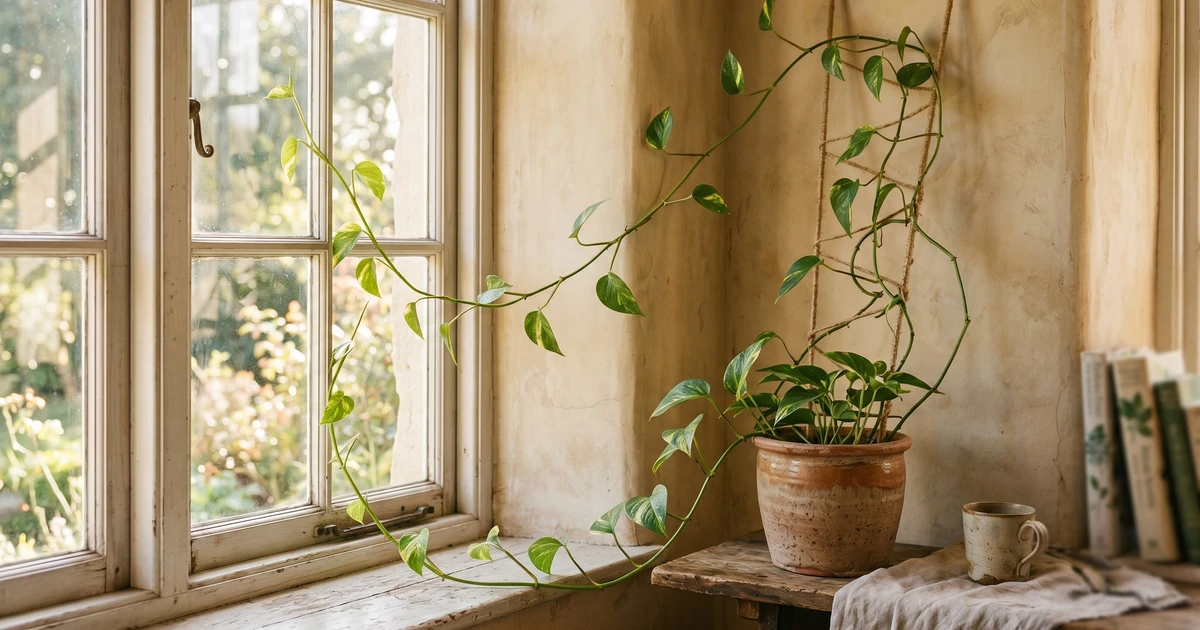
variegated care on Rhaphidophora Tetrasperma
Quick answer
If your Rhaphidophora Tetrasperma has variegated care, the most likely cause is: Variegated Rhaphidophora tetrasperma exhibits white/cream sectors lacking chlorophyll, reducing photosynthetic capacity by 40-60% compared to green specimens. Research shows the species sustains growth at 6.8 µmol m⁻² s⁻¹ white LED for 9h/day, but variegated forms require higher light intensity (12-15 µmol m⁻² s⁻¹) to compensate for reduced chlorophyll area. White tissue provides zero photoprotection, making variegated sectors susceptible to photooxidative damage under direct sunlight while simultaneously requiring brighter conditions than green forms.
Start here:
- 1. Position in bright indirect light: East-facing window with sheer curtain or 3-5 feet from south/west windows
- 2. Supplement with grow lights: 12-15 µmol m⁻² s⁻¹ for 12-14 hours daily if natural light is insufficient
Why Rhaphidophora Tetrasperma gets variegated care
Variegated Rhaphidophora tetrasperma exhibits white/cream sectors lacking chlorophyll, reducing photosynthetic capacity by 40-60% compared to green specimens. Research shows the species sustains growth at 6.8 µmol m⁻² s⁻¹ white LED for 9h/day, but variegated forms require higher light intensity (12-15 µmol m⁻² s⁻¹) to compensate for reduced chlorophyll area. White tissue provides zero photoprotection, making variegated sectors susceptible to photooxidative damage under direct sunlight while simultaneously requiring brighter conditions than green forms.
How to reverse variegated care on Rhaphidophora Tetrasperma
- 1
Position in bright indirect light: East-facing window with sheer curtain or 3-5 feet from south/west windows
- 2
Supplement with grow lights: 12-15 µmol m⁻² s⁻¹ for 12-14 hours daily if natural light is insufficient
- 3
Maintain 60-75% humidity year-round to support reduced photosynthetic efficiency
- 4
Rotate plant weekly to ensure even light distribution across all variegated sectors
- 5
Avoid direct sunlight: Even morning sun causes irreversible sunburn on white tissue within 2-4 hours
Keep variegated care off this Rhaphidophora Tetrasperma
Provide consistent bright indirect light (2000-4000 lux) measured with light meter. Variegated forms need more total light than green specimens to support equivalent growth rates. Maintain stable environment without sudden light changes that trigger stress responses.